Deepinder Goyal's Temple opens a new front: Startup founders vs doctors
Zomato founder Deepinder Goyal's Rs 85,000 wearable Temple is facing questions from doctors over its scientific claims. But while the medical community debates the technology behind the device, several members of India's startup ecosystem are backing Goyal's ambition to build something new.
Their support comes from a belief that India needs more entrepreneurs willing to take risks and develop ambitious, science-led products that can compete globally. Some have also tried Temple themselves and shared positive feedback.
One of the most prominent endorsements came from Unacademy co-founder Gaurav Munjal, who took to X on November 5 to share his experience of using the device. Munjal said he had worn Temple intermittently for a few weeks and believed it had the potential to become a global product built in India.
CARS24 co-founder Gajendra Jangid has also backed its commercial potential in a LinkedIn post. He argued that Temple could find a market overseas, particularly in countries where consumers are more willing to spend on preventive health and premium wearables. However, he also pointed out that the device's proposed Entropy biomarker still needs independent validation.
Entrepreneur Prakash Dadlani also came out in support of Goyal, arguing that India should encourage people who take big risks rather than discourage them for trying something new.
In a post, Dadlani pointed out that Goyal had reportedly invested $20 million of his own money into Temple and stepped away from running Zomato to build the venture. He said investors knew the risks involved and consumers could decide whether the Rs 85,000 product was worth buying.
"Will the product succeed? Maybe. Maybe not. But that's what building something new looks like," Dadlani wrote.
He added that even if Temple did not succeed commercially, the research, technology and talent created during its development could lead to something valuable. "Cheer the builders. Believe in Bharat," he said. WHY THE STARTUP COMMUNITY IS BACKING GOYAL
Munjal's endorsement is based on his personal experience with the device. He described Temple as lightweight and comfortable enough to wear while sleeping and working out. He also praised its food-tracking feature, which he said could detect chewing and send reminders after meals.
He was impressed by the Brain Flow and Entropy features, as well as its sleep tracking. However, he noted that Whoop, a popular fitness wearable, offered a better app interface and user experience.
Jangid's argument focused more on the opportunity to build a premium Indian health-tech product for global markets. He pointed to products such as Whoop and Oura as examples of wearables that have found consumers willing to pay for health and performance tracking.
However, he acknowledged that Temple's proposed Entropy biomarker had not been independently validated. His support was for the market opportunity, not a declaration that the device's scientific claims had been established.
This distinction matters. Supporting a founder's ambition, liking a product after using it and accepting its scientific claims are three different things.TEMPLE HAS ATTRACTED BIG-NAME INVESTORS
Goyal's venture has also attracted interest from some of India's prominent startup founders and investors.
In February 2026, Temple raised $54 million in a funding round at a post-money valuation of around $190 million. Investors included Steadview Capital, Peak XV Partners, InfoEdge Ventures and Dharana Capital.
Among the prominent individual investors were Paytm founder Vijay Shekhar Sharma, CRED founder Kunal Shah and Zerodha co-founders Nithin and Nikhil Kamath. More than 30 Temple employees also participated in the round.
The venture is a departure from the consumer internet businesses with which India's startup ecosystem is more familiar. Temple involves hardware development, physiological measurements and research into ageing — areas where product development can be expensive and uncertain.
However, the stature of its investors and the money raised do not establish whether its technology works.WHAT EXACTLY IS TEMPLE?
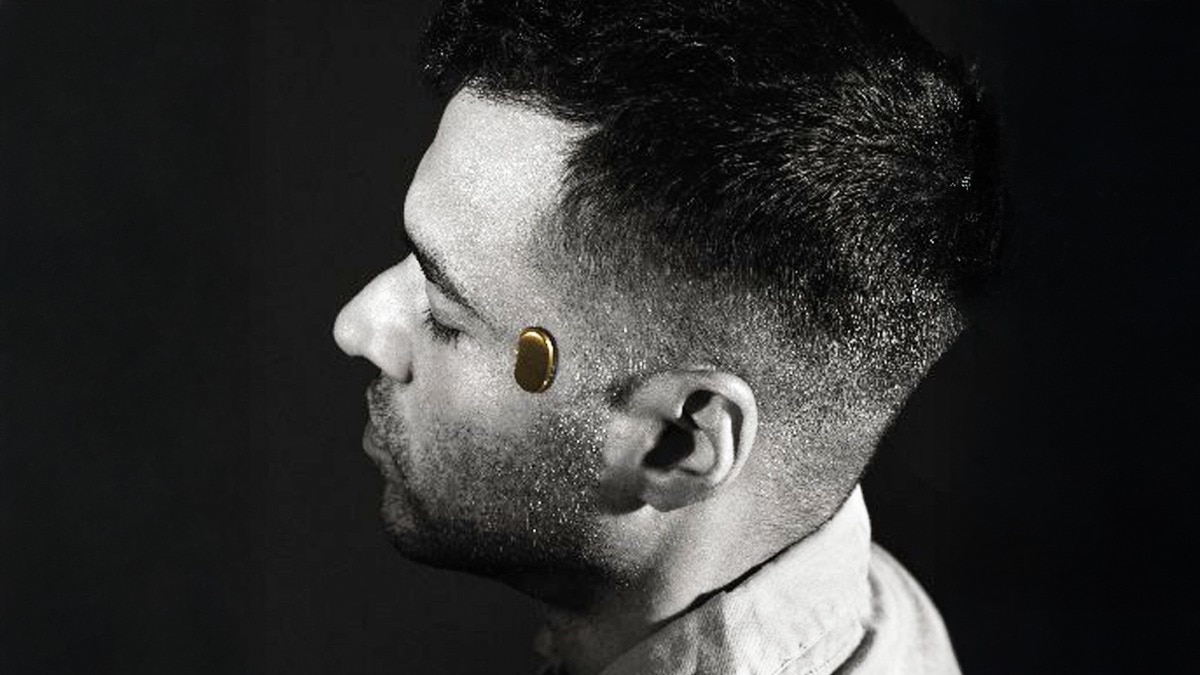
Temple is a small, pill-shaped wearable designed to sit near the temple on the side of the forehead. Unlike conventional fitness trackers worn on the wrist, it uses optical sensors placed near the head to track physiological signals.
The device is built around two central metrics: Brain Flow and Entropy. Brain Flow is intended to provide insights into cerebral blood flow, while Entropy is presented as a measure of the body's real-time physiological strain.
The Entropy score ranges from 1 to 250 and, according to the company, can be influenced by factors such as sleep, exercise, stress, food, caffeine and meditation.
Temple is also linked to Goyal's Gravity Ageing Hypothesis, which proposes that the long-term effects of gravity on blood circulation, particularly circulation to the brain, could be an overlooked contributor to ageing.
The device opened pre-orders in India on November 1 at Rs 85,000, with deliveries expected to begin in early 2027. Goyal has positioned it as a fitness and wellness device, not a medical diagnostic product.WHY ARE DOCTORS QUESTIONING TEMPLE?
The central question is whether a sensor placed near the temple can actually measure blood flow inside the brain.
Hepatologist Dr Cyriac Abby Philips, popularly known as The Liver Doc, has been among the most vocal critics. He has questioned its brain-monitoring claims.
His argument is that the superficial temporal artery, near which Temple is placed, is outside the skull and supplies blood to the scalp and face. The brain, meanwhile, receives its blood supply primarily through the internal carotid and vertebral arteries.
Doctors have also questioned the research supporting Temple's metrics, including the methodology, sample sizes and lack of independent validation. Some studies cited by the company were conducted and funded by Temple itself and have not yet undergone peer review.
The other major point of contention is Entropy. When Goyal announced the metric, he described it as a new biomarker that could measure the body's real-time energy expenditure.
However, Hyderabad-based senior neurologist Dr Sudhir Kumar had told India Today that the available evidence did not establish Entropy as a scientifically validated biomarker. He said the biological basis of the metric, the methodology used to calculate it and independent validation studies needed to be made available.GOYAL DEFENDS THE DEVICE, BUT DOCTORS WANT EVIDENCE
As criticism gathered pace, Goyal took to X on November 5 to defend Temple in a lengthy post addressed to "Concerned Indian Doctors".
He said the company had spent $30 million developing the device, of which $20 million came from his personal funds. He argued that the investment showed the seriousness of the project and that the company was not attempting to make a quick buck.
Goyal also pointed to Temple's 14-day, no-questions-asked return policy. He said the company would struggle to recover its research and development costs if the product did not work.
He cited Whoop as an example of a wearable whose validation studies came years after its launch. Goyal said Temple would publish preprints before peer-reviewed papers and that independent studies would emerge as the device became more widely available.
He also said he had stepped down from his role as Eternal CEO to pursue Temple because the project was about purpose rather than money.
However, his response has not settled the debate. Doctors have maintained that investment figures, personal sacrifices and promises of future research cannot replace scientific validation.
The distinction is important. A wearable may detect a physiological signal, but establishing what that signal represents and whether it reliably measures the parameter being claimed requires rigorous testing.WHY THIS DEBATE MATTERS BEYOND TEMPLE
The controversy has exposed a larger question for India's technology ecosystem: how can the country encourage ambitious innovation while ensuring that scientific claims are independently tested?
India needs entrepreneurs willing to invest in challenging areas such as hardware, neuroscience and longevity research. At the same time, health-related claims must be backed by credible evidence, particularly when consumers are being asked to pay a premium for a product.
Temple's backing from prominent founders and investors does not prove that its technology works. Equally, questions about the available evidence do not mean the research should be abandoned.
For Goyal, the next challenge is to demonstrate that Temple can measure what it claims to measure. The startup community may be willing to give him the benefit of the doubt, but doctors are asking for independent evidence.
And at Rs 85,000, consumers will want to see it too.- Ends