
Defending Trump media ban, DOJ cites national security and says White House access is a ‘privilege’
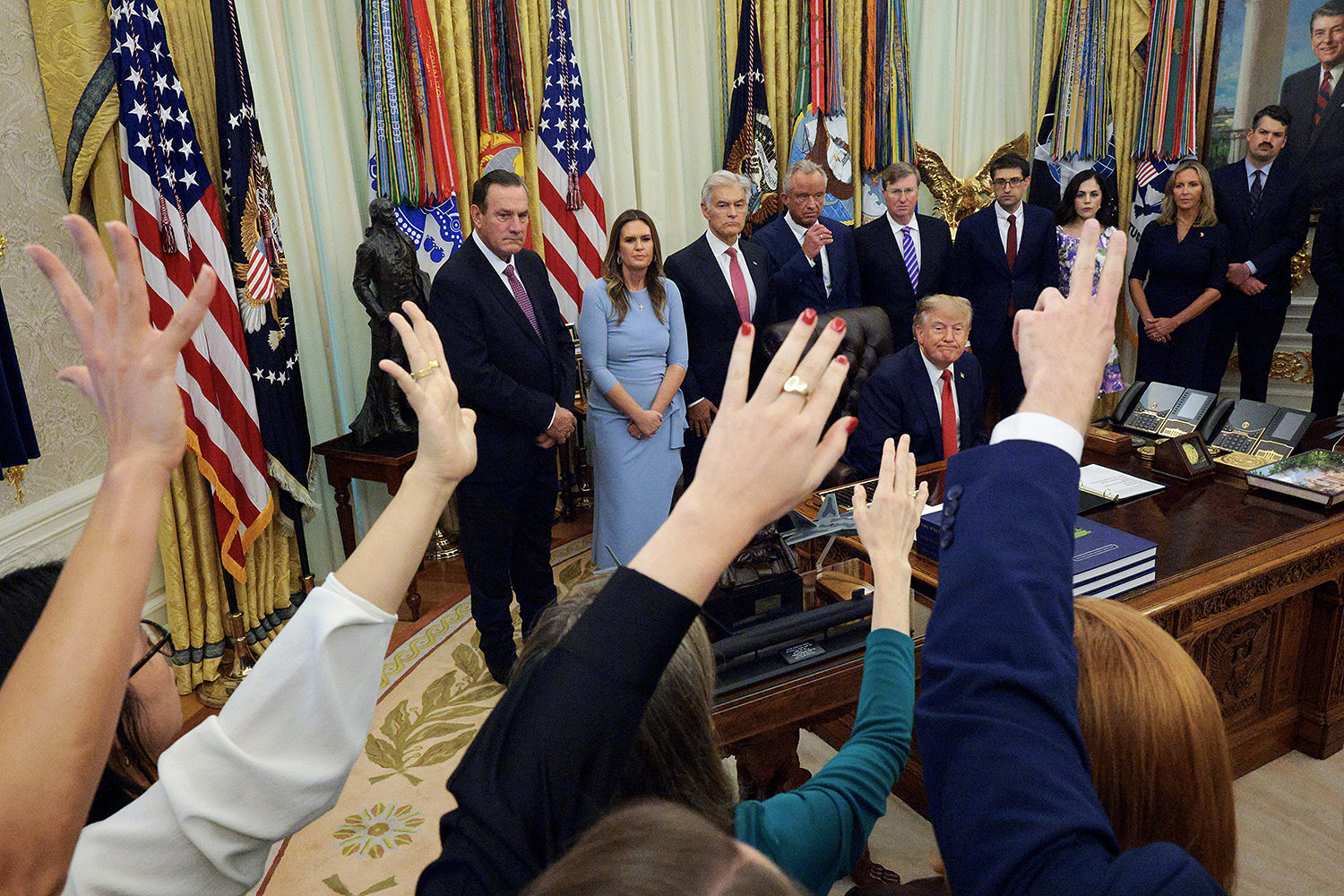
President Trump takes questions from reporters in the Oval Office last week.Chip Somodevilla / Getty ImagesShareAdd NBC News to GoogleSept. 23, 2026, 5:08 AM EDTBy Adela SulimanThe Department of Justice said in a court filing late Tuesday that President Donald Trump has the right to ban media outlets CNN, MSNOW and Politico from the White House, calling their access a “privilege” and citing national security concerns.
The filing urges a federal judge not to block the ban, ahead of an emergency hearing Wednesday on the news organizations’ request for a temporary order restoring their access.
The Trump administration argues that the ban does not violate First Amendment protections on press freedom. “Access to the White House is a privilege—not a right,” the DOJ says in the filing.
It contends that the three news outlets had “failed to maintain basic minimum ‘standards of professionalism and decorum expected of those given access to the White House Complex,’ including, “publishing sensitive or classified information,” wrote DOJ Attorney Michael Velchik.
The DOJ said the three news organizations were sent individual letters from the White House Press Office earlier Tuesday laying out the reasoning for the revocation of their passes, and citing a “non-exhaustive list of reporting incidents” the White House said it had found “threatened national security and spread falsehoods.”
The letters cite stories on construction details related to the East Wing bunker, funding for the White House ballroom, munitions stockpiles impacted by the Iran war and sanctions against Russia.
The outlets did not immediately respond to overnight requests for comment from NBC News on the filing’s claims.
The letters give the news organizations a deadline of 5 p.m. on Friday to “contest this initial decision.” If the deadline is missed “this initial decision will be final,” they say.
The decision to ban CNN, Politico and MS NOW came Friday via a Truth Social post, where Trump wrote that he was “proud to announce” the ban from the White House “effective immediately.”
He said the decision was “a result of their constant “reporting” FAKE NEWS! Media Outlets shouldn’t be able to constantly write or report FICTION and LIES when they’re covering the President of the United States, the Trump Administration, or the United States of America.” He added: “Other Fake News Media Outlets to follow.”
Journalists from the three outlets, including MS NOW reporter Akayla Gardner, CNN’s Betsy Klein and Politico’s Cheyenne Haslett, subsequently found their access passes deactivated and their White House press credentials confiscated.
First Amendment experts and the White House Correspondents’ Association called the turning away of credentialed reporters unconstitutional.
CNN, Politico and MS NOW filed their lawsuit Monday arguing that the president’s move violated the defendants’ due process rights and First Amendment protections for newsgathering and speech.
The three outlets said they were filing the lawsuit “to protect our First Amendment rights and defend the principle that the government does not decide what the press reports or publishes.”
U.S. District Judge Timothy Kelly, who was appointed by Trump in 2017, will preside over the hearing Wednesday. He will evaluate the outlets’ request to issue a temporary restraining order blocking enforcement of the ban and restoring reporters’ hard passes to access White House grounds.
Kelly ruled against Trump in a similar case back in 2018, when the White House withdrew credentials from reporter Jim Acosta, who was then with CNN.
President Trump speaks to the press at the United Nations General Assembly in New York on Tuesday.Charly Triballeau / AFP via Getty ImagesOn Tuesday, Trump remarked that he would “probably” let journalists from CNN, MS NOW and Politico back into the White House if a court rules against his decision to ban the media outlets from the White House grounds.
Later that day, during his address to the United Nations’ General Assembly in New York, Trump told CNN reporter Kaitlan Collins: “You shouldn’t be here ... You said you weren’t going to cover me.” Collins responded that CNN never said it was not going to cover Trump, and that while it had been banned from the White House it was credentialed by the U.N. as usual.
The solidarity among TV networks has been swift, as they refused to provide TV pool coverage of the president’s activities this week, resulting in quiet mics and a lack of photographs of Trump’s official activities.
Pool coverage is when one network attends an event and then distributes information and media, such as video footage and audio, to other outlets. The system has been recognized by administrations from both parties for decades, and the coverage is used by pool members and subscribers, which includes outlets like Newsmax, One America News Network, C-SPAN and international outlets.
Print and radio pools are still in place, and TV pools for events for other parts of the administration will continue. Individual TV networks, including NBC News, continue to provide coverage of White House events that are open to the press, outside of the pool. Outside of events, NBC News reporters continue to report on the administration’s activities.
Adela SulimanAdela Suliman is a breaking-news editor and reporter for NBC News in London.


