Delhi was gasping for breath days ago. How did the air quality improve suddenly?
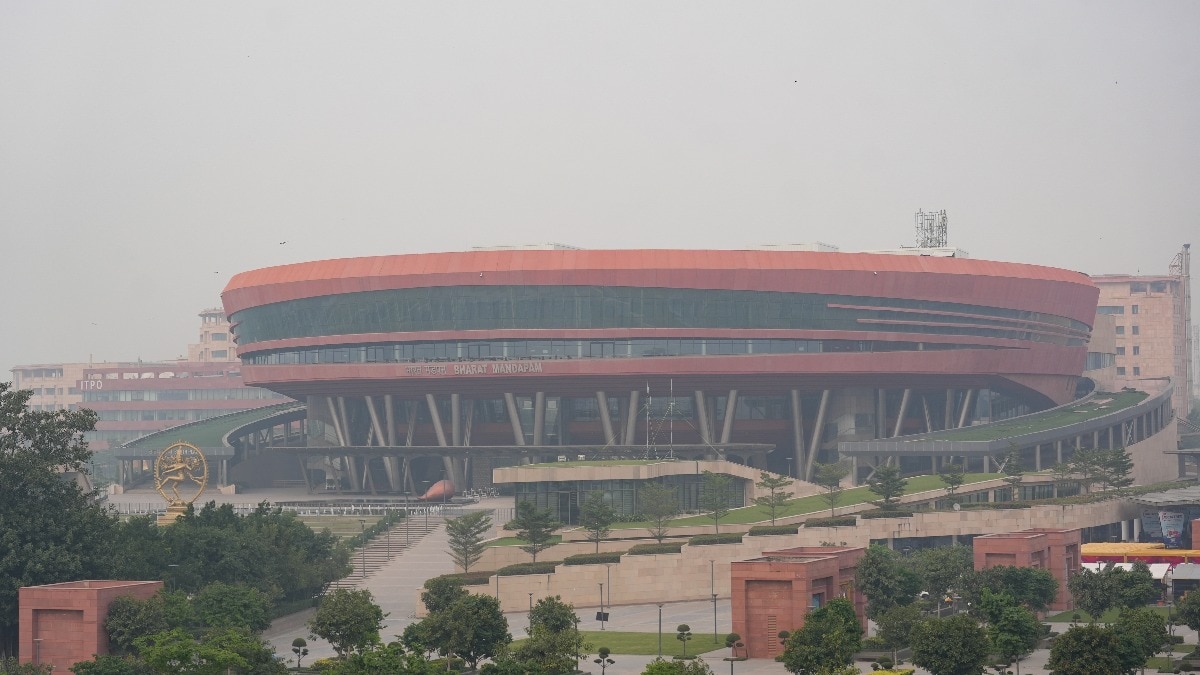
Delhi's air quality improved on Sunday, moving from the 'very poor' to the 'poor' category after several days of toxic pollution that had kept the national capital shrouded in a haze following Diwali. The improvement came after better wind speeds and light rainfall helped disperse pollutants, according to weather experts.
The city's Air Quality Index (AQI) stood at 290 at 4 pm, compared with 350 in the 'very poor' category in the morning, according to the Sameer app.
Of the 58 air quality monitoring stations across Delhi, 34 recorded 'poor' air quality, while 23 reported 'very poor' levels. Delhi Cantonment was the only station to record 'moderate' air quality. NSIT Dwarka recorded the worst air quality, with an AQI of 364.
According to the Central Pollution Control Board (CPCB), an AQI between zero and 50 is classified as 'good', 51 and 100 as 'satisfactory', 101 and 200 as 'moderate', 201 and 300 as 'poor', 301 and 400 as 'very poor', and 401 and 500 as 'severe'.
Delhi's air quality had remained in the 'very poor' category since November 11, with several hourly readings approaching the 'severe' mark and even crossing it once. The last time the city recorded 'poor' air quality was on November 10, when the AQI stood at 299. Before that, the AQI was recorded at 261 on November 1.
According to real-time PM2.5 source apportionment data from the Air Quality Early Warning System and the Integrated Decision Support System, biomass burning was the largest contributor to Delhi's pollution on Sunday, accounting for 37.1 per cent.
This category includes stubble burning, domestic solid biofuel, and the burning of dung cakes and wood.
Secondary organic aerosols, fine particles that form in the air through chemical reactions involving gases, were the second-largest contributor at 22 per cent. Vehicular emissions accounted for 17.2 per cent, followed by secondary inorganic aerosols at 9.6 per cent.
Waste burning, including municipal waste and waste containing plastic and rubber, contributed 5.5 per cent, while mixed combustion accounted for 4.3 per cent.
Mineral dust and ash contributed 2 per cent, firecrackers 1.6 per cent, and industrial emissions 0.6 per cent, the data showed.WHY DID DELHI'S AIR QUALITY IMPROVE SUDDENLY?
Weather experts attributed Sunday's improvement to better wind speeds and light rainfall, which helped disperse pollutants and improve ventilation.
According to the India Meteorological Department (IMD), very light rain or drizzle was recorded at several places in Delhi during the preceding 24 hours. Surface wind speeds reached up to 15 kmph from the southwest direction.
Generally cloudy skies prevailed over the region on Sunday before becoming partly cloudy towards the afternoon. Surface winds reached speeds of up to 10 kmph from the southwest, the weather department said.
These weather conditions helped pollutants disperse, offering temporary relief from the prolonged spell of poor air quality.WILL DELHI'S AIR QUALITY IMPROVE FURTHER?
The relief is likely to be short-lived. The Air Quality Early Warning System has forecast that Delhi's air quality will remain in the 'poor' category on November 16 before slipping back into the 'very poor' category from November 17 to 18.
The system has further forecast that air quality is likely to remain in the 'very poor' category for the subsequent six days.
The IMD's forecast bulletin also indicated a decline in Delhi's ventilation index, which measures the atmosphere's ability to disperse pollutants.
The ventilation index is expected to fall from 16,000 square metres per second on November 15 to 15,000 on November 16, 7,500 on November 17 and 6,000 on November 18.
A ventilation index below 6,000 square metres per second, coupled with an average wind speed of less than 10 kmph, is considered unfavourable for the dispersion of pollutants, the bulletin said.
The forecast suggests that Sunday's improvement may provide only temporary relief, with deteriorating ventilation conditions likely to make pollution dispersion more difficult over the coming days.- EndsWith PTI inputs.