Dementia turned her husband into a violent stranger. Inside a Toronto family’s nightmare - Toronto Star
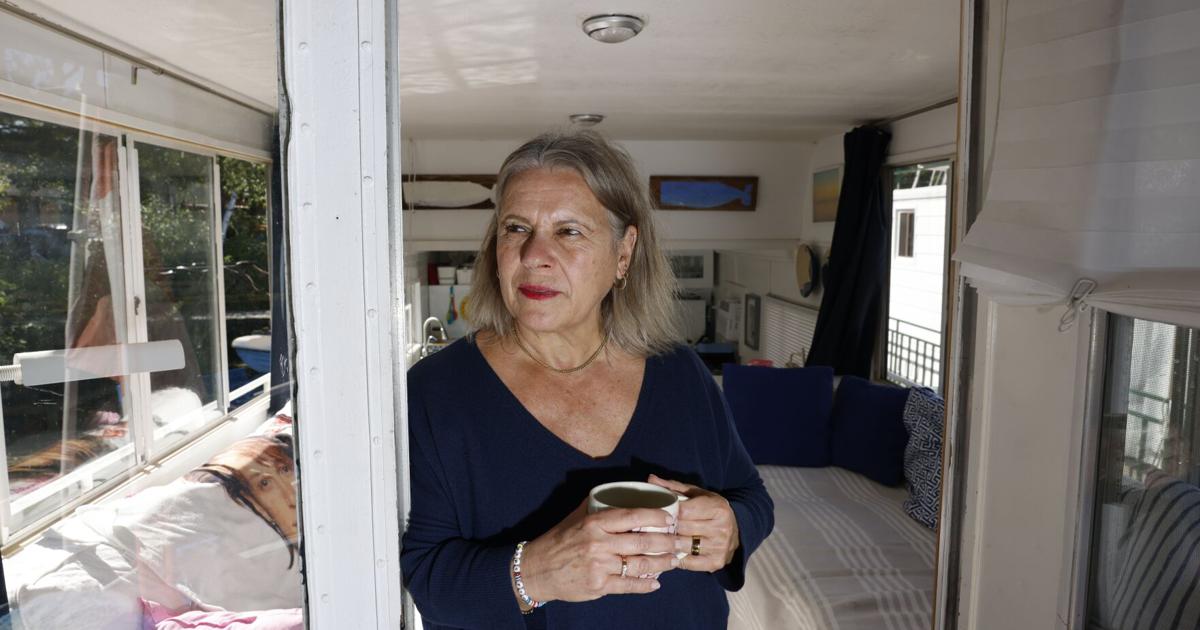
Steve Dawson's four children have a 50/50 chance of inheriting the genetic mutation responsible.
Stephen Dawson was in his mid-forties when he began to transform into a different person.
His wife, Barbara, recalls a family vacation they took in the ’90s when Steve, whom she remembers as a brilliant physician brimming with positive energy, abruptly turned to her and said, “Barb, I’m so profoundly depressed.”
Barbara didn’t think much of it at the time. She couldn’t have known that within Steve’s genome, a single pair of nucleotides — out of the six billion making up his DNA — was out of place. She wouldn’t have connected that to her husband’s change in mood, nor could she have guessed at the decades of heartbreak that one genetic mutation would cause.
Twenty years after that fateful vacation, the family would learn Steve had frontotemporal dementia (FTD), a neurodegenerative disease that represents around 10 per cent of dementia cases. By then, little remained of the warm, compassionate husband and father they knew. “He became someone we didn’t recognize anymore,” Barbara told the Star.
Unlike more common forms of dementia, FTD left Steve’s memory largely intact while eroding his personality and ability to connect with the people around him. As the years passed, he grew increasingly irritable, then abusive.
Steve died in 2016 at age 62, but the spectre of FTD continues to haunt his family. His four children each have a 50 per cent chance of inheriting Steve’s mutation and undergoing similar changes once they reach middle age.
Barbara Dawson holds a family photograph of her husband and four children.
No treatment for FTD currently exists. Yet there’s hope. Experts say that by studying the family’s mutation, which affects a protein named “tau,” we might learn new insights into the mechanisms underpinning neurodegeneration — potentially paving the way for a treatment not just for FTD, but for more common forms of dementia such as Alzheimer’s disease.
“The more people focus on factors like tau, the closer we come to developing effective therapies for the millions and millions of people with dementia out there,” said author Robert Kolker, whose new book “The Vanishing Family: A Story of Fate, Love and the Disappearing Mind” offers a profound exploration of genetic FTD. He follows multiple generations of an American family in a similar situation, chronicling how it upended each of their lives.
“It just makes sense to me to put families like the Dawsons at the front of the line when it comes to testing new treatments.”
For the first two decades of their marriage, Barbara and Steve “were really living the dream,” she said. “We just connected instantly. He had a beautiful energy.” They had four children in quick succession and settled into a quiet life in northern Ontario.
But as Steve progressed into middle age, he began to change. What began as uncharacteristic mood swings became violent outbursts.
After an especially bad fight in the late ’90s, Barbara took her kids out of town for the summer. By the time they returned, Steve’s faith had morphed into an extreme obsession with religion — from occasionally reading the bible to his kids to lashing out against anyone who didn’t share his beliefs.
“He would just talk to us about the Bible all the time,” recalled his second-youngest son, Michael. “At one point, he baptized us in a swimming pool.”
Steve became increasingly volatile. The family was fighting “all the time,” Michael said. “We’d wake up every day to his screaming.”
Eventually, Steve’s behavioural changes began affecting his work. In the early 2000s, he faced professional misconduct charges after refusing to prescribe birth control or Viagra to unmarried patients.
Then, in 2005, he lost his medical license.
At the time, the Star reported that Steve admitted to engaging in sexual acts with a 35-year-old patient while providing medical treatments and psychotherapy. Steve said he felt the acts, committed in 1999, were consensual. In a victim impact statement, the unnamed woman said he “exercised his power and authority” to commit sex acts against her wishes.
To his family, Steve had become a fundamentally different person. But he maintained nothing was wrong. None of them knew that Steve’s DNA contained a single mutation within a gene called MAPT. Experts say it set off a cascading reaction that, over the span of decades, eroded portions of Steve’s brain.
Frontotemporal dementia can present as different syndromes that gradually wear away at the brain’s frontal and temporal lobes — regions responsible for higher thinking, language and behaviour. The most common type of FTD results in behavioural changes; other variations can affect language or motor skills.
Nearly half of all dementia cases can be prevented or delayed. We asked doctors and researchers for the most effective ways to do it; their