Democrats and Republicans Are Failing America’s Men | Opinion - Newsweek
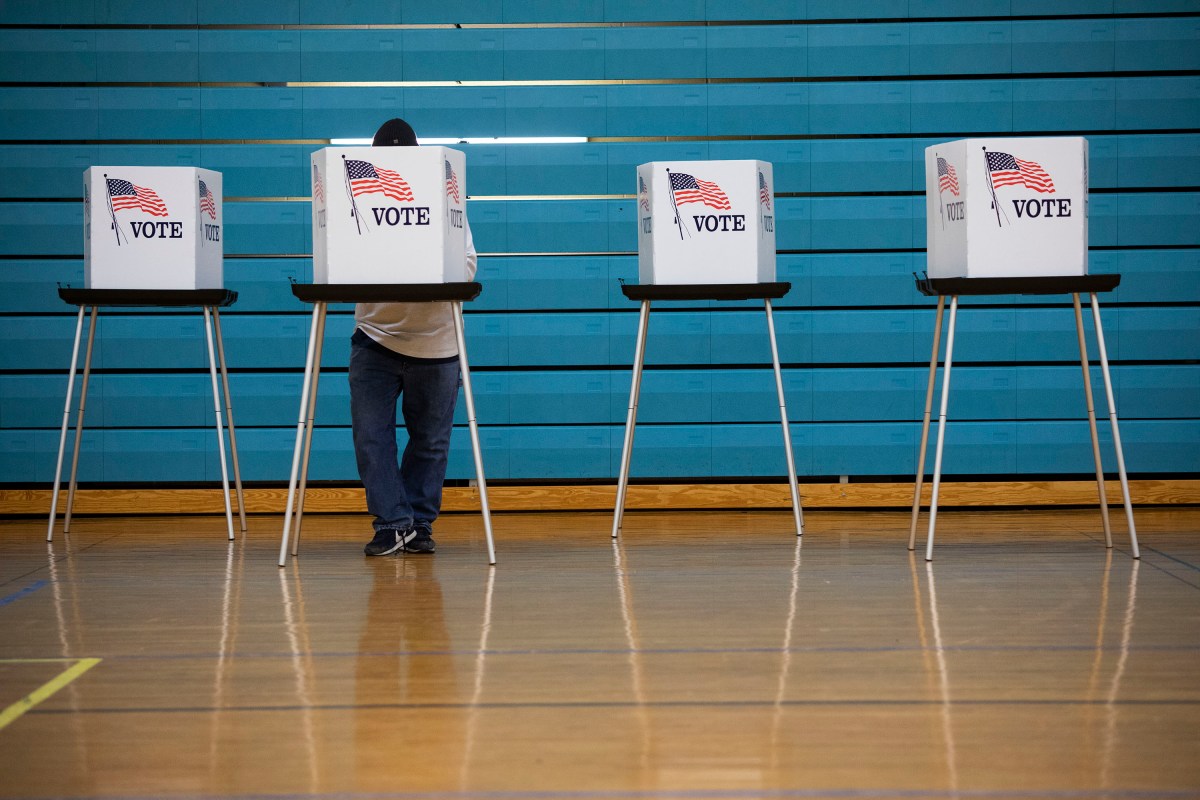
The 2026 midterm elections are fast approaching, and both Republicans and Democrats are squandering a massive opportunity while letting down the country. Neither party is seriously addressing the struggles of boys, sons, fathers, and husbands across America.
It’s no secret that a surge in young male voters helped tip the scales to President Trump and the GOP in 2024. Many felt unseen and unheard by a culture and political class that had spent the better part of 15 years treating masculinity itself as problematic. Trump’s 2024 campaign was explicit in trying to appeal to male voters and doing so in male-dominated podcast spaces.
Republicans often act as if they already “own” the male vote just by talking a good game about masculinity and freedom. In reality, GOP lawmakers have done little to pass concrete policies that tackle the economic and social crises hitting men hardest. AI will threaten millions of jobs, of men and women alike. Republicans have not secured their 2024 gains for the long term, and Trump’s approval ratings with men are slipping.
Meanwhile, most national Democrats still seem terrified to acknowledge that boys and men are struggling more than prior generations. The left continues to be paralyzed by the old orthodoxy that ignores male problems and frames masculinity as something to be dismantled. They point to a small handful of extraordinarily wealthy, older men and conclude there’s nothing to be concerned about for the male population as a whole.
It’s past time for men and women to stand side by side and demand that our leaders take the challenges facing boys and men seriously. If we want our nation to move forward, these issues cannot be ignored any longer.
As someone who made addressing the challenges facing boys and young men a key issue during a 2020 presidential campaign, and another who has advocated for boys and men for nearly a decade, regularly meeting with lawmakers on both sides of the aisle to discuss the issues, we have watched what has happened with growing frustration.
Yet real movement is happening on the state level. Democratic governors in several states have quietly begun taking targeted action to help boys and young men. Maryland Governor Wes Moore has launched a Young Men and Boys Initiative, expanded programs to recruit more male teachers, and partnered with research organizations to deliver better support for mentoring and education. Virginia just became the first state to establish a Boys and Men Advisory Commission led by Del. Josh Thomas. California Governor Gavin Newsom issued an executive order last year directing state agencies to confront the loneliness, mental health, and disconnection crisis among boys and men. Then, Newsom launched the California Men’s Service Challenge to recruit thousands of men as mentors, coaches, and role models and just recently signed an executive order to address the high male suicide rate of boys and young men.
These aren’t just symbolic gestures, rather, they represent a recognition that we need to help mold boys into strong men capable of forming families and being pillars in their communities.
These state-level baby steps offer a preview of what a potential 2028 presidential agenda could offer boys and men. Newsom and Moore are both ambitious Democrats with national profiles who track what Americans want from their leadership. If one or both runs for president, an agenda for helping boys and men could distinguish them from what is expected to be a crowded Democratic primary field.
For right now, the question is whether federal leaders on both sides will rise to the moment or continue to drop the ball until some unknown point in the future.
Addressing the challenges facing boys and men should be a top-tier campaign issue in every race this fall. Fortunately, lawmakers already have serious legislation they can champion right now.
Two bipartisan bills currently before Congress offer exactly the kind of concrete action voters are hungry for, and two bills introduced by a senator might help set us in the right direction. H.R. 7602, the State of Men’s Health Act, introduced by Representatives Troy Carter (D-LA) and Greg Murphy, M.D. (R-NC), would finally create an Office of Men’s Health within the Department of Health and Human Services. Senator Ruben Gallego and Senator Roger Marshall recently introduced a Companion Bill into the Senate.
America currently has eight federal offices focused on women’s health. We have zero dedicated to men—even though men die earlier, suffer higher rates of suicide, and face unique barriers to care for conditions like prostate cancer, cardiovascular disease, and mental illness. The bill requires a comprehensive study of men’s health and coordinates existing programs without creating new spending or touching funding for women’s health initiatives.
The second bill, H.R. 7800, the White House Council on Fathers and Sons Act, would establish an interagency council inside the Executive Office of the President to coordinate federal efforts on the full range of challenges facing boys and men.
In July, Senator Mark Kelly introduced two bills of his own: The Educators for America Act and the Building Community in America Act. The bills aim to expand recruitment into teacher residency and national service programs and create more ways for men (who are underrepresented in these roles) to serve their communities and guide boys and young men. The senator would like to see more men in classrooms and communities.
This is all great news, but support and attention has been scarce in D.C.
These aren’t radical ideas by any measure. They’re overdue recognition that half the population has been left behind at every level. Devoting specific time and resources toward problems that disproportionately impact men is common sense policymaking. It’s also good politics.
Men account for roughly 80 percent of suicides. Boys are falling behind in school, with lower reading proficiency, higher suspension rates, and dramatically lower college enrollment. Prime-age male labor force participation has declined for decades. Dating is harder than ever before and fatherhood is on the decline. Father absence correlates with worse outcomes for children in crime, education, and emotional health.
Many young men are demoralized by the culture around them, with 69 percent saying that manhood is generally viewed negatively by society, according to a report from the Institute for Family Studies.
Supporting bills aimed at helping men does not take a zero-sum approach to gender-related issues. It does not diminish the ability for lawmakers and government agencies to combat problems unique to women.
When boys succeed in school, they become men who can form stable families. When fathers are healthy and present, crime drops and children thrive. When men have better access to mental health resources, the women and children who depend on them benefit too. Taking action to rectify the issues impacting boys and men makes everyone better off, now and in the future.
For politicians of either major party: the data is clear and the political upside is enormous. Men are paying attention. A party that offers and supports real policy solutions and not empty rhetoric could earn loyalty that lasts a generation and moves our country forward.
We’ve spent too many years pretending that boys and men will simply figure it out on their own. As their suffering has grown, we have pathologized normal male behavior and talked about privilege instead of the problems right in front of us. The result has been predictable: more isolation, despair, and lost potential.
The good news is that it’s not too late to change course. National and state leaders are finally beginning to take steps to support boys and men. Recognition of the unique struggles of boys and men among academics and journalists is growing enormously. The midterms are a chance to send a clear message: The men we love deserve the same serious attention from our political leaders we have long given to every other demographic group.
Championing real policy solutions to assist men and strengthen families will go a long way toward winning the male vote for whoever decides to make it a priority. Republicans and Democrats alike have a chance to make their pitch this fall. If they fail, they will only fuel an alternative.Andrew Yang is an author and former presidential candidate and Lisa Britton is a writer and advocate. Watch them discuss this op-ed, and other issues on Newsweek’s The 1600 podcast here.The views expressed in this article are the writers' own.