
Democrats mire themselves in Schumer debate after landslide win - Semafor
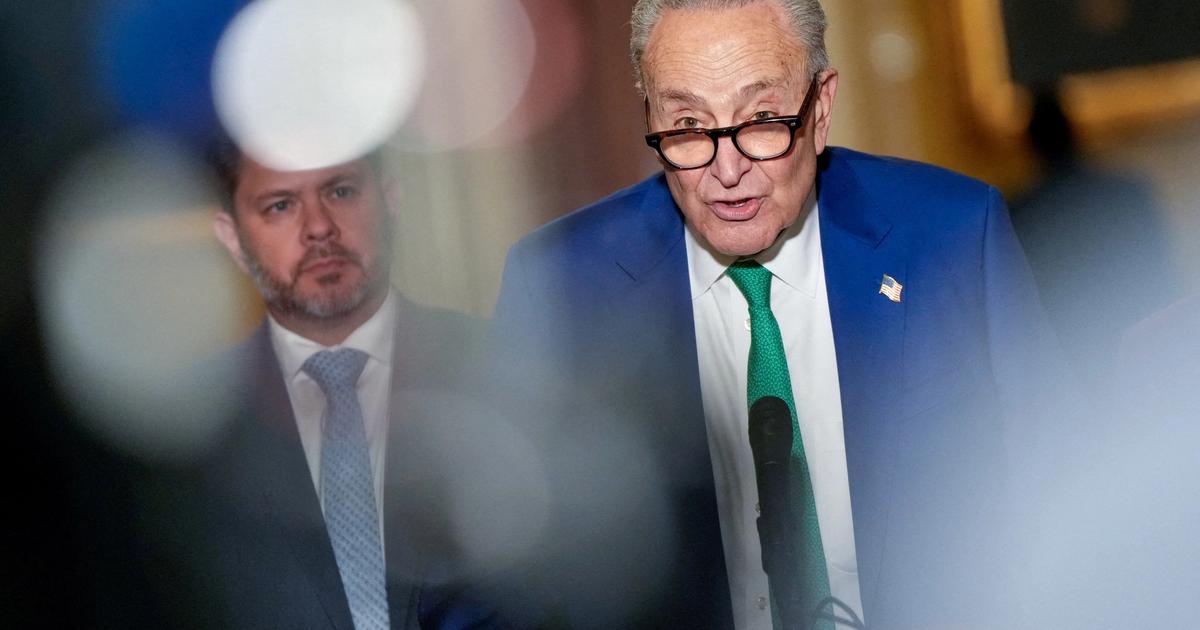
Some Democrats say they won’t vote for Chuck Schumer to be Democrat leader. Others are declining to endorse him publicly as Sen. Chris Van Hollen, D-Md., weighs a challenge and dials up colleagues.
But a confident Schumer is acting like he’s staying put. And many of his colleagues are itching to skip the Democratic infighting altogether and reach the moment when Schumer is reelected Democratic leader on Dec. 1.
“Schumer has been an unpopular figure among people who don’t understand the role of the Senate party leader. And I think it probably helped them on the trail,” Sen. Sheldon Whitehouse, D-R.I., told Semafor. “It’s not the first time that a Senate leader has helped elected members who have opposed his leadership.”
He said he was confident when all is said and done, Schumer will emerge as the victor. Schumer is, too.
The New York senator has asserted repeatedly he’ll be the majority leader again next year. And in a sign of that confidence, he’s already plotting out a unified Democratic agenda with House Democratic Leader Hakeem Jeffries. He spent his Wednesday doing things that only a returning leader would: meeting with incoming newly-elected senators like Rep. Chris Pappas, D-N.H., and Sen.-elect Adam Hamilton, D-Kan., to discuss their priorities and what committees they’d like to serve on.
Schumer is not acting like a guy who is short of the votes. Hamilton has called for new party leadership and told Semafor that Schumer didn’t ask him to reconsider that demand during their sitdown on Wednesday: “No, he didn’t at all, actually.”
“We talked about being overwhelmed when you’re first getting into this and talked about stories, things that matter, committees,” Hamilton said.
Schumer recruited a number of strong Democratic candidates, including former Sen. Sherrod Brown of Ohio, former Gov. Roy Cooper of North Carolina, and former Rep. Mary Peltola of Alaska (who is ahead of Sen. Dan Sullivan, R-Alaska, in a race that has yet to be called). Still, there’s no question that the core of the Democratic Caucus is changing and Schumer has to adapt to it.
Whitehouse is from the class of 2006, the year of Schumer’s first big Senate triumph, when he flipped the chamber as party campaign chair. He then achieved a stunning 60-seat majority two years later. Those Democrats were the bulwark of Schumer’s political power as he became leader in 2017, and his support remains strong within the caucus even as his reputation has eroded outside the Capitol.
And despite Schumer’s relentless fundraising on candidates’ behalf and candidate recruitment, the class of 2026 has its own ideas. The Schumer-aligned Senate Majority PAC and its affiliates spent $67 million in Michigan, $65 million in Maine, and $14 million in Kansas, only to see those senators say they do not support him.
“We have a lot of new voices coming into the Senate and folks who have been on the ground hearing directly from their constituents about how frustrated they are. So we just have to make sure that leadership recognizes the urgency of this moment,” said Sen.-elect Peggy Flanagan, D-Minn. “We’ll see who decides to step in,” she added, calling Van Hollen “fantastic.”
Schumer also has moves to make to reshape his caucus. He may elevate progressive Sen. Elizabeth Warren, D-Mass., to a more prominent leadership position as Sen. Amy Klobuchar, D-Minn., prepares to be sworn in as governor of her state. Sen. Adam Schiff, D-Calif., a vocal critic of President Donald Trump who was elected to the Senate in 2024, is also making calls about a position in leadership.
So far, no one besides Sen. Kirsten Gillibrand, D-N.Y., is raising their hand to be chair of the Democratic Senatorial Campaign Committee — a position appointed by the party leader. Gillibrand just enjoyed a wildly successful 2026 cycle.
And most importantly, Schumer will have to decide whether he will run for another six-year term as senator in 2028.
Even as a number of Democrats like Sens. Raphael Warnock, D-Ga., and Mark Warner, D-Va., decline to publicly back Schumer, Democrats believe Schumer’s private commitments range far beyond his public ones. The long windup to the Dec. 1 leadership election, which is conducted by secret ballot, offers little upside for members with national ambitions to endorse Schumer early.
But even so, a number of Democrats are still publicly backing him. Brown, who was first ushered into the Senate in 2006, says he’ll support Schumer after Schumer-aligned groups spent an eye-watering $150 million in Ohio. Sen. Angus King of Maine, an independent who caucuses with Democrats, said on CNN that expects the caucus to unite around Schumer.
Sen. Tammy Baldwin, D-Wis., said she’ll back Schumer, as did Sen. Richard Blumenthal, D-Conn. “When the manager takes you to the World Series, you give him another contract,” added Sen. Ruben Gallego, D-Ariz.
And Schumer is already plotting out next year’s schedule. Senate and House Democrats are planning fast legislative action on potentially bipartisan bills by picking up the four or more Republican Senate votes they need to pass legislation. If Republicans block those bills, Jeffries and Schumer would move more quickly to party-line budget reconciliation legislation that can reach Trump’s desk.
If Schumer were somehow dislodged as leader, the new Democratic majority would be way behind the eight-ball.
As Gallego and Gillibrand lauded Schumer this week, Sen. Bernie Sanders, I-Vt., announced he can’t support him, while Sen. Elissa Slotkin, D-Mich., said she’s a no until she gets a “concrete plan” from a Democratic leadership candidate. Sanders called for a “vigorous debate about the direction of the Democratic Party” to show voters the party is changing.
And Van Hollen criticized Schumer and Gillibrand’s electoral approach, accusing them of siding “with the crypto industry and AIPAC” in their candidate endorsements.
After their biggest victory since post-Watergate, Democrats are spending weeks picking apart Schumer and, to a lesser extent, Jeffries. That’s not exactly the thank-you one might expect after winning the largest Senate majority since 2010.
Not to mention that Schumer is still being second-guessed for not spending more in Florida and Louisiana, on Senate races that ended up closer than expected. Talk about a thankless job.
The infighting could extend for weeks if Van Hollen runs against him. Schumer would be the heavy favorite, but it would be an unwanted distraction for Democrats ahead of 2027.
But for now, Schumer is the only one who wants the job. As Senate GOP Leader John Thune found out this week, your critics lose steam pretty quick if they can’t put up an opposition candidate.


