Despite cleanup, Croatians fear lasting damage from illegal waste - CGTN
By continuing to browse our site you agree to our use of cookies, revised Privacy Policy and Terms of Use. You can change your cookie settings through your browser.
As Croatia prepares to clear tens of thousands of tonnes of hazardous waste from its idyllic Lika region, locals fear years of illegal dumping may have caused lasting damage to its pristine surrounds.
In a home framed by flowers and fruit trees, Zeljka Sikic lives just a short walk from the dumpsite in Gospic – which she says locals have warned about for years.
"Given the nature of the waste, the cleanup needs to begin urgently. There is no point in waiting," said Sikic, a 50-year-old teacher.
As early as 2021, she said townspeople noticed suspicious trucks moving around the town in the mountainous region – dubbed the "Lungs of Croatia" for its lush landscape.
Although the illegal dumping was publicly confirmed early last year, it took until September for the government to release a plan to clean up the waste.
"Not a single kilogram of waste has been removed so far," said Vjekoslav Busic, from the civic initiative called Gospic is our Home. "It continues to pose a threat to the environment and human health."
Teacher Zeljka Sikic, a resident of Gospic whose house is just a few hundred meters away from the site where waste was illegaly dumped and buried. /Marko Perkov/AFP
In August, an expert report confirmed that "soil contamination had occurred" at the site in Gospic and impacted the surrounding area, posing a "significant risk" to people and the environment.
It came after prosecutors announced an investigation last year into 10 people suspected of dumping waste from Italy, Slovenia and other parts of the country at sites in Croatia, including in Gospic.
But when the scale of the waste and potential contamination became clear, frustration grew over authorities' response, triggering widespread protests and a political backlash.
"The government is taking the issue very seriously and is not underestimating the problem in any way," Prime Minister Andrej Plenkovic said in August, accusing the opposition of "whipping up hysteria" over the issue.
"There is a problem, but that is why a criminal investigation is being conducted ... and those responsible will be found guilty and held accountable."
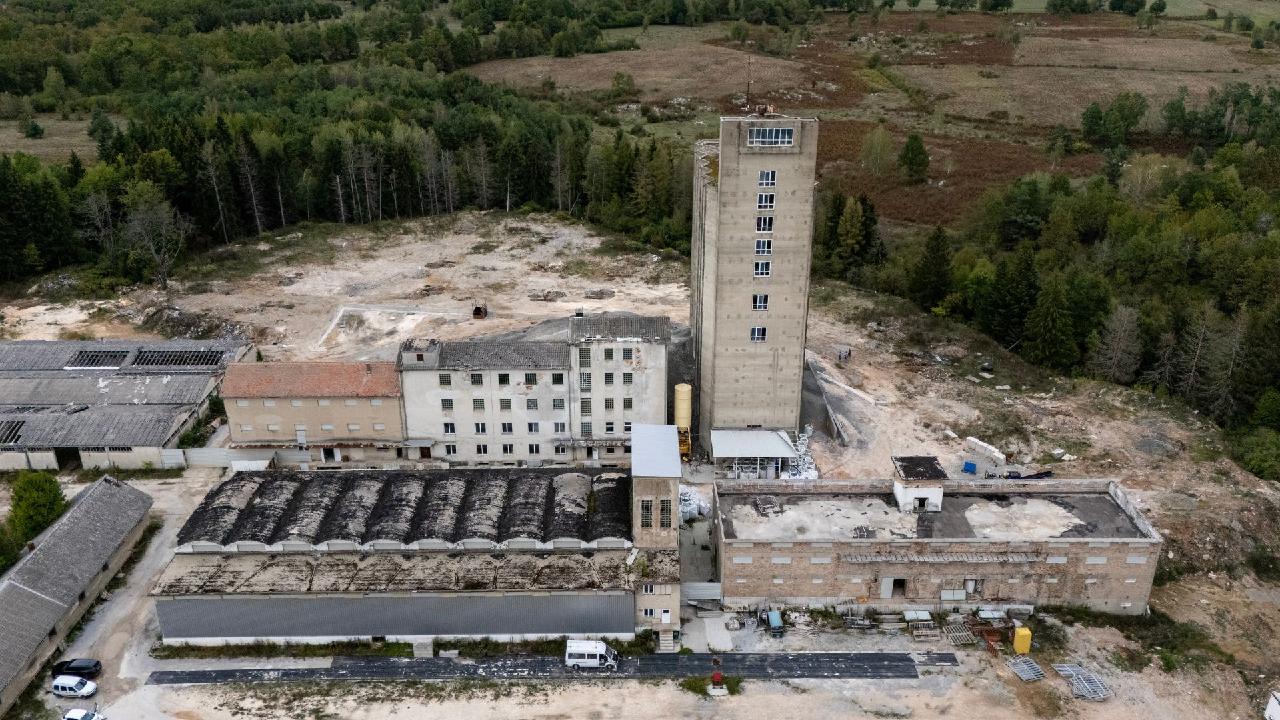
Graffiti reading "Why did you poison us?" on the wall of the silo of the former PPK Velebit agro-food industrial complex where waste was illegally dumped and buried in Gospic. /Marko Perkov/AFP
At the site in Gospic, about 200 kilometers south of Zagreb, there are around 44,000 tonnes of waste, including medical and other hazardous waste, according to official estimates.
Some of it is exposed, but most of the waste is buried nearly three meters underground, making cleanup efforts particularly complicated.
Since the criminal investigation became public in February 2025, locals say authorities have continued to withhold information about the waste's future "in the interest of the investigation".
They also complain that no safety measures were taken to protect citizens, despite analysis finding the waste could not be treated as non-hazardous as early as 2024.
Last week, the government presented a cleanup plan that could take over a year, with an estimated cost of $62 million.
But authorities have yet to decide whether the buried waste will be excavated and processed on site or sent outside Croatia for processing and disposal.
Busic, who was part of the group that led protests that drew tens of thousands to the capital in September, said the time for firm action was now.
"We can no longer accept vague answers," he said.
Lawyer Vjekoslav Busic (L) and geodesist Daria Dosen (R), residents of Gospic engaged in the "Gospic is our Home" civic initiative. /Marko Perkov/AFP
The dumpsite is part of a global and lucrative trade in illicit waste that the European Commission's Anti-Fraud Office estimates could be worth $10.7 billion in Europe alone every year.
Much of the waste can contain material that is expensive to dispose of safely, including substances known as forever chemicals – because their makeup means they never break down.
"This is not a Croatian problem. Croatia is facing the challenge now, and Croatian people are at risk of being affected," said Loris Palentini, director of the World Wide Fund for Nature (WWF) Adria.
"But all the other governments along the way should act because they are still the ones that allowed this," he said. "It's a cross-border issue."
But illegal dumping in Croatia's Lika region poses a particular risk, with its porous Karst landscape fueling fears that any leaching chemicals could easily enter groundwater and be carried across a wider region.
Lika's drinking water also supplies some towns and islands on the northern Adriatic coast.
So far, PFAS, among toxic substances known as "forever chemicals", has been detected in waste and groundwater near the site, but not in the town's drinking-water supply.
"Once the damage is done, you never go back. And this is the scariest part of PFAS," Palentini stressed.
For Sikic, the need to clean up the waste quickly is clear, regardless of difficulty or cost.
"Human life and health are priceless," she said.