Dialled wrong number, go protest: CJI's quip to petitioner seeking quota rotation
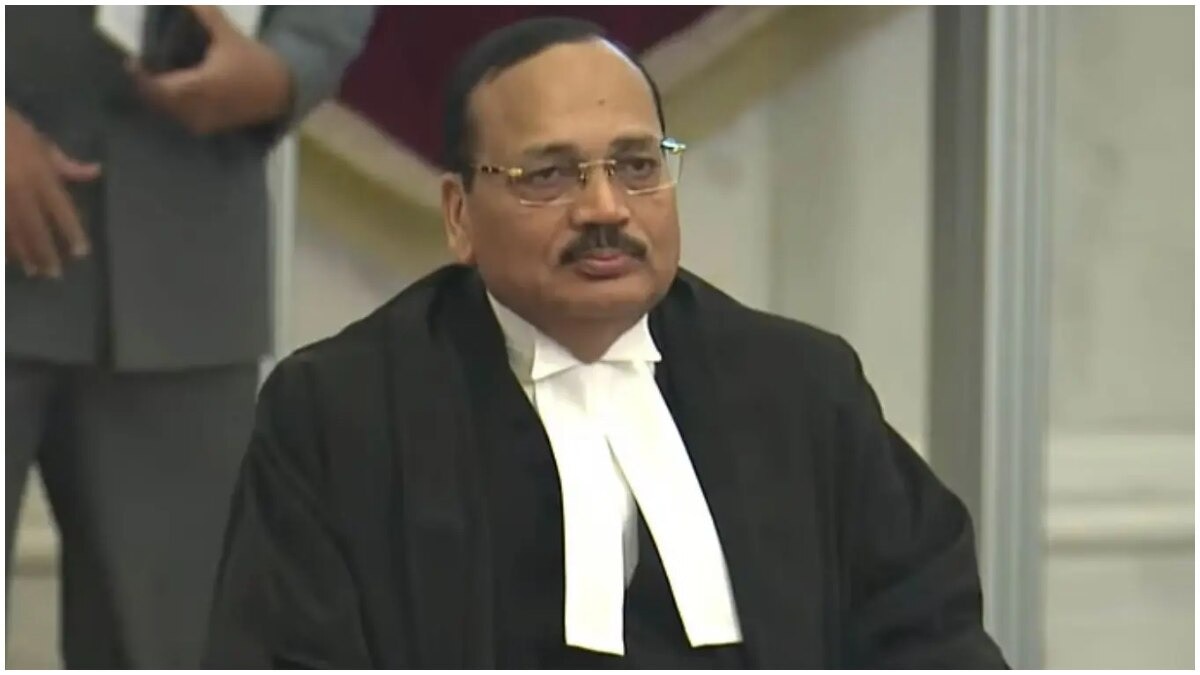
"You're dialling the wrong number. This is the good season for protests and naarebaazi (slogans). You can also do that."
This was Chief Justice of India (CJI) Surya Kant's witty response to a petitioner seeking rotation of Scheduled Caste (SC) and Scheduled Tribe (ST) reserved seats, with the Supreme Court suggesting that the issue should be taken up with lawmakers rather than the judiciary.
"Muster some strength and raise their voice and say that the time is ripe for the legislature to do something," CJI Kant remarked during the hearing, indicating that the court could not intervene in what was essentially a legislative decision.
A bench of the CJI and Justice Joymalya Bagchi later dismissed an appeal challenging the continued reservation of SC/ST constituencies without rotation. The petitioner argued that several constituencies had remained reserved since 1972 and that the absence of rotation had allowed the same three or four families to contest elections repeatedly.
The plea sought periodic rotation of reserved constituencies, citing recommendations made by the Delimitation Commission in its 2008 report. The petitioner contended that keeping constituencies reserved for the same communities over several decades restricted voters' choices and diluted their right to vote.
The bench, however, said the matter fell within the domain of the legislature and constitutional authorities, and could not be addressed through a petition under Article 32.'CANNOT PLAY ROLE OF A THIRD CHAMBER'
Justice Bagchi observed that the reservation of constituencies was a matter for constitutional authorities and the legislature to consider. He said that even if voters had limited choices, their fundamental right to vote was not taken away.
"The option may be limited, but your right to vote is there," he told the petitioner's counsel.
The judge added that the court could strike down a provision or read it down if it found manifest arbitrariness, but could not rewrite constitutional provisions to introduce a rotation mechanism.
"We cannot play the role of a third chamber of Parliament," Justice Bagchi said.
The petitioner argued that the same families had continued to contest from reserved constituencies for decades, effectively limiting electoral choices. The bench responded that voters could take up the issue with their elected representatives and make it an electoral demand.
The CJI suggested that voters could tell their representatives that they would not vote for them unless changes were made to the delimitation and reservation framework.WHY DID THE SUPREME COURT DISMISS PLEA?
The petitioner had challenged Section 9(1)(c) of the Delimitation Act, arguing that SC/ST-reserved constituencies had not been rotated despite recommendations by the Delimitation Commission.
The counsel also referred to the commission's observations on the need to consider rotation of reserved constituencies in local body elections.
The bench said the delimitation guidelines were meant to be followed when the exercise was undertaken and did not require a continuous process of rotation. It added that delimitation was a legislative exercise and not something the court could independently direct.
Justice Bagchi also pointed out that rotation of seats in municipal and panchayat elections was governed by the legislature.
Dismissing the appeal, the Supreme Court said it saw no reason to differ from the High Court's decision, which had held that although rotation could be desirable, the matter fell within the legislature's domain.
The court said reservation of seats in Parliament and state assemblies was essentially a legislative prerogative. It left the petitioner free to approach public representatives and persuade them to implement the rotational principle in accordance with the Delimitation Commission's recommendations.- Ends
Aneesha Mathur is a Special Correspondent for India Today where she puts her LLB degree to use covering Legal issues and cases in the Supreme Court of India, Delhi High court and other courts/tribunals.
Aneesha joined India Today in October 2018. After graduating from St Stephen's College and Faculty of law,Delhi University, she spent the formative years of her career in print Media.
Her interest in journalism stems from experience while interning with Legal services and Juvenile justice board as a law student, where she learnt the importance of ensuring that accurate information reaches the world, and that stories about individual experiences and statistics that show a "bigger picture" must supplement each other so other people can see what the large impact of a small thing can be. When not working or thinking about the law and it's state, Aneesha hides from reality in fantasy novels, rom-coms and food.