Did a bullet crisis hit Indian shooters, cost medal at Asian Games?
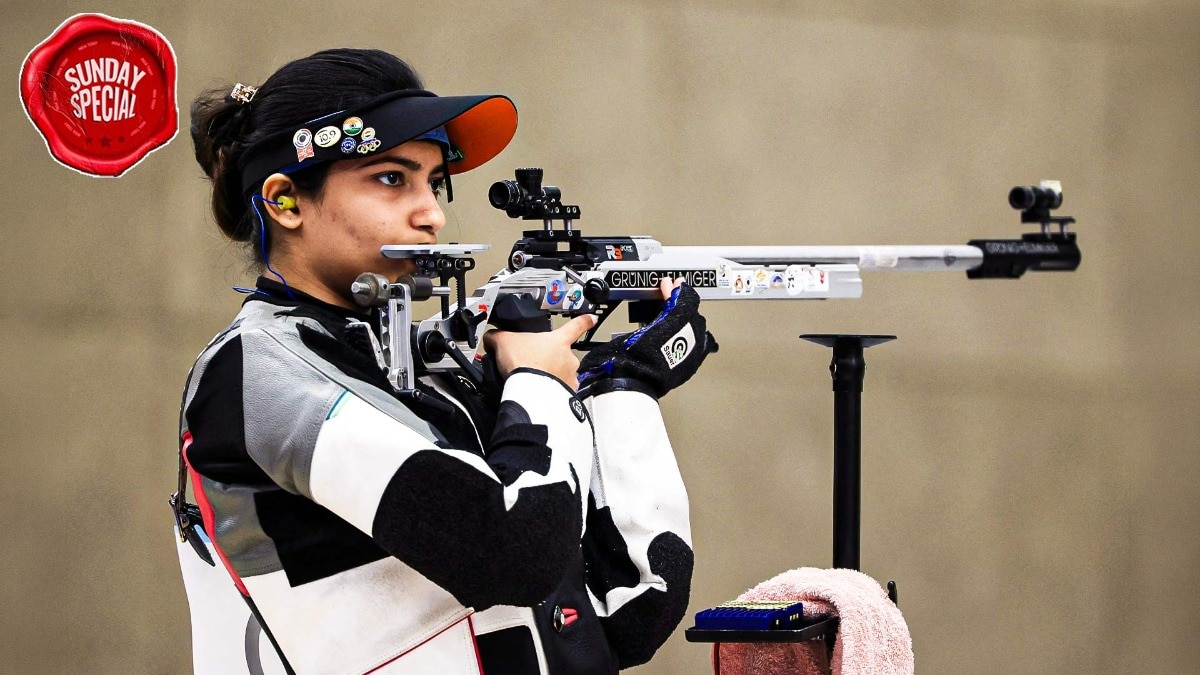
A professional shooter knows the sound of a good shot. After years of training, the gun, the ammunition, and the shooter become a single system. A slight change in the way a shot feels or sounds is enough to make an experienced shooter pause.Indian rifle shooter Ashi Chouksey experienced that uncertainty at the International Shooting Sport Federation (ISSF) World Cup in Hangzhou, China, in July, ahead of the 2026 Asian Games in Japan.During the women's 50m rifle 3 positions event, she suspected something was wrong with her ammunition. Her coach reportedly told her to continue because no alternative stock was available. The ammunition came from stock left over from the Paris 2024 Olympics, according to Sportstar magazine. She finished in 23rd spot and couldn't advance to the eight-shooter final.
At the highest level of shooting, where a millimetre can separate a medal-winning shot from a disappointing finish, ammunition has to be precise and consistent.
While civilian and defence ammunition typically has a shelf life of five years, the same does not apply to competitive shooting ammunition. Factors such as humidity and temperature can affect a bullet's performance, causing rounds to behave unpredictably.
Former international rifle shooter Suma Shirur told India Today Digital that old ammunition is not necessarily bad, and its condition depends on how it is stored. Rapid fire pistol shooter and Olympic medallist Vijay Kumar also emphasised the importance of storage.
"It [the performance of competition ammunition] depends on the kind of ammunition, and how long it has been stored. If you are keeping it in a place with moisture, or if it is not stored properly [as per protocol], it can affect its performance. So, the age of the ammunition and how it has been stored both matter," Kumar told India Today Digital.
At the World Cup in July, ammunition dating back to 2024 might have contributed to the glitch that hurt Chouksey's chances of making to the top eight. That's why shooters prefer fresh ammunition. Two months later, Chouksey bounced back to win a silver medal for India alongside Tilottama Sen and Vidarsa Vinod in the women's 50m rifle 3 positions team event at the Asian Games.The wider supply problem, however, extends beyond the episode at the July event.India Today Digital spoke to international shooters, coaches and a Delhi-based gun dealer to understand the situation better. The dealer said there have been delays in obtaining match-grade .22 ammunition, making it difficult for shooters to practise regularly. There have been ammunition access problems, particularly for shooters outside the elite ranks.
The shortage is so acute that Indian shooters were reportedly carrying year-old .22-calibre ammunition to the Aichi-Nagoya Asian Games in Japan, reported Sportstar, The Hindu Group's sports magazine.
The National Rifle Association of India (NRAI) acknowledged to India Today Digital that there was a period of limited supply of .22-calibre ammunition due to supply-chain constraints arising from the Russia-Ukraine war and the broader geopolitical situation. However, NRAI Secretary-General Pawan Singh refuted the claims made by Sportstar and told India Today Digital, "The required ammunition was made available before the Asian Games and was used and tested by the athletes during their training and competition preparation for the Asian Games."However, this leaves a separate question if earlier supply strains had affected preparations.
A former NRAI official, who requested anonymity, told India Today Digital, "Shooters had practised with older ammunition for the Asian Games."
Incidentally, Indian shooters finished the 2026 Asian Games with 15 medals, comprising three gold, eight silver and four bronze, down from 22 medals, including seven gold, at Hangzhou in 2023. Trap shooter Neeru Dhanda won two of India's three shooting golds at the 2026 Asian Games, one individually and the other alongside Kynan Chenai in the mixed team event. Her discipline, however, uses 12-bore ammunition, while the shortage concerns .22-calibre rounds.
Given the Indian shooting team's modest performance at the 2026 Asian Games this time, one question that needs to be asked is — did the ammunition shortage play a role in the lower medal haul? We try to answer that question in this story. Interviews with international-level shooters and shooting association officials reveal a mixed picture.
India Today Digital asked Olympian Ronjan Sodhi if the ammunition shortage could have affected shooters during training, even if they had access to fresh ammunition for the competition. "Let's celebrate what Neeru has achieved [in trap shooting] in the tournament instead of focussing on the scrutiny," he said, adding that he would need to study the issue first. Sodhi did not respond to subsequent calls from India Today Digital.
The question of performance at the Asian Games comes amid a global shortage of .22-calibre ammunition, in which the Russia-Ukraine war has a part to play. And it's almost ironic that when bullets are being fired in conflicts and wars across the world right now, there is a shortage of them where they are meant for sport — on shooting ranges.Several shooters India Today Digital spoke to explained what goes into match-level precision, why they seek fresh ammunition, and how poor storage and exposure to moisture or extreme temperatures can affect a bullet's performance. They also stressed the importance of shooters getting their preferred ammunition well in advance. A .22-calibre rimfire round's casing being ejected from a sporting rifle after a shot at a precision shooting event. (Image: Getty Images) advertisementA CLOSER LOOK AT .22-CALIBRE ROUND, WHY IT'S SPECIALA .22 Long Rifle (LR) cartridge is a complete round containing a bullet, cartridge case, primer and propellant. Both rifle and pistol shooters use it.
Dating to the late 1800s, .22 LR ammunition is widely used for target shooting and hunting small game. It comes in different grades and loadings. Match-grade ammunition is made with particular emphasis on consistency and accuracy.
"Sports ammunition comes with a specific velocity and power designed around accuracy at 50 metres or 25 metres," Olympic silver medallist in the 25m rapid fire pistol, Honorary Captain of the Indian Army Vijay Kumar, told India Today Digital.
"If you fix a gun at one point and fire a defence ammunition, the bullets will not repeatedly hit exactly the same place. But controlled-velocity ammo [used for shooting sports] is manufactured and measured so that the bullets hit the same place," he added.
This is why Indian elite shooters use imported match ammunition. India produces .22-calibre rounds for civilian and defence use, but ammunition for competitive shooting is mainly imported from Europe. Popular brands include ELEY, Lapua and RWS.
In competitive shooting, .22 LR ammunition is used in several ISSF disciplines, including 25m Pistol, 25m Rapid Fire Pistol and 50m Rifle events, as well as non-Olympic events such as 50m Pistol and 25m Standard Pistol.
Indian shooters have excelled in these disciplines, producing names such as Olympic medallists Vijay Kumar himself, and Gagan Narang, as well as current stars like Manu Bhaker, Anish Bhanwala and Aishwary Pratap Singh Tomar.
The 30-member Indian contingent at the Asian Games competed in rifle, pistol and shotgun events. Of the 28 shooting events, eight used .22-calibre ammunition. India won three medals in those events.
India won seven medals in the 2023 Asian Games in the events to do with .22-calibre ammunition.
The question now is whether the ammunition shortage affected practice and, ultimately, India's medal tally. Let's have a closer look.GUNS AND BULLETS ARE TESTED, MATCHED BEFORE TOURNAMENTSA few basics first. A .22 Long Rifle (LR) cartridge is used by both rifle and pistol shooters. It might look basic, but tiny differences matter in competitive shooting. Competition-grade ammunition stands out for how consistently each round is made and performs.
Take Tenex, a well-known match-grade .22 ammunition range from British manufacturer ELEY. The company says each batch is tested for performance and consistency. The aim is for rounds to travel at similar speeds, follow predictable trajectories, produce similar recoil and hit targets accurately at 25 or 50 metres.
Shooters test different batches with their own rifles and pistols because the same ammunition can perform differently in different guns. For elite or even for normal shooters, obtaining ammunition is therefore only the first step.
"It depends on which rifle the ammunition is best suited to. We extensively test it and go for testing before selecting ammunition," Shirur told India Today Digital.
She pointed to a disadvantage that Indian shooters face. "Most of the ammunition manufacturers are in Europe, so even club-level shooters there can go and get their ammunition tested before buying it. Unfortunately, we don't have that luxury in India," Shirur, a former chief coach of the Indian shooting team, told India Today Digital.
"I completely agree that what we import should be manufactured in India. As shooting grows and the number of players increases, there should be at least one or two companies here producing ammunition to the same standard," 2012 London Olympics silver medallist, Vijay Kumar, told India Today Digital.
"As shooting grows and the number of players increases, there should be at least one or two companies here producing ammunition to the same standard," he added.
Olympian and Arjuna Award winner Anjali Bhagwat said, "Elite shooters did not have a problem [in getting .22 ammunition]." She added, "Normal participants have no access to ammunition." By "normal participants", Bhagwat means shooters who aspire to represent India and win medals at the highest level someday.
Gagandeep Singh, proprietor of Delhi's Sharda Gun House in Ramesh Nagar, revealed that there have been delays of months in deliveries".
"Civilian shops generally don't keep match-grade bullets. But I can tell you that right now, the shortage is such that orders that used to take three to four months now take anywhere between eight and 10 months," Singh, who imports civilian firearms and accessories from Europe and the US, told India Today Digital.
A former NRAI official, who remains active on India's shooting circuit, said delays had affected practice before the Asian Games.
"Shooters have faced difficulties getting new ammunition in the run-up to the [Asian] Games, which affected their practice," the official told India Today Digital.
"Shooters have been practising with old ammunition, which means they might not know whether an error is coming from their technique or the ammunition itself," the former official said, requesting anonymity.
That account raises a concern about confidence and the potential performance of the shooters, for whom the gun and the ammunition are part of their bodies. Each time, each part has to click. A batch of .22-calibre rimfire rounds, the small cartridges widely used in competitive shooting, including several Olympic and Asian Games events. (Image: Getty Images) WHY IS THE WORLD SHORT OF .22-CALIBRE AMMUNITION?
The ammunition industry is facing a wider supply problem. Nitrocellulose, a key raw material used in smokeless propellant, has been identified as a bottleneck for manufacturers in Europe, where major sporting ammunition brands are also based.
The European Commission has identified limited supplies of nitrocellulose and nitroglycerine, both used in propellants, as obstacles to expanding ammunition production. The EU introduced the Act in Support of Ammunition Production (ASAP) in 2023 to increase output, replenish stocks and support supplies to Ukraine, which is at war with Russia.
But manufacturers cannot expand production overnight. The industry needs specialised chemical facilities and equipment. Shortages of raw materials, machinery and other inputs limit how quickly output can grow.
There is another geopolitical layer. China is a major player in supply chains for strategic raw materials and chemicals used in ammunition propellants. In a July 2025 resolution, the European Parliament raised concerns that China's export restrictions on critical raw materials could disrupt European supply chains, including those serving defence industries.
European Parliament records also discuss China's role in supplying Russia with nitrocellulose. A 2024 parliamentary question cited research identifying China as Russia's largest supplier by the end of 2023. This was a finding cited in the question, not an independent determination by the European Parliament.
These records show how war, defence procurement, chemical production and trade restrictions can put pressure on ammunition supply chains. However, they do not establish how far those pressures explain the shortage of match-grade .22 ammunition reported by Indian shooters and dealers.TOP SHOOTERS SAY OLD AMMO ISN'T NECESSARILY BAD
Former rifle shooter Suma Shirur was careful not to label old ammunition as bad or ineffective for competitive shooting.
"You can't generalise it. The condition of a batch of bullets depends on so many factors, like how it's stored, the temperature, the humidity, and many other factors. Yes, a shooter tries to get the same brand or bullet whose behaviour they know, but the bullets being old doesn't mean they are bad. There is some old ammunition that does work. I can't make a general statement on whether it is good or bad," she told India Today Digital.
Olympian Vijay Kumar was also sceptical of making that leap. "I think if somebody is saying this is the reason for my poor performance, that is clearly an excuse," Kumar said. He pointed out that ammunition malfunctions can happen even with newer cartridges.
"In rapid fire [a sport Vijay Kumar masters], malfunctions happen. It depends on your luck, the quality of the gun, how properly it is maintained and how the ammunition is stored."
There is another reason Kumar does not believe the age of a cartridge should automatically become the explanation for a poor result. "A shooter cannot win all the time. An athlete cannot win all the time. If somebody finishes 20th or 30th, they have to come back, work harder and improve their score and consistency," he said.
Old ammunition is not necessarily defective, Kumar underlined.
Proper storage of bullets matters, but neither Shirur nor Kumar consider age of the ammo alone enough to determine whether a cartridge remains suitable.SO, DID OLD AMMO, BULLET CRISIS COST INDIA MEDALS AT ASIAN GAMES?
India won medals in three of the eight shooting events that used .22-calibre ammunition at the 2026 Aichi-Nagoya Asian Games. That makes it difficult to draw a direct line between the ammunition shortage and India's lower medal tally.
As Olympic silver medallist Vijay Kumar pointed out, sport does not always offer a neat explanation for a poor result. An athlete can't win every time. One tournament doesn't tell the full story of an athlete's ability, preparation or performance. "Shooting is a sport where equipment can malfunction. Performance depends on the gun and ammunition working as they should," Kumar said.
But the shortage is still a problem. Shooters outside the elite group are struggling to access match-grade ammunition, while even top shooters used old stocks in the ISSF World Cup held in July. The shortage might not have cost India a medal that can be identified or quantified so easily, but it exposed a bigger weakness in the system.
India's shooting success still depends heavily on imported ammunition, limited testing opportunities, and a global supply chain vulnerable to disruptions that go far beyond the shooting range. For a sport where consistency can come down to tiny differences between rounds, that dependence is a huge vulnerability.- Ends