Did Nani's The Paradise get lost in the Andhra vs Telangana debate?
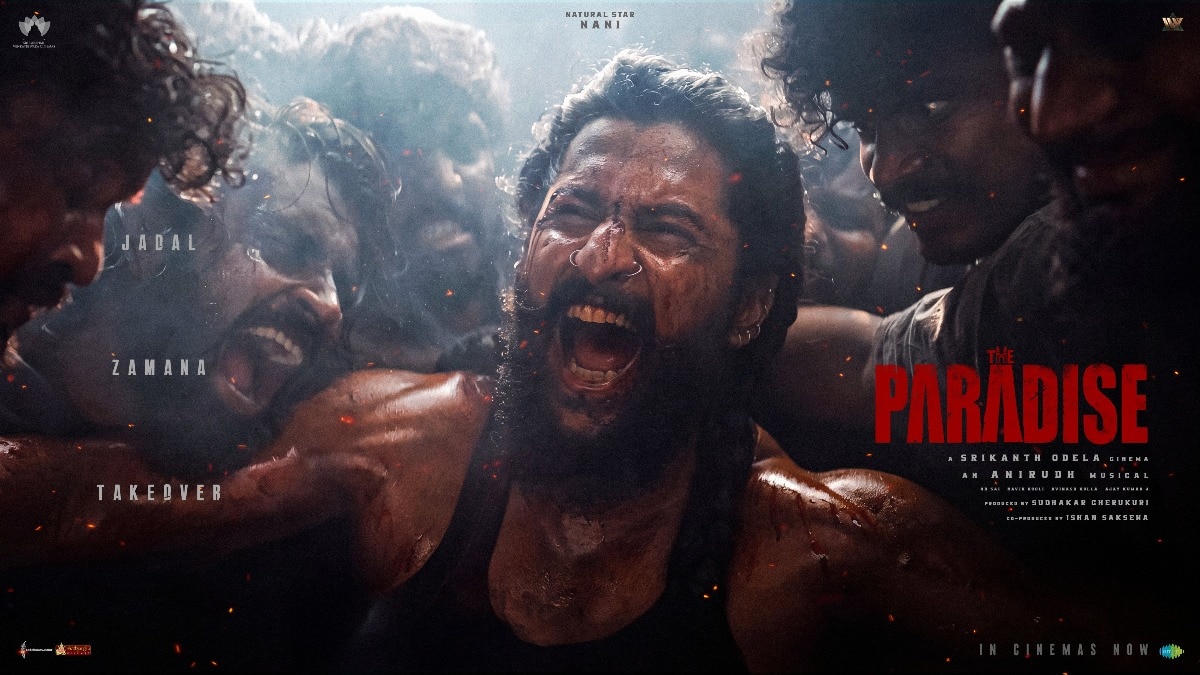
Let's settle on one thing first: Nani's The Paradise is not a perfect film, and anyone who says otherwise isn't helping it. The writing is uneven, several ideas are underdeveloped, and the sound design often works against the film. Anirudh Ravichander's score can swallow the dialogue, leaving some conversations hard to follow.
Nani and director Srikanth Odela have both acknowledged these flaws. Honest criticism is fair, and it is unfortunate that the word 'honest' needs emphasis here. But another conversation became impossible to ignore during the film's run.
The negativity often went beyond good versus bad. The film's Telangana setting, dialect and identity moved to the centre, and a film debate turned into an Andhra versus Telangana argument. The scale of the negativity was far from organic. It had the markings of something orchestrated. Some will wave it away as fan wars or the usual online hostility, and those surely play a part. But the film's performance on the ground tells a different story from the noise online, which is why the regional divide deserves to be named.When Telugu and the Telangana culture became the target
The biggest flashpoint was language. Some viewers genuinely struggled with the Telangana dialect, and that is a legitimate concern. The Paradise does not dilute its Telugu for outsiders. The problem begins when criticism moves from accessibility to the dialect itself.
One post said: 'Telangana language is not cool, bro, please accept it. And especially when Andhra actors try it, it looks far worse. Don't even put Telangana songs in films.' Another: 'I request all Telugu film heroes, directors and producers not to make films in Telangana slang. We Telugu people cannot understand that language and it makes us laugh.'
'I couldn't follow the dialogue because the music was too loud' is technical criticism. 'Don't make films in this dialect' is a verdict on which Telugu deserves the screen. That is where The Paradise touched a much older nerve.
For readers outside Telangana, some context. The state was formed in 2014 and has its own linguistic traditions. Its dialects have long been under-represented in mainstream cinema compared with coastal Andhra speech, particularly from the Krishna and Godavari regions, which is an irony of its own given that the industry sits in Hyderabad.
For decades, Telangana accents went to comic sidekicks, villains, rural characters or anyone meant to seem unsophisticated. Not every film did this, but the pattern was familiar enough to feed the cultural argument behind statehood. So when The Paradise puts Telangana Telugu at the centre of its world instead of using it as a punchline, it means something beyond dialogue. The Pushpa contradiction
Allu Arjun's Pushpa films use the Chittoor dialect, also distinct from the Telugu most audiences hear on screen. Yet the discussion centred on the performance, the world and the commercial appeal. There was criticism, but language was never part of it.
So why did The Paradise become a language war? Perhaps because the dialect wasn't the only thing it foregrounded. Telangana identity itself was. The setting, references, characters, music, politics and imagery build a very specific regional world. For those unfamiliar with it, the film can feel alien. For those who recognise it, the same specificity feels like representation. Both reactions can exist.advertisementDisliking the film is not disloyaltyThe conversation also turned unfair in the opposite direction. Some viewers who criticised the film found themselves accused of disliking Telangana. One post joked: "Telangana people are suddenly becoming Andhras just because they said they did not like The Paradise." Another: "I have been a Telangana resident since birth, but suddenly I am being called an Andhra person just because I said I did not like The Paradise."
That is equally problematic. The film can matter for Telangana representation and still have weak writing. Its cultural specificity can be valuable, while its sound design remains flawed. A viewer can appreciate what Odela is attempting and still feel that the execution does not work. Cinema criticism cannot become a test of regional loyalty. advertisementWhy did it connect so strongly?For many in Telangana, the film felt recognisable rather than generic. It references Paradise, the well-known Secunderabad setting, along with Liberty Theatre and Yakut Mahal, tying its fictional world to the city's physical and cultural history. Its mentions of Sammakka and Sarakka point to the Sammakka-Saralamma tribal festival, which honours the tribal deities and draws huge crowds. These details seem small to an outsider. To someone who grew up around them, they spell recognition.
One viewer put it this way: "As a proud Telanganite, The Paradise gave me an emotional, goosebumps-filled experience. Srikanth Odela has brought the raw grit of our soil to life with authenticity." That cannot be reduced to fan wars.
Odela has been clear about where the film comes from. In a post-release interview, he said: "I have always had a doubt about this. The Telangana I have seen is different from the Telangana that exists today. Anyone can write a story only from the place where they were born and raised. This is my world, and this is the world I can write from." He isn't building a neutral Telangana that everyone will instantly understand. He is writing from the world he knows.advertisementThen there was the KCR appearanceThat world also includes former chief minister K Chandrashekhar Rao, or KCR, through Shankar Anna, a character widely seen as modelled on him. BRS working president KTR praised the film for capturing Telangana's soil, dialect and culture and depicting the struggle of a suppressed community. For supporters of Telangana identity, that recognition mattered. For others, it became another reason to read the film through a partisan lens.The making of Shankar anna @TheParadiseOffl Thank you @FirstShowonline for the video. https://t.co/bBTMdnb1As— Priyadarshi Pulikonda (@Preyadarshe) October 5, 2026
Much of this remains speculation. Some pro-Telangana viewers believe the portrayal of a KCR-like saviour fuelled criticism from sections of Andhra-centric media. Others think it may have alienated supporters of rival parties within Telangana. But there is no clear evidence of an organised political campaign against the film. Political readings, regional tensions and online hostility can all exist without a central conspiracy.Story behind the ultimate rejection of The Paradise
If you followed social media during the release, it was easy to believe The Paradise had been universally rejected. The theatrical story was more complicated. The film ran strongly in the Nizam region, which includes Hyderabad and is one of Telugu cinema's most important markets. One post crowed: "They heckled. Telangana answered at the box office."
The same post also made clear that the film underperformed in the Andhra region. The discourse cannot take all the blame for that, but it is a detail that cannot be ignored either.
Figures in such posts should be treated cautiously, but the larger point stands: the response in theatres did not mirror the hostility online. That doesn't prove every negative review was driven by regional bias. It does suggest the internet wasn't telling the whole story. Did The Paradise get lost in the Andhra vs Telangana debate?
Maybe the question itself is wrong. There was never supposed to be a winner. A film can be flawed and still culturally significant. A viewer can struggle with its dialect without being anti-Telangana. A Telangana viewer can celebrate its representation without pretending every creative choice works. And a film can be criticised without the criticism becoming a referendum on where the viewers or the critics come from.
The most revealing part may be that, even in 2026, a Telugu film speaking unapologetically in a regional dialect can still spark an argument over whether that language belongs in mainstream cinema. That isn't entirely The Paradise's fault, but the film has brought it into the open.
It may have lost some battles as a film. But the conversation it triggered, about who gets to define mainstream Telugu, whose culture gets represented, and whether regional identity can exist on screen without being softened for everyone else, is much bigger than the film itself.- EndsALSO READ | Yeshanagula from The Paradise went global. So why is Telangana Telugu still a joke?
Maruthi Acharya is a passionate multimedia journalist who loves to combine reporting with story-telling. He is a total film-buff and is always ready to go to bat for any originals or their remakes, based on what is his favourite. When he is not writing about entertainment, he entertains by cooking a meal that could feed an army.