Digger star says critics ‘killed’ Tom Cruise movie before it even hit cinemas - The Independent
Want to bookmark your favourite articles and stories to read or reference later? Start your Independent Membership today.
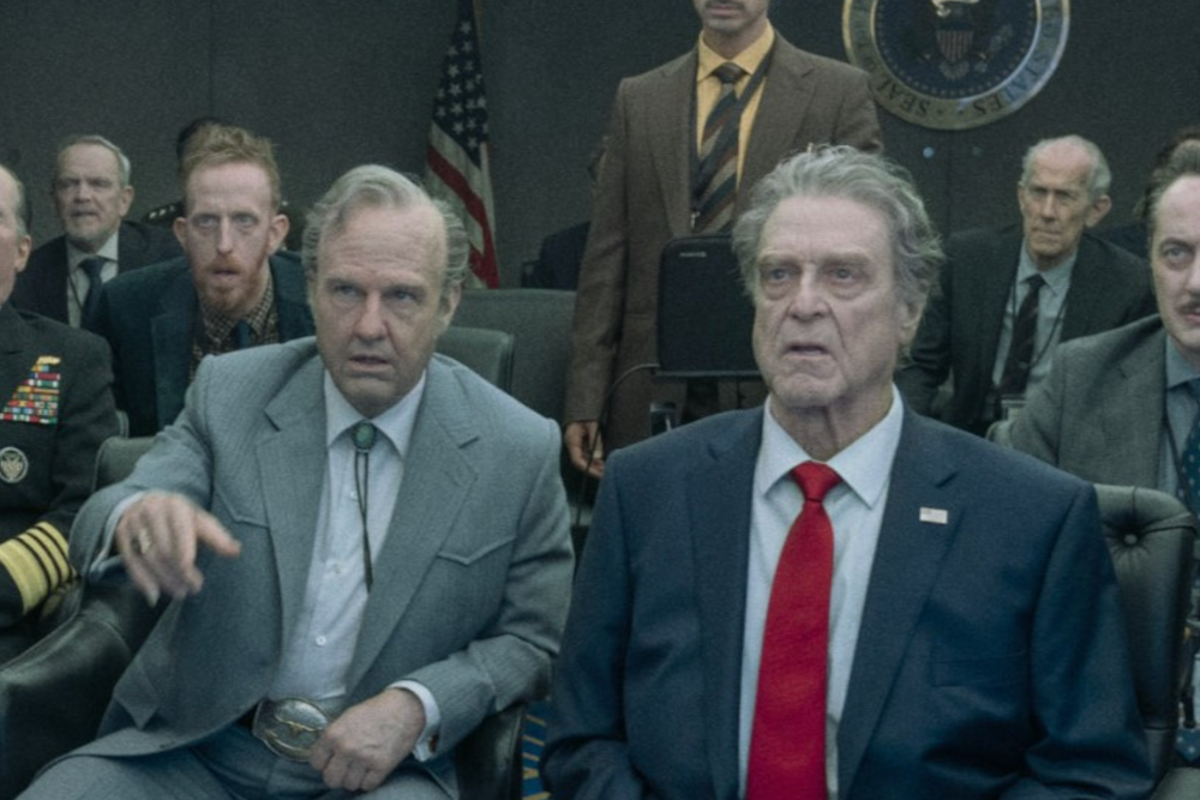
John Goodman has said negative reviews of Digger “kind of killed” the film before it reached cinemas, arguing that the critical response gave audiences a reason to avoid the Tom Cruise-led satire.
Alejandro González Iñárritu’s dark climate-change satire, which stars Cruise as a billionaire oil tycoon whose drilling operation triggers an environmental catastrophe, was released in cinemas on 2 October.
The film, which also features Goodman as the US president and Riz Ahmed as a scientist, received sharply divided reviews, with critics questioning its heavy-handed humour, sprawling narrative, and attempts at political satire.
“People are talking. It hurt. It kinda killed us before we even opened. [The headlines like]: ‘This will only make $5.’ It was good reason for people to avoid it,” Goodman told host Josh Horowitz on the Happy Sad Confused podcast.
“I am proud of it. I had a ball doing it. It was a good six months out of my life. It is a huge swing. It’s going to be around for a long time.”
The Independent’s Clarisse Loughrey wrote in her two-star review of the film that it “arrives, in all its American grotesquerie, with all the force of a light breeze”, while The Guardian’s Peter Bradshaw called it an “exasperatingly shallow, laborious, self-congratulatory satire”.
In an early reaction to the film, The Independent’s Jacob Stolworthy said that Digger took a “big swing that grabbed my attention in a big way”. “Digger is the kind of film that exists entirely on its own merits, and almost dares the audience to dislike it,” he said.
However, The Telegraph’s Robbie Collin gave Digger four stars, describing it as the “most bonkers film of the year”, and Amy Nicholson of The Los Angeles Times wrote that while she didn’t “entirely love this strange comedy, I’m giddy that it’s lurched into existence”.
Digger currently has a 53 per cent Tomatometer score on Rotten Tomatoes, based on around 340 critic reviews, against an audience score of 77 per cent. The film is Iñárritu’s lowest-rated feature on Rotten Tomatoes, falling below Bardo, False Chronicle of a Handful of Truths, which previously held that position at 60 per cent.
Digger has struggled commercially, taking around $47m worldwide against a production budget that reportedly rose to $180m.
Goodman, 74, admitted that he was still “tied to” negative reviews, despite decades in the industry. “Unfortunately I have to say that I am. I have to be very honest. I used to be less so,” he said.
“Maybe I am getting old and pathetic,” he joked and added: “It’s like ‘I put so much into this film, and here you go.’ I am over it now. I am proud I did it.”
However, Goodman said “everything I have done for the Coen Brothers flopped initially… so who cares, man? I still have people coming up to me in the streets asking me about Barton Fink and Big Lebowski”.
The Big Lebowski (1998), in which Goodman played Walter Sobchak, had a similarly modest start.
It made about $48m worldwide against a $15m budget, but its initial reception was mixed, with some critics and audiences unsure what to make of the Coen brothers’ offbeat comedy. It found a much larger audience through home video, repeat viewings, and word of mouth, becoming one of the most recognisable cult films of its era.
Barton Fink (1991) took just $6.2m at the worldwide box office against an estimated production budget of $9m, despite winning the Palme d’Or at Cannes, as well as the awards for best director and best actor.
Ben Affleck criticised the public response to Digger’s commercial failure, saying earlier on the same podcast: “If you punish movies that take risks, guess what you're going to get? A bunch of sh***y homogenised movies.”
Anne Hathaway, Jane Fonda, and Mandy Patinkin have also praised the film, with Patinkin describing it as one of the greatest films he had ever seen. Filmmaker Guillermo del Toro has defended its scale and ambition, calling it “daring, bold, and cinematically complex”.