Digital sovereignty
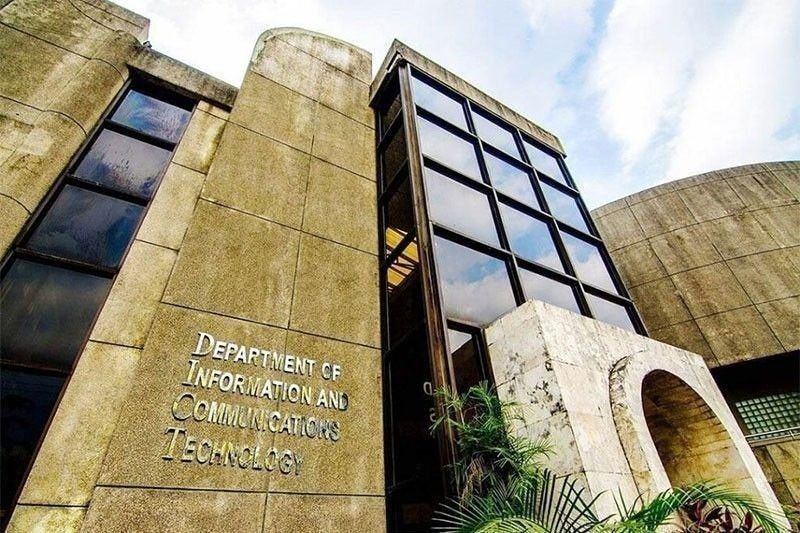
It is hardly surprising that the DICT is struggling to get foreign-based social media platforms to comply with local regulations. Perhaps, this should be a prime topic in the ASEAN summit this month to produce a regional stand.
A single nation trying to negotiate with a $1.4 trillion conglomerate has zero leverage. By aligning regulatory standards with regional neighbors – such as through an ASEAN-wide digital safety framework – their aggregated market size may matter.
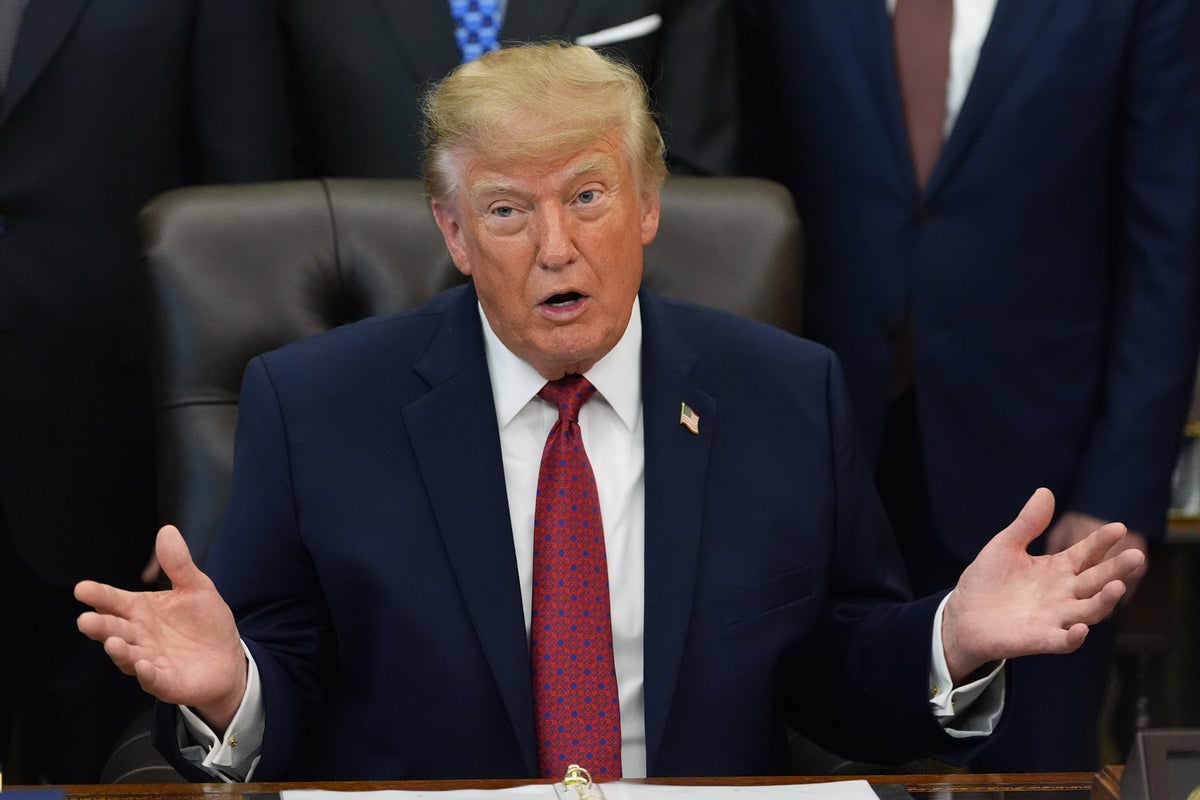
We are not alone. The Economist just reported that “America’s Justice Department intervened to try to save X from paying a €120m ($137m) fine imposed by the European Commission, the EU’s executive arm.
“The social-media platform, which is owned by Elon Musk, an ally of Donald Trump, was found guilty of breaking the bloc’s online safety laws. The DoJ said that the commission “inappropriately attempted to expand its regulatory authority to reach American companies.”
This EU-US case is testing the reality of digital sovereignty. If the EU cannot make a cloud platform backed by the US government pay a multi-million-dollar penalty, then smaller developing nations will have to be extremely creative in protecting their information ecosystems.
The European Commission is prepared to aggressively defend its €120 million ($137 million) penalty against Elon Musk’s X. The EU’s stance is straightforward: if you extract economic value from our citizens, you are within our jurisdiction, cloud or no cloud.
But the intervention of the US DoJ, basically an attempt of the Trump administration to shield American Big Tech, directly attacks EU’s premise.
Assistant attorney general Brett Shumate argued that the EU “inappropriately attempted to expand its regulatory authority to reach American companies not present or operating within its jurisdiction.”
If the EU wins this case in its General Court, it cements a global precedent: the cloud does not grant immunity. If the EU loses, it proves exactly that sovereign nations have structurally lost the ability to police foreign digital infrastructure.
Since the “Big Tech” companies in social media are American, trying to enforce our rules on them brings us up against Trump himself as he has emerged as their great defender. Have the DICT and Congress considered this?
Even without Trump, Meta can afford to walk away from the Philippines since we only account for one percent of its global revenues. Meta also knows that losing Facebook will deeply anger roughly 98 million Filipinos using it. Our politicians will beg Meta to come back.
We lost our digital sovereignty because foreign tech platforms constitute our critical national communication infrastructure. Facebook isn’t just an app; it is our primary communication system for news, businesses and government announcements.
Indeed, digital technology has made our current Constitution pathetically outdated and irrelevant. The framers required Filipino ownership of media and even advertising agencies because they said they didn’t want foreign influence on how our public opinion is formed. That’s no longer technically possible unless we impose something like China’s Great Firewall.
Of course we don’t want that. Indeed, foreign independence from the whims of our local politicians is good for our democracy.
During the martial law era, we depended on foreign news stories faxed into the country and xeroxed for us to know the unblemished truth of what’s happening. The daily newspapers of that time were required to clear their content with Malacañang before they could roll their presses.
At least with cloud-based social media, every Filipino can be a publisher who is free to express his views and even to make a fool of himself. It is admittedly messy with all the fake news going around but that’s better than our experience with the Malacañang censors.
Because tech giants are structurally insulated in the cloud, nations deeply dependent on their platforms need well-thought strategic responses to get their respect.
Big tech billionaires never personally respond to legislative summonses from foreign parliaments or congresses. They make the legal claim that foreign governments lack extraterritorial jurisdiction to compel US citizens sitting on US soil to travel and testify.
Mark Zuckerberg may be beyond the subpoena powers of Congress but the Filipino advertisers on Facebook are not. The government may not be able to politically afford to block Facebook but it can heavily penalize the domestic revenue pipeline that feeds it without risking a devastating digital blackout.
For example, the government can use the BIR to do aggressive corporate tax audits on local ad spending routed to foreign tech firms. It can also hold corporate advertisers legally co-responsible if their ads appear next to unchecked, harmful disinformation or child exploitation material.
This shifts the pressure. Instead of the government fighting Meta directly, the country’s largest corporations and advertisers will demand that Meta fix its platform safety to protect the advertisers’ own domestic business interests.
Similarly, if the government cannot tax or fine Meta directly, it can heavily penalize or tax domestic companies that purchase ads on non-compliant platforms. If a local bank or fast-food chain faces massive financial audits for routing ad money to a non-compliant foreign cloud entity, the domestic money supply fueling Meta dries up from the inside.
If Meta refuses a franchise, as it likely would, blocking it outright is politically problematic. Instead, the government can legally mandate that local telecom companies stop offering free data for Meta access. Once users must pay for access, its utility as the “default internet” may begin to fracture.
The attempt to force the socmed platforms to appoint local representatives is how digital migrants think. Digital natives know that when a platform chooses to operate entirely in the cloud without a local legal presence, domestic laws including requiring franchises lose their teeth.
Congress is supposedly pushing to require a franchise for social media platforms including the foreign cloud-based ones. Perhaps they should think first if it could be implemented. Baka mapahiya lang tayo.
Boo Chanco’s email address is [email protected]. Follow him on X @boochancio
abtestabtest GCash to undergo system maintenance on Oct. 1-2 By Renalyn Ramirez | 7 hours ago Bank transfers, cash-ins via InstaPay and payments via QRPH will be unavailable starting late Thursday night. Business ABS-CBN shareholders OK P6 billion placement By Elijah Felice Rosales | 1 day ago Media giant ABS-CBN Corp. has received a P6-billion placement from the Lopez family and its new investor, increasing the company’s... Business EPIRA at 25: The distribution utilities By Bienvenido Oplas Jr. | 1 day ago The Electric Power Industry Reform Act of 2001 (EPIRA, RA 9136) turned 25 years old this year. I wrote a three-parts series... Business ACEN takes in Dutch partner for solar project in India By Brix Lelis | 1 day ago Zobel-led ACEN Corp. is partnering with Netherlands-based Diamond India Renewables One B.V. for yet another solar power... Business Building tomorrow’s power grid By Joe Zaldarriaga | 1 day ago After 25 years, the Electric Power Industry Reform Act of 2001is back in the spotlight. The Philippines’ top energy... Business Latest More in Business Bank lending growth reaches 3-month high GCash IPO price set at P6.6/share Market falters anew, extends losing streak Factory activity contracts in September abtest PAL to resume Saipan flights By Elijah Felice Rosales | 56 minutes ago Flag carrier Philippine Airlines is betting against rising airfares, as it is set to restore direct flights to Saipan,... Business Pryce exits pharma, focuses on gas business By Brix Lelis | 56 minutes ago Pryce Corp. is exiting the pharmaceutical business to sharpen its focus on core operations, including the importation and... Business Philippines carbon emissions keep rising – CCC By Brix Lelis | 56 minutes ago Even as Filipino businesses become more operationally efficient, the country’s carbon emissions continue to rise, according... Business GSIS solar loans now available to pensioners By Aubrey Rose Inosante | 56 minutes ago The Government Service Insurance System opens its solar energy loan to qualified pensioners, allowing them to borrow... Business Meat importers oppose pork tariff hike By Adrian Kenneth Halili | 56 minutes ago Meat importers have warned that pork prices could rise if the government imposes higher tariff on pork meat. Business Recommended Lacson dismisses Cayetano’s mockery 1 day ago Sen. Panfilo Lacson brushed off Minority Leader Alan Peter Cayetano’s recent statements labeling him as the Senate’s... BusinessALAN PETER CAYETANOLACSON SC junks petitions vs lower impeach vote to convict 1 day ago The Supreme Court has junked the three petitions challenging the ruling of the Senate impeachment court that allowed a lower... BusinessSARA VP Sara spokesmen patch things up 1 day ago he misunderstanding between Vice President Sara Duterte’s spokesman Paolo Panelo and defense panel spokesman Michael... BusinessSARA DUTERTE SC dismisses petitions vs vote threshold in Sara Duterte impeachment trial 1 day ago The Supreme Court has dismissed separate petitions challenging the Senate Impeachment Court’s interpretation of the... BusinessIMPEACHMENTSARA DUTERTESARA DUTERTE'S IMPEACHMENT Dizon denies cover-up in Taguig flood control probe: 'We'll go where evidence leads us' 1 day ago Public Works Secretary Vince Dizon has vowed "no cover-up" in his department's probe into Taguig’s flood... BusinessDIZONDPWHTAGUIG next Recommended Lacson dismisses Cayetano’s mockery Sen. Panfilo Lacson brushed off Minority Leader Alan Peter Cayetano’s recent statements labeling him as the Senate’s “chief justice” and “prosecutor,” saying he would have taken the titles as a compliment if they came from a credible source. 1 day ago ALAN PETER CAYETANO LACSON SC junks petitions vs lower impeach vote to convict The Supreme Court has junked the three petitions challenging the ruling of the Senate impeachment court that allowed a lower number of votes to convict Vice President Sara Duterte. 1 day ago SARA VP Sara spokesmen patch things up he misunderstanding between Vice President Sara Duterte’s spokesman Paolo Panelo and defense panel spokesman Michael Poa has been resolved. 1 day ago SARA DUTERTE SC dismisses petitions vs vote threshold in Sara Duterte impeachment trial The Supreme Court has dismissed separate petitions challenging the Senate Impeachment Court’s interpretation of the two-thirds vote requirement needed to convict Vice President Sara Duterte. 1 day ago IMPEACHMENT SARA DUTERTE SARA DUTERTE'S IMPEACHMENT Dizon denies cover-up in Taguig flood control probe: 'We'll go where evidence leads us' Public Works Secretary Vince Dizon has vowed "no cover-up" in his department's probe into Taguig’s flood control works, an attempt to clear the air after his answer at a Senate hearing was construed as a clearance for the Cayetano stronghold. 1 day ago DIZON DPWH TAGUIG OK Are you sure you want to log out? Yes No X Login Philstar.com is one of the most vibrant, opinionated, discerning communities of readers on cyberspace. With your meaningful insights, help shape the stories that can shape the country. Sign up now!
Related Coverage in Politics