
Does BJP's Rajasthan urban poll results show a shift in its loyal voter base?
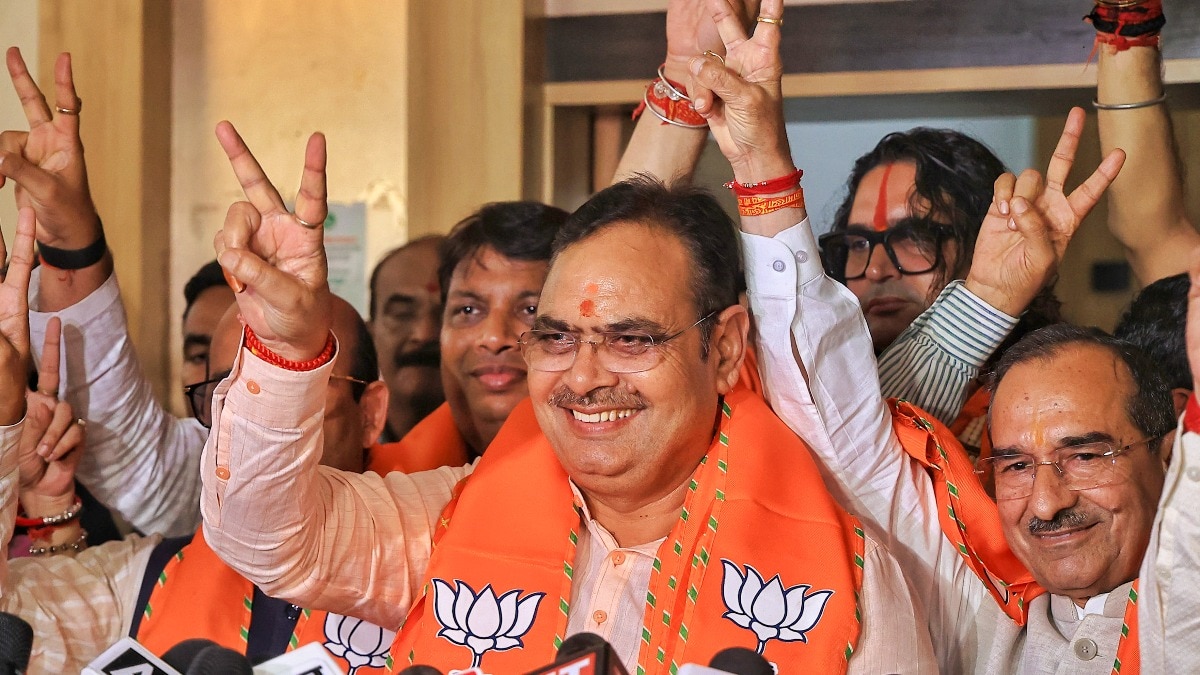
The BJP has won Rajasthan's urban local body elections, securing 4,179 of the 10,235 declared wards, against the Congress's 3,613. The BJP's seat share also rose from 35.7% in the previous election cycle (2019 to 2021) to 40.8%, while the Congress slipped from 40.7% to 35.3%. PM Narendra Modi called it "proof of the victory of truth over the echo of falsehood." However, the BJP's victory in the cities and towns in Rajasthan might be masking deeper trouble for the saffron party.
The win also exposes discontent within sections of the BJP's traditionally loyal urban electorate. This was not the kind of sweeping civic victory that an incumbent government backed by a formidable urban organisation would have expected.
While the BJP's victory lies in its victories in a large number of wards and its lead over the Congress, the warning signs are clearly visible in the municipal corporations in the districts of Bharatpur, Pali, Ajmer, Bikaner, Jodhpur and Alwar, where the party failed to secure a majority.
All the seven corresponding Lok Sabha seats went to the BJP in the 2024 General Elections. Several of them are BJP strongholds and are associated with the party's most prominent leaders, including that of Rajasthan CM Bhajan Lal Sharma, state BJP president Madan Rathore, former CM and BJP national vice-president Vasundhara Raje and Union ministers Arjun Ram Meghwal, Gajendra Singh Shekhawat, Bhupender Yadav and Bhagirath Choudhary.
Independents, meanwhile, won 2,273 wards, but their share remained virtually unchanged at 22.2%, compared with 22.4% in the 2019-21 election cycle.
So, the poll results point not to an abandonment of the BJP by its traditionally loyal urban voter base, but to worrying cracks in it.
The BJP's urban constituency, built from the Jana Sangh era and consolidated by the BJP from the 1980s onward, has included traders, shopkeepers, Bania-Vaishya and Jain communities, sections of the salaried middle class and voters connected to the RSS network in Rajasthan. Their support has helped make Rajasthan's cities BJP strongholds, even when the party has faced attacks in rural constituencies.
Polling for 309 urban local bodies in Rajasthan was conducted on September 9 and 11. The previous cycle stretched over four rounds between November 2019 and January 2021. A direct comparison of the two contests is complicated as delimitation before the 2026 polls added 2,770 wards. Nevertheless, the BJP's rise from 2,666 of 7,474 wards to 4,179 of 10,235 declared wards represents a five-percentage-point improvement in seat share. The Congress's seat share fell by approximately the same number.BJP WON, BUT IT'S NOT AN USUAL SWEEP
Urban Rajasthan has traditionally provided the BJP with a dependable political base. Traders, shopkeepers, the salaried middle-class and sections of the Bania-Vaishya, Jain and other "upper-caste" communities. The BJP's organisational network, ideological appeal and reputation as the natural party of urban Hindu voters have generally helped it withstand local dissatisfaction.
There is, however, no caste-wise post-poll survey establishing that these communities shifted away from the BJP in 2026. A defensible conclusion is that loyalties have weakened selectively, depending on the candidate, performance of local administration, conditions of civic infrastructure and equations concerning factional.
The BJP secured 40.8% of the declared wards, but its vote-share lead over Congress was just 0.94 percentage points. It won clear majorities in urban local bodies in Jaipur, Kota, Udaipur and Bhilwara, but only four of the 10 municipal corporations. Meanwhile, the Congress won Bikaner, which saw a massive mobilisation against the BJP, led by Shri Karni Sena, over the now-stayed UGC caste-equity norms. The BJP displaced the Congress as Rajasthan's leading urban force in elections held simultaneously across 309 local bodies, unlike the previous polls spread from 2019 to 2021. advertisementREBELLION IN BJP, CONG LED TO INDEPENDENTS CONTESTINGIndependents have captured Bharatpur (Rajasthan CM Bhajan Lal's home turf) while Municipal Corporation polls in major cities like Ajmer, Alwar, Jodhpur and Pali produced fractured verdicts. The picture becomes clearer when the results of these politically significant corporations are examined individually.
In Bharatpur, Independents won 36 of 65 wards, securing an outright majority, while the BJP managed 20 and Congress seven. The result points to a powerful local rebellion, and, because of the optics involved, a BJP defeat here appears to be politically more damaging than an ordinary setback in a municipal election.
"Bharatpur is one region where people often do not take the Congress or BJP symbol and contest as Independents. Therefore, Bharatpur should not be assessed strictly through the Congress-BJP binary," said Sharat Kumar, Rajasthan Bureau Chief of the India Today Group, in a YouTube broadcast.
Congress was in power in Bharatpur. In 2019, after it had won only 18 of 65 wards, it managed to form the board with support from Independents and BSP councillors.
It must be noted that news agency PTI, before the polls, reported widespread unrest in both the BJP and Congress over ticket distribution. Several aspirants denied tickets by the two parties, entered the contest as Independents.advertisementBJP LOSS BASTIONS OF STATE CHIEF, FORMER CM VASUNDHARA RAJEIn Pali, the Congress won 29 wards, the BJP 21 and the Independents 15. Pali is associated with BJP state president Madan Rathore. The party's inability to emerge as the largest force here raises questions about ticket distribution, local leadership and organisational cohesion.
In Jhalawar, the Congress won 29 of the 45 Municipal Council wards, against the BJP's 13. Jhalawar is the political stronghold of former CM Vasundhara Raje, although the BJP retained the separate Jhalrapatan municipality. The result suggests that the BJP label alone could not overcome local anti-incumbency. The BJP secured majorities in four of Rajasthan's 10 Municipal Corporations, but fractured verdicts in four others left Independents crucial to board formation.
"Vasundhara Raje's supporters are influential in several constituencies, and the BJP lost in some urban areas where leaders connected to her on caste or personal grounds held sway...," said Sharat Kumar of Rajasthan Tak, India Today Digital's sister portal.
In Ajmer too, the Congress emerged as the largest party with 37 of 80 wards, followed by BJP with 32 and Independents with 11. Ajmer has long had a strong BJP-RSS presence and was controlled by the BJP previously. The loss in Ajmer could also be attributed to former BJP mayor Dharmendra Gehlot's rebellion, which might have hit the party's local calculations. Rajasthan Tak's Sharat Kumar also said that "the BJP performed poorly in areas associated with women and child development minister and South Ajmer MLA, Anita Bhadel, who is considered close to Vasundhara Raje."
In Jodhpur, the BJP and Congress finished level with 44 wards each, leaving Independents decisive in board formation. The BJP emerged as the largest party in Alwar but fell short of a majority. The inconclusive verdicts carry wider political significance because Jodhpur and Alwar are associated with Union ministers Gajendra Singh Shekhawat and Bhupender Yadav, respectively, making them notable setbacks for the BJP in the strongholds of its senior leaders.
Rajasthan Tak's Kumar linked the BJP's underwhelming performances in Jodhpur and Alwar to dissatisfaction with the Union ministers associated with the two seats. He, however, stressed that the Congress failed to capitalise on it.
"Gajendra Singh Shekhawat worked hard, but could neither secure a clear majority in Pokhran nor settle the contest in Jodhpur. There is considerable resentment against Bhupender Yadav in Alwar, but why did Independents benefit from it and not Congress? That is something Congress must think about," said Sharat Kumar.DID KARNI SENA'S PROTEST AGAINST UGC EQUITY NORMS DENY BJP VOTES?
In Bikaner, the Congress secured a majority with 42 of 80 wards, while the BJP remained far behind. The city is associated with Union minister Arjun Ram Meghwal and has had a BJP-controlled corporation. It must be noted that the Rajput-centric Shri Rajput Karni Sena had mobilised against the UGC's 2026 caste-equity regulations. The group had also vowed not to vote for the BJP.
After the poll results, Karni Sena chief Mahipal Singh Makrana claimed that its Swarna Nyay Manch had supported more than 1,500 Independents and that the campaign contributed to the BJP's Bikaner setback, according to a report in The Times of India. However, the BJP has disputed this interpretation, and argued that Independents have traditionally performed strongly in Rajasthan's municipal elections and that their success could not be attributed to the Sena campaign. Shri Karni Sena leader Mahipal Singh Makrana congratulated people who opposed the UGC caste-equity rules. He claimed that those votes shaped the civic poll verdict and warned of further protests unless the rules were fully withdrawn. ROADS, DRAINS AND REBELS MATTERED TOO. CJP ALSO A FACTOR?
The urban elections came amid mounting complaints over Rajasthan's civic mess, repeatedly highlighted by whistle-blowers such as Khurpench and reflected in reports of broken roads, waterlogging, overflowing drains, garbage piles and unreliable municipal services.
The timing of the polls added to the BJP's challenge. The polls took place during the monsoon, when these failures were difficult to conceal. Unlike Assembly or Lok Sabha elections, civic contests are local, and voters can judge a party by the councillor, the drain and street outside their homes before considering its ideological message.
"The BJP went into the election when roads in the big cities were broken, drains were overflowing and garbage had accumulated," said Sharat Kumar. He argued that the party survived the discontent because its cadre, senior leaders and organisation worked collectively.
Ticket denial also produced many rebels. Many ran as Independents and offered traditional BJP voters a way to punish the official candidate without voting for Congress. This helps explain Bharatpur and several other hung civic bodies. This, however, does not establish a statewide independence wave. Independents won 22.21% of declared wards this time, almost identical to their 22.36% share during the 2019-21 urban body poll cycle.While the CJP's "School Theek Karo" campaign amplified youth anger over crumbling government schools before polling, with the Rajasthan government subsequently announcing a three-year, Rs 12,500-crore infrastructure plan.After the results, the CJP cited the BJP's setback in Bharatpur, CM Bhajan Lal Sharma's home district, while warning that neglecting education and employment could further hurt the party.
Sharat Kumar also pointed to frustration among sections of the OBC electorate, including Kumawat candidates who contested and won as Independents. The Kumawats, often grouped with Kumhar-Prajapats, are an OBC community, with a notable presence in Jaipur and across the Ajmer, Bhilwara, Nagaur, Sikar and Pali belts.
Kumar also warned that the BJP could not treat "original OBC" communities as a permanent vote bank without providing political representation.
Before the polls, the Rajasthan OBC Commission's survey triggered pushback from Jat and Gurjar organisations, which alleged that the government had released selective data while withholding the full report on political representation. The controversy, coupled with complaints of inadequate representation among communities such as the Kumawats, could have weakened the BJP's hold over sections of its OBC base. In July, a section of Jaipur's main Tonk Road caved in after a few hours of rainfall, creating a large crater and disrupting traffic movement. RISE OF AAP, RLP AT CONGRESS'S EXPENSE?
Interestingly, the BJP's setbacks did not translate into decisive gains for Congress. Instead, smaller parties and Independents captured the space created by dissatisfaction with the ruling party in several pockets. The AAP won 42 wards, including 31 of 60 in Baran Municipal Council, ending Congress's 15-year control of the body. The CPI(M), meanwhile, captured 29 of Nokha's 45 wards, while the Nagaur MP Hanuman Beniwal-led RLP increased its tally from 14 wards in the 2019-21 cycle to 63 this time.
The RLP's gains were largely in central-western Rajasthan, where its leader Hanuman Beniwal commands support among sections of the Jat electorate. While this aided in the RLP's win in the region, the factor could have adversely affected the BJP. Hanuman Beniwal founded the Jat-focused RLP in 2018, which won three Rajasthan Assembly seats that year but fell to one in 2023. Beniwal himself won Nagaur in the 2019 and 2024 Lok Sabha elections. The party lost its Khinvsar seat in the 2024 bypoll but showed renewed local strength by winning 63 wards in the 2026 urban elections. (File)
One must remember that Rajasthan's Jats had joined the community from Punjab, Haryana and western Uttar Pradesh in farmers' protests. They have also demanded a central OBC status. A demand for a separate Jat Regiment has also sustained political discontent within sections of the community in Rajasthan. These factors and the emergence of Beniwal and the RLP could have impacted the BJP's performance in the region.
"Jats are not a fixed vote bank. They look at who will stand with them and support the strongest local leader," said Sharat Kumar of Rajasthan Tak.
The verdict from Rajasthan's cities and towns may not yet amount to a realignment of voters. But the BJP's handling of civic failures, unpopular candidates, internal factionalism and demands for representation from caste groups appear to have made sections of its support base more willing to consider alternatives. The Congress, however, failed to harness that unease, allowing AAP, the RLP, CPI(M) and Independents to gain ground in several important pockets that are politically important to the BJP.- EndsPublished By: Sushim MukulPublished On: Sep 16, 2026 07:00 IST


