Donald Trump Strikes New Drug Price Deal as Democrats Eye Midterm Gains - Newsweek
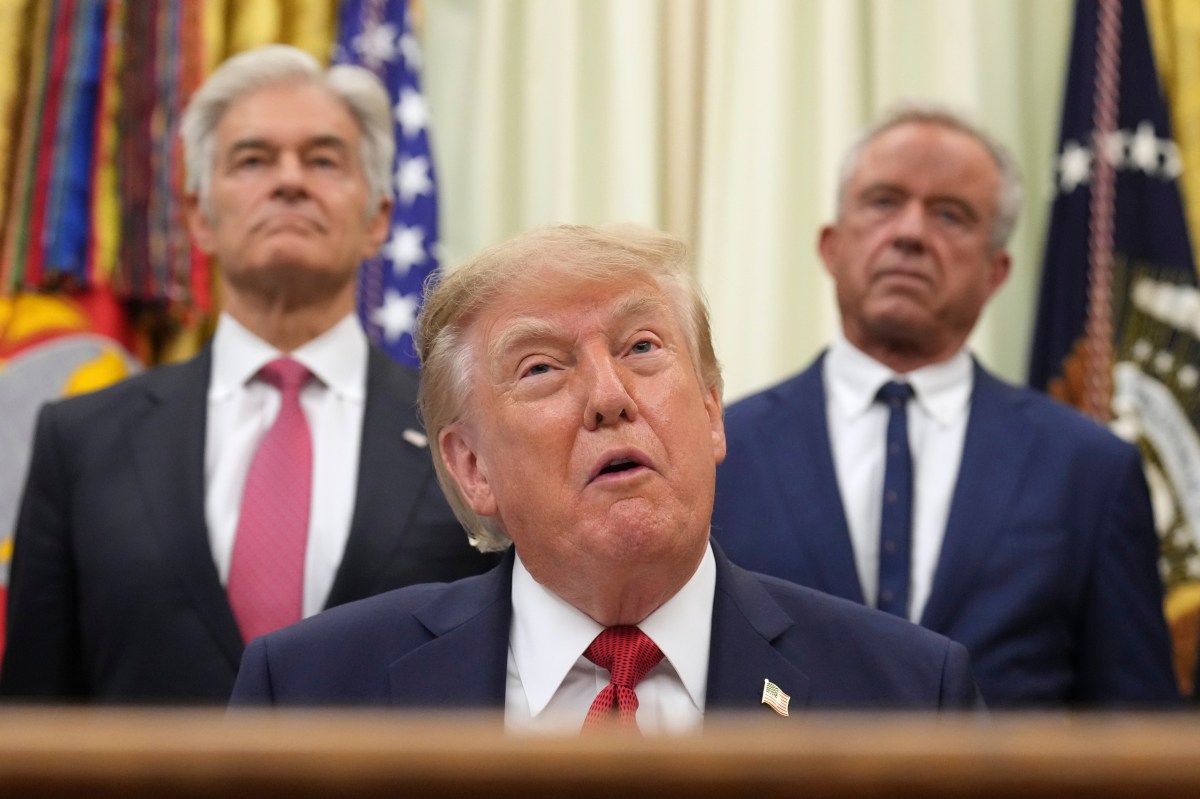
President Donald Trump announced Friday that all 50 states will participate in the administration's Medicaid GENEROUS drug-pricing model, a program that aims to lower what Medicaid pays for certain prescription medicines through an international reference-pricing system.
The announcement gives Republicans a new healthcare policy achievement to promote as Democrats seek to make healthcare affordability, Medicare and prescription drug costs key issues in November's midterm elections.
"This one thing alone should win us the midterms. It won’t, because the press doesn’t report it,” Trump told reporters in the Oval Office.
The initiative could reduce pharmaceutical spending for state and federal Medicaid programs through new manufacturer rebates, though analysts say the actual level of savings will depend on which drugs and manufacturers ultimately participate.
According to the White House, the nationwide rollout marks a major expansion of Trump's "Most Favored Nation" (MFN) drug-pricing agenda, which seeks to reduce the gap between U.S. prescription drug costs and prices paid in other developed countries.
The GENEROUS model, short for "GENErating cost Reductions fOr U.S. Medicaid," operates through the existing Medicaid Drug Rebate Program and allows the Centers for Medicare & Medicaid Services (CMS) to negotiate supplemental rebate agreements with participating pharmaceutical manufacturers.
Under the model, CMS calculates an MFN price for participating drugs using manufacturer-reported pricing data from eight countries: the United Kingdom, France, Germany, Italy, Canada, Japan, Denmark and Switzerland. The benchmark is based on the second-lowest net international price after rebates and discounts and is adjusted using purchasing-power-parity measures. CMS then negotiates supplemental rebates intended to bring Medicaid's net price down to that level.
Unlike commercial drug pricing, which is negotiated primarily within the U.S. market among insurers, pharmacy benefit managers and manufacturers, the GENEROUS model explicitly incorporates international price benchmarks to determine a target Medicaid net price.
The program focuses on brand-name drugs, including single-source and innovator multiple-source medicines. States can choose which eligible drugs they want covered under the model but must adopt standardized coverage criteria negotiated by CMS and manufacturers, including utilization-management tools such as prior authorization or step therapy.
The five-year model launched in January and was initially voluntary for both states and manufacturers. Friday's announcement means every state Medicaid program has now agreed to participate.
The White House has argued that broader MFN drug-pricing initiatives could save taxpayers billions of dollars over the next decade. A White House analysis previously estimated that a Medicaid MFN framework could save approximately $64.3 billion over 10 years.
“Every state will have the ability to use those extra billions of dollars to invest in other healthcare improvements or something else,” Trump said Friday.
However, health policy researchers say it remains difficult to determine whether those estimates will be achieved because several important variables remain unknown. According to KFF, an independent, nonpartisan nonprofit focused on health policy, savings will depend heavily on which manufacturers participate, what drugs are included, the size of existing Medicaid rebates and confidential international pricing information that is not publicly available.
KFF also notes that Medicaid, the joint federal-state health insurance program for low-income Americans, already receives some of the deepest prescription-drug discounts in the U.S. healthcare system. Its analysis found that rebates reduced gross Medicaid prescription-drug spending by an average of 53 percent between fiscal years 2019 and 2024. A separate MACPAC analysis found rebates reduced spending on brand-name drugs by 62 percent in fiscal year 2020.
That means the program's impact could vary significantly from drug-to-drug. Newer medicines with limited competition may generate meaningful additional savings if they currently receive relatively small rebates. Other drugs may already receive such large Medicaid rebates that additional savings under the GENEROUS model could be limited.
The announcement comes as healthcare continues to rank among the issues voters say will influence their decisions in November's elections.
A January KFF Health Tracking Poll found that 66 percent of Americans worry about being able to afford healthcare for themselves or their families, while 55 percent said their healthcare costs had increased over the previous year. The survey also found Democrats held a 13-point advantage over Republicans on which party voters trusted more to handle healthcare costs.
At the same time, prescription drug prices appear to be one of the few healthcare issues where Republicans have narrowed the gap. KFF found voters were nearly evenly divided on which party they trusted more to address prescription drug prices, with 35 percent choosing Democrats and 30 percent selecting Republicans.
Healthcare has been central to Democratic messaging throughout the 2026 cycle, particularly in competitive House and Senate races. A recent New York Times/Siena University poll found Democrats held a 60 percent to 36 percent advantage over Republicans on healthcare.
Natalie Baldassarre, national press secretary for the Republican National Committee, responded to the poll, telling Newsweek this week that Democratic candidates “are in an all-out leftward lurch to see who can be the most extreme.”
“Meanwhile, Republicans have lowered drug prices, secured out the border, created jobs, and cut taxes. Republicans will continue highlight these achievements and contrast them with Nancy Pelosi and Chuck Schumer’s plans to strip Americans of their safety, sanity, and freedom,” she said.
Newsweek has reached out to the Democratic National Committee via email for comment on Friday.
Republicans are likely to frame the all-50-state Medicaid agreement as evidence that the administration is acting on one of voters' most persistent affordability concerns.
Trump touted the program's universal adoption, saying "every single state" signed on after some governors initially questioned whether the administration's savings claims were genuine. "They all signed up quickly," Trump said, arguing the initiative is already lowering healthcare costs for states, though researchers have said the magnitude of any savings will depend on factors that remain uncertain.
Prescription drug prices have traditionally been an area of strength for Democrats. Republicans, meanwhile, face the task of persuading voters that projected government savings from the GENEROUS model will ultimately lead to lower healthcare costs and greater affordability.
“Health care is intensely personal,” Michael Fahey, CEO of Fahey Communications and a political strategy expert, told Newsweek this week. “If voters hear reform and think lower costs or greater access, that can be attractive. If they hear reform and think losing their current insurance, changing doctors or handing over control of a system they already know, the politics change very quickly.”
Arkansas Republican Governor Sarah Huckabee Sanders praised the effort during the White House event, telling Trump, "You're the only person who could have gotten this done" and described the initiative as a potential "generational change in our country's health care."
However, the broader electoral environment remains difficult for Republicans. The RealClearPolitics average of generic congressional ballot surveys showed Democrats leading Republicans by 8.6 percentage points in mid-September, while individual national polls have consistently shown Democrats holding an advantage on healthcare issues.
Still, by securing participation from every state in the GENEROUS model, Trump has created a tangible healthcare initiative that the GOP can point to in the campaign's closing weeks. Whether voters view that as a meaningful step toward lowering prescription drug costs or as an unproven government savings program may help determine how much political value the White House ultimately derives from the announcement.
Newsweek’s reporters and editors used Martyn, our AI assistant, to produce this story. Learn more about Martyn here.
Contact Newsweek editors for this story: Anthony Murray.