DR Congo urges Russia to back UN demand for Rwanda to withdraw troops - Anadolu Ajansı
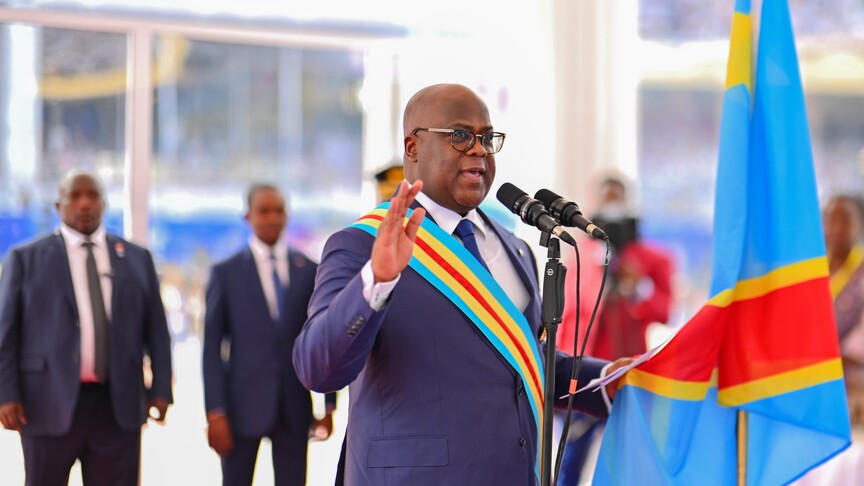
Democratic Republic of Congo President Felix Tshisekedi has called on Russia to support a UN-backed resolution that demands the withdrawal of Rwandan troops from Congo, the president’s office said Thursday.
Tshisekedi made the appeal in a speech on the sidelines of the third Russia-Africa Summit in Moscow.
UN Security Council Resolution 2773, adopted on Feb. 21, 2025, condemns Rwanda for its alleged support of the M23 rebel offensive in eastern Congo and calls for the immediate withdrawal of Rwandan troops.
Noting that he remained committed to pursuing a diplomatic path through the Washington and Doha processes, Tshisekedi called on Moscow to “support the implementation of Security Council resolutions as well as mediation efforts.”
Kinshasa contends that the presence of the Rwandan army on Congolese soil has been documented in several UN reports.
There was no immediate reaction from Rwanda.
Tshisekedi’s remarks came a day after the US imposed sanctions on the Rwandan Defense Ministry and Zigama Credit and Savings Society, a Rwandan financial cooperative accused of playing a key role in facilitating Rwanda’s support for the M23 rebel group, which is at the center of the conflict in eastern Congo.
The US Department of the Treasury’s Office of Foreign Assets Control said “Rwanda must halt its support for M23 and withdraw its troops from eastern DRC.”
“Our choice is that of a lasting peace, which ensures the security of our fellow citizens and restores the authority of the State over the entire national territory,” Tshisekedi said.
In December 2025, Rwandan President Paul Kagame and his counterpart Tshisekedi signed a peace and economic agreement in Washington, DC witnessed by US President Donald Trump seeking to end the violence in Congo’s eastern restive region.
Under the agreement, Rwanda committed to withdrawing its troops from eastern Congo, where Kigali maintains that its military presence is necessary for national defense and security.
Both countries also committed to ending their support for militias and non-state armed groups, including the Democratic Forces for the Liberation of Rwanda (FDLR), a Rwandan rebel group.
But since the signing of the deal, the debate over the FDLR security threat to Rwanda remains one of the defining issues.