Dr Hanan Balkhy lays out trust and reform vision for WHO
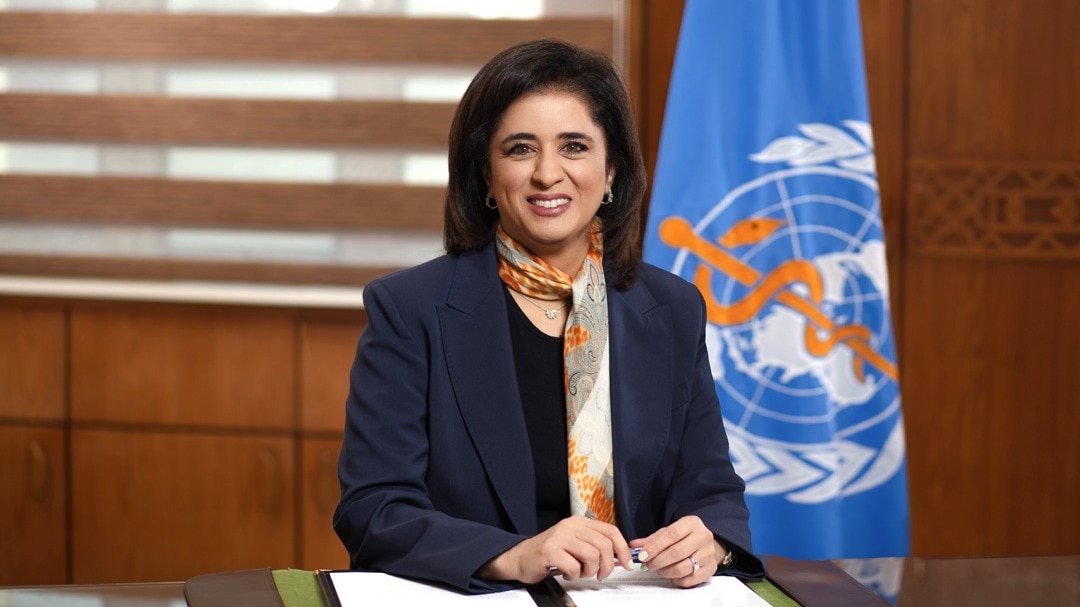
As the race for the next World Health Organisation Director-General accelerates ahead of 2027, India Today Global speaks with a formidable candidate: Dr Hanan H. Balkhy. Elected in February 2024 as WHO Regional Director for the Eastern Mediterranean, Dr Balkhy oversees health initiatives for over 750 million people across 22 Member States. A proven crisis manager, she directs the region’s response to protracted emergencies and has raised over US$1.6 billion in additional programme resources to combat polio and emergencies. Furthermore, she spearheads the 18-agency Regional Health Alliance to streamline critical action at the country level. Here is Geeta Mohan’s exclusive interview.
QUESTION: If you become the next WHO Director-General, it would be a truly historic moment, as you would be the first person from the Eastern Mediterranean region—which encompasses West Asia, or what the West calls the Middle East—to hold this position.
Thank you. Thank you for having me. I appreciate it. That is true.
What does your candidacy bring to the organisation, and how would your experience as a clinician, researcher, and regional director shape your leadership?
I would be the first person from the Eastern Mediterranean region to hold such a position, and I think this rotation among different regions is very critical because it adds value to this major science-based health organisation, which belongs to 194 member states, 22 of which sit in the Eastern Mediterranean region. As you've seen, the current Director-General is the first to be elected from the African continent. This regional rotation is of great value to the organisation. The organisation is sometimes not fully understood by the general public, but the role of the WHO is extremely critical in harmonising guidelines and making sure that equity is reachable for everybody, ensuring people can access quality healthcare. What I bring to the table is a long history in medicine. I have been practising as a physician in infectious diseases. I also have a very robust background in research and science as a full professor. Prior to joining the WHO, I led a WHO collaborating centre for 10 years. I have worked at three different levels of the organisation, so I understand the inner workings of the headquarters in Geneva, where I served as the Assistant Director-General for five years. There, I led a very complex file—the Quadripartite on antimicrobial resistance—dealing with several agencies and member states. In 2023, I was elected as the Regional Director for the Eastern Mediterranean region, where I lead all health topics for the 22 member states and handle health diplomacy within and outside the region. So, what I bring to the table is in-depth knowledge of a region that has not been represented in this directorship before.
You have met Indian health and foreign ministry officials during your visit. What were the key takeaways from your discussions, and what role can India play in strengthening global health cooperation, particularly through traditional medicine and evidence-based healthcare?
It has been a great visit so far. We have been attending various regional committee meetings to capitalise on the presence of the different ministers. I was very honoured to meet His Excellency Dr. Nadda, the Minister of Health of India, and had significant, in-depth discussions with the Ministry of Health and the Ministry of External Affairs. I was also able to visit the Ayurveda Traditional Integrated Health Centre, which provided me with great insights into India's approach to traditional medicine. As you know, it was inaugurated by Director-General Dr. Tedros, and I think it will add immense value, especially as it takes a strong, science- and evidence-based lead in validating and supporting India's traditional medicine approach. It has been a great visit with really good discussions, and I believe India can continue to add a lot, as it has over the years, in its collaboration with the World Health Organization.
The WHO faced a major trust deficit during the COVID-19 pandemic. If elected Director-General, how would you rebuild trust among member states and the public, particularly around scientific guidelines, transparency, and accountability?
Trust is something that can be easily lost. In a pandemic, where there is a lot of stress and pressure on communities, leadership, and heads of state, it is easy to lose trust. Gaining it back requires continuous effort. When I say our work needs to be built on trust, I mean we must reaffirm the relationship between the organisation, the member states, and the public every single day. That trust comes from being very transparent about our methodology. It is crucial when working with member states that the science upon which we build our guidelines is relevant to their communities, which is not an easy task to do regularly. If I become the Director-General, I will ensure the robustness of our science and greater inclusion of member states and communities. They require reassurance about the science we produce, because that science shapes our guidelines and, ultimately, our policies. That foundation must be built on a daily basis.
The Eastern Mediterranean region faces some of the world's largest displacement and migration crises. How would you address the healthcare challenges faced by displaced populations and protect the health workforce, including the recognition of medical qualifications across borders?
The issue of displacement and migrant populations is a global one. The Eastern Mediterranean carries the largest burden of migrants and internally displaced people. We are working on how to support healthcare systems that are already fragile and stretched in many of these countries. Despite these fragile systems, we want to ensure they can provide healthcare to everyone. We hold equity in very high regard and want to make sure everybody can access the medicines they need, when they need them. We work with our member states to secure healthcare systems during conflicts, fulfilling our mandate to advocate for healthcare generally. However, displaced populations present an even more complex challenge. Over the past few years, I have seen the severe impact on the health workforce. During a conflict, health workers often migrate and flee, becoming displaced in new communities where their certifications and capacity to work are not recognized due to licensing issues. This detailed challenge regarding the health workforce in conflict zones became a priority and my second flagship initiative as the Regional Director for the Eastern Mediterranean. I believe this initiative can be expanded globally to areas that need it—unifying certifications and creating systems so that medical qualifications are not lost when people flee their home countries. There is a lot to be said about this specific area of work, which I have been deeply involved in recently.
As Regional Director for EMRO, Gaza falls under your direct operational mandate. With healthcare infrastructure systematically decimated and severe access restrictions, what concrete lessons from WHO’s response in Gaza will reshape how the agency delivers emergency care in active warzones if you become Director-General?
Gaza is a very complex and unique case. I was able to enter Gaza in July 2024 and see the healthcare system and the destruction firsthand. As you aptly described, the destruction across the entire region was quite significant. While I didn't have the ability to travel throughout all of Gaza, what I did see was extensively damaged. In these situations, we work with our UN partner agencies to negotiate the entrance of aid as much as possible, though we have seen the delivery of humanitarian aid stall. I was also at Al Arish on the Egyptian border, where there were still problems moving aid into Gaza. We worked very hard with the different parties involved to allow aid access. It has been a very challenging situation. On top of that, the warehouses where aid is directly stored have been attacked, leading to a loss of vital resources during these difficult periods. We are pushing hard for humanitarian aid to continue entering in the highest possible volumes. The health workforce has also been heavily hit in Gaza. We are pleading for health workers, healthcare facilities, and warehouses to be spared in all conflict zones, including Gaza. This is part of the diplomatic work we do. We communicate constantly to advocate for adherence to international law and to ensure that healthcare systems, health workers, ambulances, and medical warehouses are protected from conflict.
Neighboring states, including nations in your own EMRO footprint like Sudan and Somalia, frequently face cross-border contagion risks whenever regional outbreaks flare up. How would your "present before crises hit" model practically strengthen border surveillance and laboratory capacity in fragile states?
This ties into the "impact" part of my "Trust, Impact, and Value" campaign slogan. I have been involved in prevention my whole life, and I understand that when a crisis hits, it is already too late to prepare. Unfortunately, preparedness does not make the headlines or get much attention. The more you prevent, the more people forget about the work you are doing because they don't directly see or feel it. That is why we need an organisation that strongly advocates for prevention and preparedness ahead of a crisis. As Director-General of the WHO, I would place significant emphasis on analysing crises and understanding the root causes of outbreaks. I would ensure that humanitarian aid is closely aligned with development aid so that communities, whether in the middle of a crisis, between crises, or close to a crisis, can start preparing for the next one. This is not an easy task, but having done it before, I know it requires extensive advocacy and attention, especially in countries burdened by fragility and conflict. With the right approach, we can prepare better and respond more robustly to the next crisis. To manage active crises within a system, we must ensure that the primary healthcare system is well-established and integrated into referral systems, health workforce training, supply chains, warehouses, education, and community awareness programs. This is a core part of my vision for the WHO if I become the next Director-General.
The WHO faces a difficult geopolitical environment, alongside calls for internal reform and greater institutional efficiency. What distinguishes your candidacy from other contenders, and what specific internal and external reforms would you prioritise as Director-General?
I want to remind you that the nomination period has not closed yet; we have about another eight days until it closes. Regarding what I bring to the organisation, first of all, it is my long history of dealing with healthcare and medical care, not only as a clinician but also as an administrator, manager, and reformer. In my previous roles, I have never been content with the status quo. I would bring a very robust internal reform programme to the table. I could talk at length about how the system reports on its grants and manages its manpower across country and regional offices. The internal system within the World Health Organization is quite complex. I haven't been here so long as to be too wedded to the current structure; I have been in the organisation for seven years, which has been just enough time as a leader to understand which areas require significant reform. I have clear visibility on this, and I am very excited to lead the WHO and drive these internal changes. From an external perspective, regarding the difficult geopolitical situation you described, my background in infection control and public health means I am accustomed to not always being praised. We are not an organisation that will be patted on the back 24/7; our role is to be present during difficult times. I am used to this, and I am capable of withstanding the heat that comes with the job while speaking boldly about what must be done to secure public health. I truly hope the member states voting in this upcoming election make a wise choice. Even from my perspective as a Regional Director, we need a Director-General who can lead the organisation through such a difficult geopolitical landscape. As you mentioned, we must recognise that this is not an ideal world and that extensive internal and external reforms are needed within the global health architecture. I understand this deeply, both as an insider and as a long-term outsider who has been a constructive critic, yet a big fan, of this amazing organisation.- EndsPublished By: indiatodayglobal Published On: Sep 18, 2026 14:12 IST
:strip_icc()/i.s3.glbimg.com/v1/AUTH_63b422c2caee4269b8b34177e8876b93/internal_photos/bs/2025/W/z/oZTQnuRgu4cEw2Y4iXRw/foto03emp-101-estudio-b6.jpg)