Drug trafficking, illegal mining threaten Indigenous communities in Peru's Amazon - Anadolu Ajansı
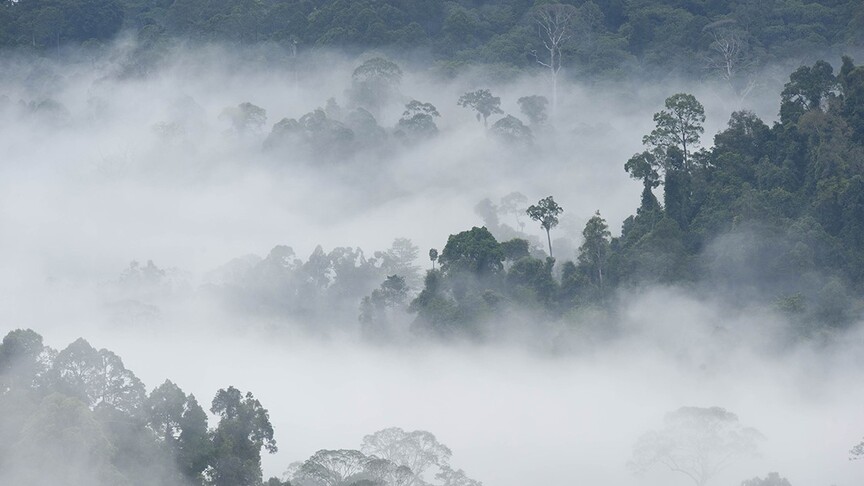
Drug trafficking, illegal mining and logging are putting growing pressure on Indigenous communities in Peru’s Amazon, bringing violence, environmental destruction and territorial invasions to remote regions where criminal groups often operate beyond the reach of authorities.
Along the country’s isolated borders, expanding cocaine routes are reshaping the rainforest and threatening communities already confronting a lack of health services and state protection. Indigenous leaders say defending their territories against illegal actors can carry deadly consequences.
Those concerns came into focus Sunday as Indigenous representatives gathered in the Amazon city of Pucallpa during Pope Leo XIV’s visit, hoping the international attention would compel government authorities to confront the criminal economies operating on their lands.
UK-based rights and environmental group Global Witness said in 2025 that it had documented 62 killings or disappearances of environmental defenders in Peru since 2012, including 35 Indigenous defenders, underscoring the risks faced by communities denouncing illegal activity in their territories.
“We don’t want to be part of this statistic of murdered Indigenous leaders,” Herlin Odicio, vice president of ORAU, a regional Indigenous federation in Pucallpa, told Anadolu ahead of Pope Leo’s visit. “We hope the pope can offer a message that improves government so we can join forces and change the system.”
For Indigenous groups, many of whom traveled hundreds of miles from remote regions, the gathering offered a global spotlight on the pressures facing their territories, particularly along isolated borders where drug traffickers operate with relative impunity.
An Anadolu report published in August documented how drug traffickers were recruiting Indigenous children to transport cocaine through jungle trails near Peru’s border with Brazil. One teenager described being given a revolver and seven kilograms (15.4 pounds) of cocaine paste to carry on a three-day journey.
The reporting found that clandestine airstrips, rivers and roads originally opened for oil exploration and logging were facilitating the cocaine trade. A weak state presence, including an abandoned border checkpoint, had allowed trafficking networks to expand in the Yurua region, where Indigenous communities face growing exposure to drugs and organized crime.
The danger is not confined to narcotics. Illegal mining and logging are threatening forests and livelihoods, while residents say outsiders are taking control of land that Indigenous peoples have occupied for generations.
“We’re excited about the arrival of the pope. As Indigenous women, we’re here to make sure our voices are heard and that our communities aren’t forgotten about. Mining is impacting our community and our forests. Animals are disappearing, and so are the plants we depend on,” said Naiva Hilda Maringo, an Indigenous representative from Peru’s central Amazon.
For such communities, the consequences of illegal extraction reach beyond environmental damage. Forests provide food and other resources, and their destruction compounds concerns over territorial security and the safety of people who challenge those entering their lands.
Land invasions are also among the concerns raised by students who traveled from Atalaya to Pucallpa, where Indigenous groups sought to draw attention to territorial threats alongside the dangers posed by the expanding drug trade.
Italo Bardales, a university student from Atalaya who traveled with more than 350 fellow students representing several Indigenous groups, said he hoped the pope's visit would bring attention to the issue.
"On our lands, we are having problems with land invasion – outsiders coming in and taking possession of our territory. We hope that issues like this come up with the pope,” said Bardales.
The concerns have also mobilized a younger generation of Indigenous leaders, who see public attention as a way to pressure authorities to defend territories vulnerable to illegal economies.
“I’m so thankful he (Pope Leo) is coming to visit us here. But this is also a good opportunity for Indigenous voices to be heard across the world. More than anything it’s a message of defending our territories and defending our Amazon that we want to be heard.”
Freny Orquia Regatei, an Indigenous Shipibo youth leader from the region, said the visit offered an opportunity to bring these demands before a global audience.
Ahead of the first-ever papal mass in the Amazon, held at a sports complex in Pucallpa, a city of over 400,000 people, Leo met with Indigenous leaders, missionaries and church authorities to address social and environmental threats facing the region.
Speaking before thousands under a scorching afternoon sun along a waterfront port, he addressed deforestation, territorial invasion, a lack of health services and violence against Indigenous leaders and environmental defenders.
He also condemned drug trafficking for exploiting the poverty of young people and drawing them away from their communities with promises of money.
“In recent years, many Indigenous leaders have been murdered for defending their territories. The blood of these brothers cries out to God and demands justice,” said Leo.
Under Pope Francis, the Catholic Church highlighted the Amazon and its Indigenous peoples in a 2019 synod, bringing leaders together to address environmental and cultural threats to the world’s largest tropical forest.
Bishop of Pucallpa, Martin Quijano Rodriguez, told Anadolu that Leo’s visit sought to draw attention to problems extending across national boundaries.
“The pope isn’t just coming to a vicariate, or to one town or region. He’s coming to deliver a message about the reality of all the Amazon, which includes nine countries,” said Quijano Rodriguez. “It’s a message to the world, because the Amazon concerns the entire world.”
Born in the US, Leo first arrived in Peru in 1985 as a rural missionary, later serving as bishop of Chiclayo from 2015 to 2023. His return drew large crowds to Pucallpa, where residents lined the streets to see the popemobile. An estimated 70,000 attended his Sunday afternoon mass.
“The health of our lives and that of the Earth we inhabit go hand in hand. Anything that wounds the dignity of life destroys the beauty of the Earth,” said Leo. “Violence against the people is violence against the Earth, and violence against the Earth is violence against the people.”