Durban's struggles with financial mismanagement: A decade after Manase's warnings
This in-depth examination of Durban's financial mismanagement reveals a troubling pattern of inaction a decade after crucial warnings from the Manase investigation.
More than a decade after the Manase investigation warned eThekwini that weak financial controls could cost residents dearly, the same warning signs are still flashing — and Durban is paying the price.
Manase identified irregular expenditure, abuse of urgent and emergency procurement, non-compliance with supply-chain rules, questionable variation orders, conflicts of interest and inadequate expenditure controls. It recommended disciplinary action, further investigations, recovery of irregular expenditure and stronger controls.
The question facing Durban today is therefore not whether we can still talk about Manase. It is whether we learnt from it.
Residents do not experience governance through audit terminology. They experience it when water does not come out of the tap, businesses cannot operate normally, infrastructure deteriorates and public money fails to produce the service it was intended to provide.
There has been progress. eThekwini has maintained an unqualified audit opinion, and that should be acknowledged.
But the City's own records continue to identify procurement and contract management, infrastructure management, consequence management and material irregularities as areas requiring attention.
An improved audit opinion cannot be where the conversation ends.
The scale of eThekwini's irregular, fruitless and wasteful expenditure demands scrutiny.
Audited UIFW expenditure was approximately R1.501 billion in 2021/22, R2.410 billion in 2022/23 and R1.619 billion in 2023/24.
Council documents from September 2026 show MPAC recommended approximately R2.298 billion relating to 2024/25 and earlier years for write-off after being deemed irrecoverable, while approximately R60.95 million was recommended for recovery from implicated officials and service providers.
For 2025/26, MPAC recommended approximately R1.816 billion in irregular, fruitless and wasteful expenditure certified as irrecoverable for write-off, while approximately R10.66 million was recommended for recovery.
These figures measure different stages of the accountability process and must not be carelessly conflated.
A write-off is also not, by itself, proof that money was stolen or that a crime was committed. The MFMA provides for irregular expenditure to be investigated and, where appropriate, certified as irrecoverable and written off.
But residents are entitled to ask: why does expenditure of this magnitude repeatedly reach the point where Council must determine whether it can ever be recovered?
And when recovery is recommended, does the money come back?
That is consequence management. Not another report or committee meeting. An outcome.
This becomes even more urgent when financial management meets service delivery.
Parliament's Standing Committee on Public Accounts reported that the Auditor-General identified R1.54 billion in uncompetitive and unfair procurement deviations and R311.76 million in irregular expenditure linked to supply-chain management failures.
It also reported non-revenue water losses of approximately R2.92 billion in 2024/25. eThekwini itself reported non-revenue water at 58.7% for that year.
Those numbers become real when treated water pours from a burst pipe while communities struggle with unreliable supply.
The City's reporting also records material-irregularity processes involving tanker services, including overpayments and payments for services allegedly not received. Investigations and recovery processes have followed.
Again, irregular expenditure or a procurement deviation does not automatically prove corruption.
But when water losses are measured in billions and infrastructure is struggling, residents are entitled to know whether every rand intended for the water system delivered what it was supposed to deliver.
Former eThekwini Mayor Zandile Gumede and 21 co-accused remain before the Durban High Court in the Durban Solid Waste case involving contracts worth approximately R320 million.
They face allegations including fraud, corruption, racketeering and money laundering. These allegations remain before court and must be determined there.
But Durban cannot wait for every criminal trial to conclude before asking the institutional question: what happens inside the municipality when serious failures are identified?
Manase recommended disciplinary action, investigations and recovery more than a decade ago. Today, the City's own reports still speak about consequence management and procurement controls.
The test is therefore not how many reports are produced.
Were officials disciplined? Was money recovered? Were suppliers held accountable? Were repeat failures prevented?
Municipal financial management does not live in committee rooms.
A restaurant cannot stop needing water. A factory cannot tell its production line to wait for municipal reform. Small businesses cannot build their future around unreliable basic services.
Every rand lost through poor financial management is a rand that could have maintained infrastructure. Every service failure makes Durban less competitive and makes creating jobs harder.
That is why I believe the complete Manase documentary trail should, wherever legally possible, be made publicly accessible, including the findings, Council responses, implementation measures, disciplinary processes and recoveries.
Transparency is not about reopening old wounds for political theatre. It is how institutions learn.
Durban does not need another decade of discovering problems after the money has been spent.
It needs systems that prevent them, consequence management that produces consequences, infrastructure that works, and public money focused on creating the conditions for businesses to invest, grow and create jobs.
Manase warned us. The City's current records tell us the work is not finished. The question now is whether eThekwini will finally finish it.
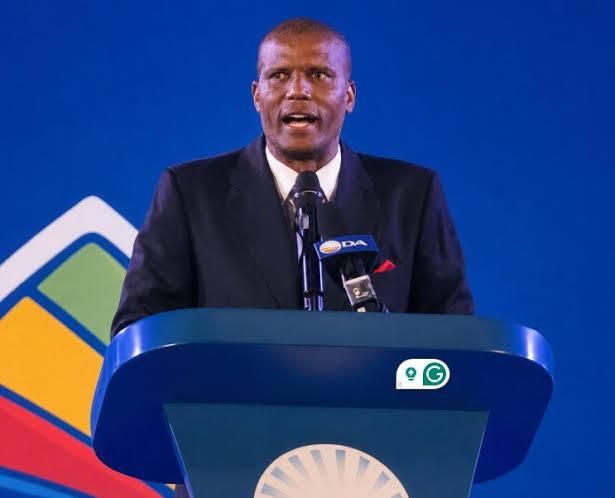
* Sithembiso Ngema is the DA KZN Provincial Leader. The views expressed do not reflect those of IOL