
DU's four-year UG, one-year MA plan: What went wrong with the NEP transition?
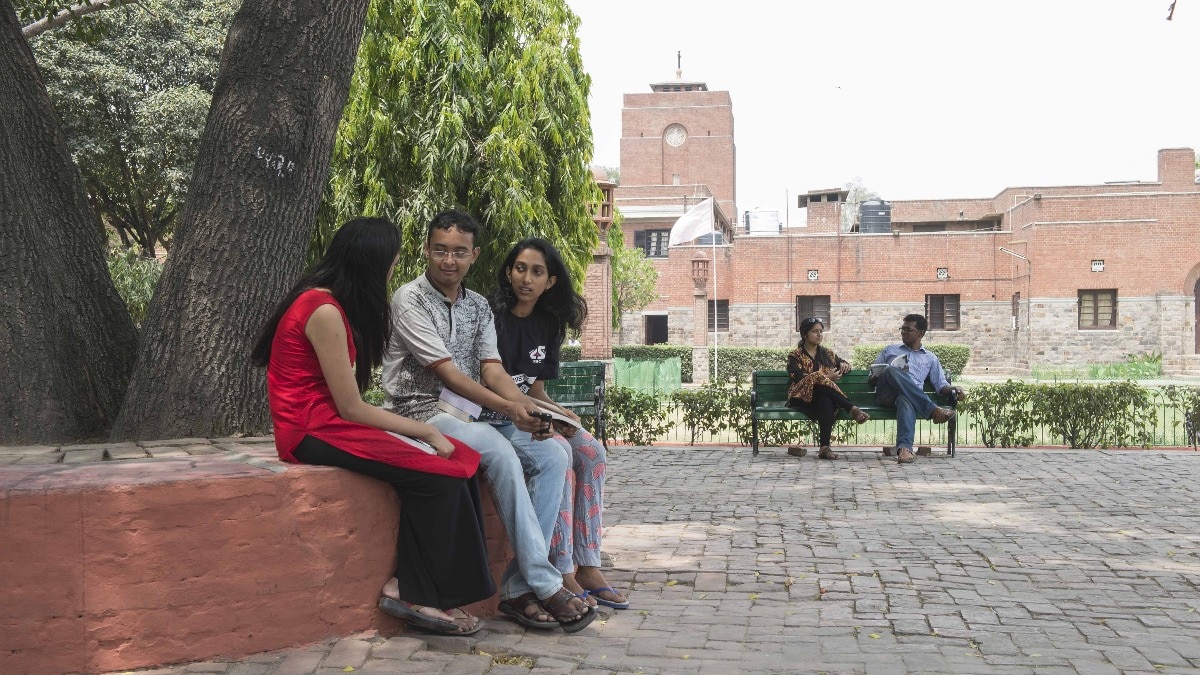
Delhi University's (DU) decision to introduce the Four-Year Undergraduate Programme (FYUP) under the National Education Policy (NEP) 2020 was meant to bring a significant change to higher education, including greater flexibility in undergraduate learning and a shorter postgraduate route for students completing a four-year bachelor's degree.
However, as the university's first FYUP batch completes its undergraduate education and seeks admission to one-year master's programmes, students are finding that completing four years of undergraduate study does not necessarily translate into an assured place in the corresponding postgraduate course.
The issue has now reached the Delhi High Court. On November 20, the court refused to direct Delhi University to create additional seats or accommodate the petitioners in its one-year master's programmes. It did, however, acknowledge that students had pursued the four-year undergraduate programme under a bona fide belief that it would facilitate their progression to a one-year master's degree.
The court has directed the University Grants Commission (UGC) to examine their grievances and consider possible accommodation in one-year master's programmes at other universities and colleges within three weeks.
This raises a larger question: If the four-year undergraduate structure was introduced to facilitate a one-year master's pathway, why is DU struggling to accommodate the very students who completed the programme?WHAT WAS THE IDEA BEHIND FYUP UNDER NEP 2020?
The National Education Policy (NEP) 2020 proposed a restructuring of undergraduate education, moving away from a rigid three-year degree structure towards a flexible four-year undergraduate programme.
One of the key features was the multiple-entry and multiple-exit framework, allowing students to leave at different stages with appropriate qualifications. The four-year undergraduate programme also provided for a degree with honours or honours with research, depending on the academic structure and credits completed.
The broader postgraduate framework envisaged by the NEP also included a one-year master's degree for students who had completed a four-year undergraduate programme, alongside the two-year master's route for graduates of a three-year bachelor's programme.
The underlying idea was to create greater flexibility and avoid making students repeat academic requirements they had already completed during their undergraduate studies.
DU adopted the Undergraduate Curriculum Framework (UGCF) 2022 to implement the four-year structure. Students who enrolled in the programme were therefore entering a system that was being aligned with the broader NEP framework.
However, the transition from a four-year undergraduate programme to a one-year master's degree also required universities to put in place postgraduate admission rules, seat capacities and academic eligibility conditions.
That is where the current dispute has emerged.WHY ARE DU'S FIRST FYUP GRADUATES FACING ADMISSION PROBLEMS?
Delhi University introduced its one-year postgraduate programme in the 2026-27 academic session, alongside the existing two-year master's programme.
But the admission process for the two courses was different.
While admission to the traditional two-year postgraduate programme was based on CUET-PG scores, DU used undergraduate CGPA and a university-defined priority system for its one-year master's programme.
Under this arrangement, students with a four-year Honours degree with Research or Entrepreneurship in the relevant subject were placed in the first priority category (P1). Students with a four-year multidisciplinary degree with a Major in the relevant subject were placed in the second category (P2).
This meant that a candidate belonging to the second category could be considered after candidates in the first category, even if the former had a higher undergraduate CGPA.
Students challenged this admission mechanism, arguing that it disadvantaged graduates of the multidisciplinary four-year undergraduate programme.
The controversy is particularly significant because students who completed the four-year course expected it to open the door to a one-year master's programme. Instead, the admission hierarchy created another layer of competition within the same four-year graduate cohort.DID DU NOT ANTICIPATE THE NUMBER OF STUDENTS SEEKING A ONE-YEAR MA?
The question of planning and capacity is central to the dispute.
In an affidavit submitted before the Delhi High Court, DU told the court that it was already operating at its maximum capacity in terms of infrastructure, accommodation and teaching staff.
According to the university, it had initially introduced 1,063 seats in the one-year postgraduate programme. Following grievances from students, the intake was subsequently increased to 2,807 regular seats and 3,340 seats under the School of Open Learning.
The university said that the expansion had added to the pressure on its existing resources. It also pointed out that the one-year postgraduate programme had been introduced without additional resources.
This raises a question about the sequencing of academic reforms: when DU introduced the four-year undergraduate programme in 2022, was the corresponding postgraduate capacity adequately assessed for the first graduating batch?
The university's position suggests that while the one-year postgraduate structure was eventually introduced, accommodating the demand within existing infrastructure and faculty strength has proved difficult.WHY DID THE DELHI HIGH COURT REFUSE TO ORDER ADDITIONAL SEATS?
The Delhi High Court acknowledged the students' grievance but said that directing the university to create additional seats would involve academic and administrative considerations beyond the scope of judicial intervention.
The court pointed to factors such as sanctioned intake, availability of faculty, infrastructure, classroom space and other institutional resources.
It also said that it was not equipped to assess the comparative curricula, academic rigour and credit requirements of the four-year multidisciplinary undergraduate programme against the four-year Honours programme.
However, the court recognised the particular circumstances of the first FYUP batch and referred the students' representations to the UGC.
The UGC has been asked to examine whether seats are available in one-year master's programmes at other universities and colleges and, wherever feasible, facilitate the students' admission.WHAT HAPPENS NEXT? DU CONSIDERING ENTRANCE TEST FOR ONE-YEAR MA
The controversy has also prompted DU to reconsider its admission mechanism.
Earlier this month, the university told the Delhi High Court that it was considering introducing an entrance examination for one-year postgraduate admissions from the 2027-28 academic session.
Under the proposed arrangement, admissions would be based solely on entrance-test merit. The university also indicated that it would assess available resources before deciding the number of seats to be offered in the one-year and two-year postgraduate programmes.
This could change the way students are admitted to the one-year master's programme in subsequent academic sessions. However, it does not immediately resolve the difficulties faced by the first FYUP batch.
The larger issue remains one of policy implementation. A four-year undergraduate degree and a one-year master's programme are interconnected components of the NEP's proposed academic structure. Their implementation, therefore, requires universities to plan both stages together.
For DU's first FYUP graduates, the question is no longer simply whether a one-year master's programme exists. It is whether the university's admission framework, seat availability and academic planning have kept pace with the undergraduate reform it introduced four years ago.- EndsRead | DU awards 1.72 lakh degrees, women make up 245 of 472 PhD recipientsRead | Rs 161 crore Delhi University loan under fire as Rs 221 crore grant remains unused

