
Ebola Is Outrunning Congo’s Trust Faster Than Its Health System - IOL
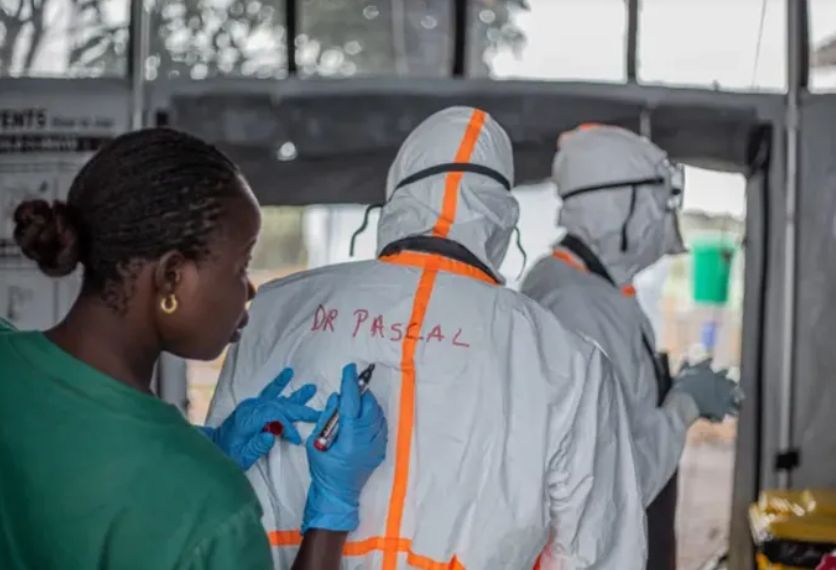
The first Ebola case detected in Nigeria is the Bundibugyo strain, which is behind a major DR Congo outbreak, and the patient is a diplomat, an emergency meeting heard on Wednesday.
The outbreak, caused by the Bundibugyo virus, was confirmed on 15 May after circulating for weeks, possibly months. Authorities in the gold-mining town of Mongbwalu believe more than 80 people died before anyone raised the alarm. There is no approved vaccine or treatment for this strain, so the response leans heavily on behaviour: reporting the sick, isolating them, burying the dead safely.
Rumours attack exactly those behaviours. ActionAid estimates that nearly one in three people in Ituri, the epicentre, does not believe Ebola is real. Patients arrive late or not at all. Crowds have stormed treatment centres after refusing to accept that a relative died of the disease, letting suspected patients flee. Last Saturday a nurse was killed responding to an alert in Tshopo province. The WHO’s Tedros Adhanom Ghebreyesus has warned that misinformation is “almost as dangerous as the virus itself”.
It is tempting to dismiss these beliefs as ignorance. The evidence points elsewhere. A Lancet Infectious Diseases survey of 961 adults in Beni and Butembo during the 2018 outbreak found that more than a quarter believed Ebola did not exist. A third thought it was invented for money, and 36 percent thought it was meant to destabilise the region. People who held such views were less likely to seek care or accept vaccination. Between August 2018 and November 2019, researchers counted 386 attacks on health workers and facilities in Congo, with seven deaths.
Eight years later, the same theories are back, now with a mineral-grabbing twist. These are not random fantasies. They are conclusions drawn by people in a region neglected by Kinshasa, battered by armed groups, and visited for decades by outsiders who arrive with vehicles and promises and then leave. Research from the earlier outbreak traced resistance to poor care in treatment centres, the loss of traditional burials, and distrust of foreigners seen to profit from the crisis. When a family is told a relative has died and the body is taken away sealed, rumour fills the silence.
Last year offers a contrast. An outbreak in Kasai province reached 64 cases and 45 deaths before being declared over on 1 December 2025. Authorities ran a community protection plan alongside the medical response, sending engagement teams to talk with residents, and more than 35,000 people were vaccinated.
I do not claim this proves everything. Kasai involved a strain with a vaccine, and it lacked the armed conflict that shadows Ituri. But the comparison still teaches something. A response that arrives with a vaccine offers people something in return for cooperation. The current one mostly asks for sacrifice: isolation, abandoned rites, a stranger’s word. Without a vaccine, trust is the main tool, and it is being squandered. The stakes are not abstract. This outbreak has already passed a third of the 28,652 cases recorded in West Africa’s 2014 to 2016 epidemic, which killed 11,325 people.
Fact sheets and radio jingles will not fix this. Four changes would.
First, pay responders on time. Last week, surveillance and community engagement staff in Nia Nia health zone went on strike over bonuses unpaid since late August. A health worker who is not paid is the best evidence for anyone claiming the money disappears somewhere.
Second, let families bury their dead with dignity. Relatives should be present and rites adapted, not simply banned.
Third, put credible local voices in front. Pastors, traditional healers and survivors already carry accurate messages, and they should be funded, not merely thanked.
Fourth, fund engagement as seriously as beds and protective gear. Donors pay readily for isolation wards. They pay far less readily for the slow work of listening, which is what makes people walk through the ward’s door.
Ebola is a virus, but this epidemic is also an argument about who deserves to be believed. Until the response wins that argument, the virus will keep winning everything else.
**The views expressed do not necessarily reflect the views of IOL.
** MORE ARTICLES ON OUR WEBSITE https://bricscg.com/


