
ED chief says asset recovery must go beyond seizures, return money to victims
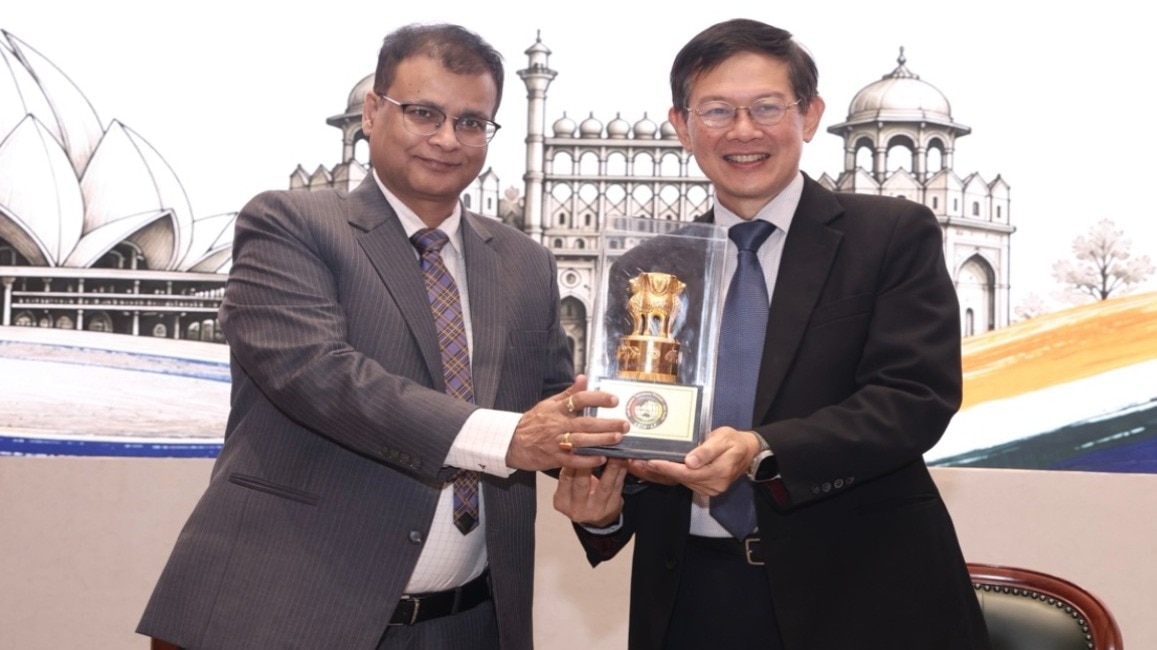
Enforcement Directorate (ED) Director Rahul Navin said asset recovery should ultimately result in money and property being returned to victims or the public exchequer, rather than ending with the seizure or confiscation of assets.
Addressing the closing session of the 11th Annual General Meeting of the Asset Recovery Interagency Network, Asia Pacific (ARIN-AP) in New Delhi, Navin stressed the need for closer international cooperation to ensure that criminal proceeds are recovered and put to their intended use.
“The measure by which the public judges law enforcement institutions” is ultimately the return of assets, he said, highlighting restitution to victims, transfers to the exchequer and the social reuse of confiscated assets as key outcomes of the recovery process.
Navin said asset recovery should be viewed as a continuous chain — from tracing illicit wealth and securing confiscation to managing seized assets and ensuring their eventual return.
The three-day meeting, hosted by the ED under India’s presidency of ARIN-AP for 2026, brought together prosecutors, investigators, financial intelligence officers, asset managers and policymakers from across the Asia-Pacific region, along with representatives of partner agencies and Indian law enforcement bodies.
Held under the theme “Closing the Loop: From Tracing to Return”, the meeting focused on connecting every stage of an asset recovery case rather than treating investigation, prosecution, confiscation and restitution as separate processes.
Navin noted that investigators may focus on tracing assets, prosecutors on obtaining confiscation orders and asset managers on their custody, while victims can remain waiting for the final outcome. He said the objective was to give practitioners a clearer understanding of the entire recovery process and the challenges involved at each stage.CRYPTOCURRENCY, CROSS-BORDER COOPERATION IN FOCUS
The meeting also discussed the challenges posed by the rapid movement of virtual assets and the need for timely engagement with service providers, blockchain analytics firms and foreign counterpart agencies.
Participants examined cross-border asset tracing, the early experience of INTERPOL’s Silver Notice and the importance of converting intelligence gathered through informal international cooperation into evidence that can support formal legal proceedings.
Navin stressed that informal exchanges between agencies are most effective when coordinated with the formal requests required under legal procedures.
The meeting also examined non-conviction-based confiscation, under which assets can be confiscated in certain circumstances without a criminal conviction. Discussions focused on legal tests applied by appellate courts, including standards of proof, reverse onus and proportionality.
Asset management emerged as another key issue, with Navin cautioning that assets can lose value between restraint and confiscation if their custody and preservation are not planned from the beginning of an investigation.INDIA HIGHLIGHTS RETURN OF ASSETS TO VICTIMS
India shared its experience of restoring assets to victims on a large scale under the Prevention of Money Laundering Act, 2002.
Participants discussed different approaches to returning recovered assets, including restitution to victims, transfers to government treasuries and the social reuse of confiscated property.
The meeting also considered revisions to Recommendations 4 and 38 of the Financial Action Task Force (FATF), dealing with confiscation and provisional measures and international cooperation in asset recovery.
Navin said the revisions would shape the assessment of confiscation frameworks in the next round of mutual evaluations, making the exchange of experience among jurisdictions particularly relevant.
Special invitees from the UK's Financial Conduct Authority and HM Revenue and Customs, the US Internal Revenue Service's Criminal Investigation division, Italy's Guardia di Finanza, Ukraine's ARMA and Asset Reality shared case experiences.
Presentations included Operation Coriander and a cryptocurrency tracing and seizure case presented by IRS Criminal Investigation.
Navin also acknowledged the contributions of India's Financial Intelligence Unit and the Central Bureau of Investigation (CBI), as well as international partner networks CARIN and ARIN-MENA. He stressed that successful asset recovery requires financial intelligence, law enforcement, prosecution, judicial action and asset management to work together.advertisementSINGAPORE TAKES OVER ARIN-AP PRESIDENCYThe meeting concluded with the transfer of ARIN-AP's presidency from India to Singapore, which will lead the network in 2027.
David Chew, Chief Prosecutor for International Engagement at Singapore's Attorney-General's Chambers, received the presidency on behalf of Singapore and said trust among member jurisdictions was fundamental to the network's effectiveness.
Navin thanked member jurisdictions, observers and the ARIN-AP Secretariat at the Supreme Prosecutors' Office of the Republic of Korea for their support during India's presidency and assured Singapore of India's cooperation in the coming year.
Launched in South Korea in November 2013 and modelled on Europe's Camden Asset Recovery Inter-Agency Network (CARIN), ARIN-AP facilitates the direct exchange of information and good practices among 32 member jurisdictions and 10 observer organisations.
Navin said the real value of the meeting would lie in the cooperation that followed, expressing hope that when an asset recovery request reaches another member jurisdiction, investigators and prosecutors would already have professional contacts in place to respond swiftly.- Ends
Munish Pandey is Editor and National Bureau Head with India Today Group. With over a decade's experience in crime and investigative journalism, Munish is known for his factual and investigative reports on white collar crimes, crimes involving politicians and corporate houses, violence, riots, international crimes and conspired killings. He started his career in Mumbai and has covered the underworld, killings, kidnapping, corruption cases, and terrorism. Munish keenly follows the Central Bureau of Investigation, Ministry of Home Affairs, Enforcement Directorate, Income Tax Department, Narcotics Control Bureau, Intelligence Bureau, R&AW, Delhi Police and Mumbai Police. From covering and reporting on the 2013 Mumbai triple blasts, Pune Bomb Blasts, Hyderabad bomb blast, he has covered and reported extensively on 26/11 Mumbai terror attack, Malegaon case and Mumbai train attacks. Munish Pandey is among the few journalists who first reported on the growing network of terror outfit ISIS in India and their recruitments in the country. He is the only journalist to have interviewed narcotrafficker Vicky Goswami, who is currently serving time in a US jail, and Mamta Kulkarni while the two were in Kenya. He has also reported, extensively covered and broken exclusive stories on the PNB scam, the CBI vs CBI case, Nirav Modi-Mehul Choksi case, P Chidambaram's arrest and many others.
Munish is a silver medalist in Journalism from the University of Mumbai. He has also undertaken a Defence Correspondent Course of the Ministry of Defence where he spent a month with the Armed Forces at the Indo-China border in the northeast and the naval base at Vizag.
