Ed Sheeran breaks silence on Macklemore “free Palestine” backlash - Newsweek
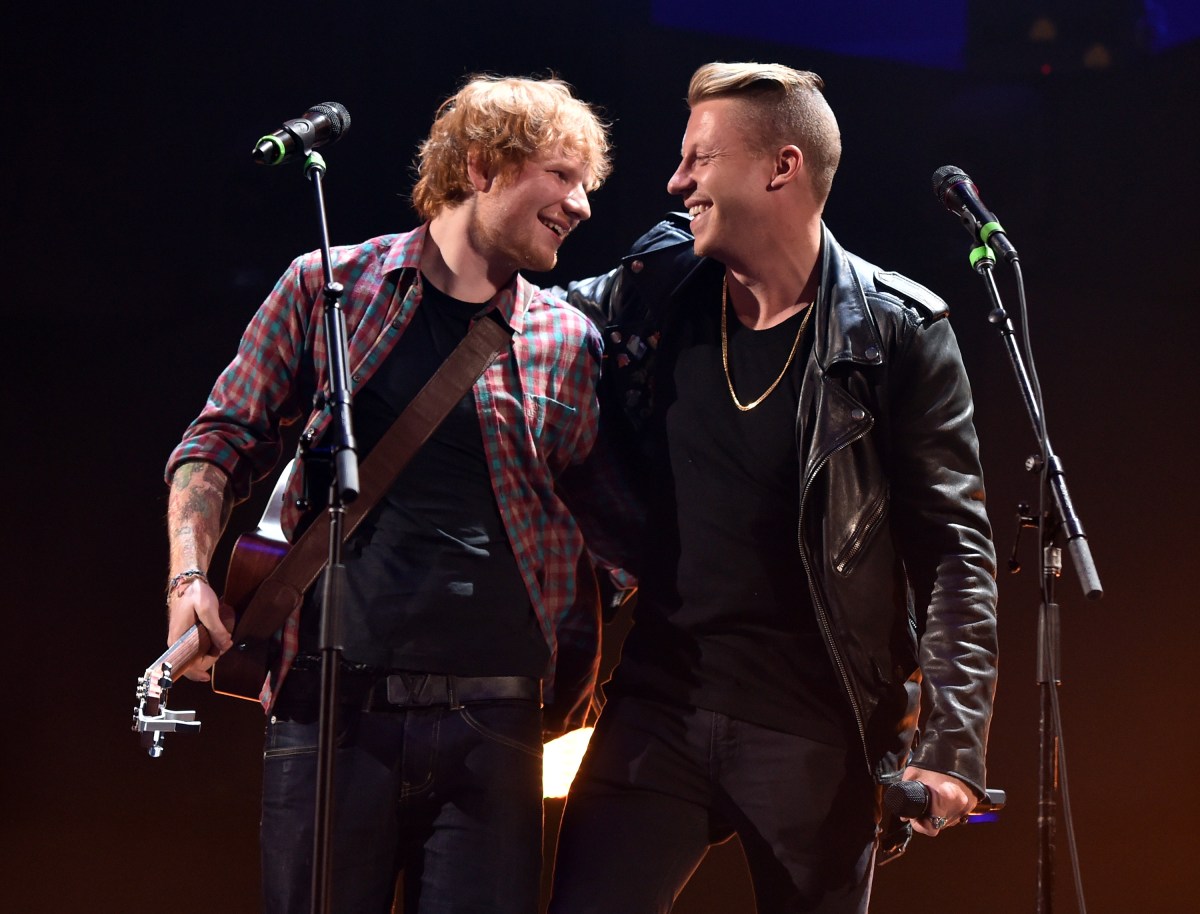
Ed Sheeran has spoken out after Macklemore was dropped from the U.S. leg of his Loop Tour following the rapper's remarks about the war in Gaza.
Sheeran, who has faced backlash after Macklemore was kicked off the tour for his comments, said that it had been a promoter and not him who had made the decision.
The 35-year-old singer said he was “appalled by the conflict between Israel and Palestine,” describing the suffering on both sides as “a human tragedy.”
“There are too many wars across the world causing immeasurable pain, none of which should be tolerated,” Sheeran wrote in an Instagram post.
Macklemore, 43, had been scheduled to open ten shows on the American leg of Sheeran's tour. He performed at MetLife Stadium in New Jersey on September 4 and September 5 before reports emerged that he would no longer perform at the remaining eight dates.
https://www.instagram.com/p/DdT-6KGAtuI/?hl=en&img_index=1
Sheeran explained that Macklemore, whose legal name is Ben Haggerty, had asked to join the tour the previous year and that he agreed because he “respect[s] him as an artist.”
The singer also said that his supporting acts are generally allowed to choose their own setlists.
However, after Macklemore's performances in New Jersey, Sheeran said venues involved in his upcoming dates told him they would withdraw the shows if Macklemore remained on the bill.
“I was informed that this stance was based on how Macklemore conveyed part of his message during his performance, rather than on everything that was said,” Sheeran said.
According to Sheeran, he spent the week speaking with venues in an effort to find a solution that would allow the shows to go ahead.
“I spoke with the venues at length all week to try and build a bridge,” he said, adding that he was also involved in direct discussions with promoters and activists on both sides of the conflict.
Sheeran said one of those involved in the conversations was New England Patriots owner Robert Kraft.
Despite those efforts, Sheeran said the decision was ultimately out of his hands.
“Macklemore coming off tour was the promoter's decision; it was not mine,” he stated. “Macklemore's contract for the tour was with the promoter, not me.”
The dispute follows a highly publicized performance in which Macklemore used his opening set to speak about Gaza and Palestinian rights, prompting criticism from pro-Israel groups and others.
Macklemore has since defended his decision to speak publicly, saying that the controversy has reinforced his belief that artists face pressure when they use major platforms to address the conflict.
Sheeran said he did not want to cancel shows because of the dispute, citing fans who had already made plans as well as the touring crew, musicians and other support acts whose livelihoods depend on the tour.
The singer also pushed back against any suggestion that his decision not to publicly comment on the conflict before now meant that he was indifferent to the situation.
He added that his shows are intended to be spaces centered on “unity, joy, escapism, love” and inclusivity.
Sheeran further insisted that he is not “complicit” in the conflict and said that he has his own views about the devastating situation in the region. “Just because I choose not to speak publicly, it doesn't mean I don't have them, and it doesn't mean I don't care,” he wrote. “Nor does it mean I don't support causes in my own, personal way.”
His statement comes after Macklemore himself addressed the fallout from his removal from the tour, bringing renewed attention to the controversy surrounding the rapper's comments about Gaza.
The controversy began after Macklemore used his opening performances at Sheeran's MetLife Stadium shows to deliver an extended political message about Gaza and Palestine.
During his set, Macklemore said one of the reasons he wanted to join Sheeran's tour was to use stages across America to say “Free Palestine.” He subsequently performed his protest song Hind's Hall, while imagery related to Gaza appeared on screens.
The remarks quickly generated backlash.
The Israeli-American Council launched a petition criticizing the performance as a “one-sided political agenda” and called for clarification about whether the political speech and visuals had been approved by Sheeran or his team.
Singer P!nk also became part of the controversy after amplifying criticism of Macklemore's comments.
Macklemore's position was that he had been making similar statements onstage for years and that performing at major U.S. stadiums gave him an even larger platform to speak about Palestine.
The situation escalated when he was removed from the remaining U.S. dates of Sheeran's tour.
Macklemore subsequently said Sheeran had told him about conversations involving Kraft and other stadium owners. Kraft later acknowledged his role in the decision concerning Gillette Stadium, but characterized his concerns differently from Macklemore's account.
Sheeran has now offered his own explanation, saying the venues communicated that they would not host the shows with Macklemore supporting and that the promoter ultimately made the decision to remove him.
Macklemore's comments came during his opening set at MetLife Stadium on September 4 and 5.
The rapper told the audience that one of the reasons he wanted to join Sheeran's tour was to speak about Palestine on stages and in stadiums across the United States.
"Two words that are very near and dear to my heart: Free Palestine," he told the crowd, adding calls for Cuba, Congo, Sudan and Iran, and calling U.S. Immigration and Customs Enforcement (ICE) a "terrorist organization."
Macklemore said he wanted the message to be heard by people in Gaza and the occupied West Bank, adding that people had not forgotten them.
He also thanked student groups involved in pro-Palestinian demonstrations at Columbia University and specifically referenced Columbia University Apartheid Divest, Students for Justice in Palestine and Jewish Voice for Peace.
The rapper also addressed Jewish members of the audience, saying that criticism of Israel and opposition to what he described as apartheid and genocide should not be understood as criticism of Jewish people.
He followed the speech by performing Hind's Hall, his 2024 protest song inspired by pro-Palestinian student demonstrations at Columbia University.
Macklemore claimed, after being dropped from the tour, that Sheeran had told him that Robert Kraft did not want the rapper performing at Gillette Stadium, and that he had subsequently rallied other stadium owners, to give Sheeran an ultimatum: either Macklemore came off the tour or Sheeran would not be able to perform at some venues.
"Ed told me that Kraft said I would not be allowed to perform in his stadium. Ed also told me that Kraft had rallied some of the other stadium owners and collectively they gave him an ultimatum: if Macklemore stays on the tour, you will not be allowed to play in our venues," Macklemore wrote.
Sheeran's statement does not deny that he spoke with Kraft. In fact, Sheeran said Kraft was among the people involved in discussions as he attempted to find a solution following the backlash. The "Shape of You" singer said he spoke “at length” with venues throughout the week and was involved in direct discussions with promoters and activists on both sides.
However, he made a clear distinction over responsibility for Macklemore's removal.
“Macklemore coming off tour was the promoter's decision; it was not mine,” Sheeran said.
He also explained that Macklemore's contract was with the promoter rather than with Sheeran personally.
Kraft has separately responded to Macklemore's account. The New England Patriots owner said Gillette Stadium has a longstanding commitment to being a welcoming environment and said the venue does not allow itself to become a platform for hate speech.
Citing what he called a "broader history of antisemitic rhetoric and imagery" from Macklemore, Kraft said he determined the rapper's participation in the September 25 and 26 shows would cross that line.
Kraft said the decision was "not about diminishing the suffering of innocent Palestinians or denying anyone the right to advocate on their behalf," and said he agreed with Macklemore that too many lives had been lost. But he argued that advocacy "should not come at the expense of the Jewish community" or obscure the role of Hamas, which he described as a designated terrorist organization.
He also pointed to his own history of directing resources to Palestinians as evidence that support for Palestinians and opposition to Hamas and antisemitism "should not be mutually exclusive."
At the same time, Kraft said he had “tremendous respect” for Sheeran and his music, while he said he was open to sitting down with Macklemore to discuss "the facts," adding that their shared goal was "peace for all people, an end to suffering, and an end to all hate."
P!nk became one of the most prominent celebrities to weigh in after Macklemore's MetLife performance.
The singer reposted criticism of Macklemore's remarks from StopAntisemitism, which accused him of spreading anti-Israel propaganda and argued that Jewish fans were owed apologies and refunds. P!nk later clarified her position and said she was not calling for Macklemore to be fired.
She said the performance, delivered in front of families while images of the war were displayed, had made her feel scared as a Jewish mother. She also pushed back against accusations that her concerns should be dismissed as propaganda.
Macklemore subsequently referenced P!nk in his own statement about the controversy.
He said he did not consider himself, Sheeran or P!nk victims of the dispute, noting that all three have careers and resources that allow them to return home to their families despite professional consequences.
The public disagreement has consequently expanded beyond Macklemore and Sheeran, with artists and advocacy groups taking different positions over whether political statements about Israel and Palestine belong on major concert stages.
“Free Palestine” is a slogan used by people advocating for Palestinian freedom, rights and self-determination.
Its meaning can vary depending on the person or organization using it. For many supporters of the phrase, it is a call for Palestinian freedom from occupation, restrictions, displacement and violence, and for Palestinian political rights and self-determination.
Critics of the slogan argue that its meaning can be interpreted differently, including as a rejection of Israel's existence, particularly when used without additional explanation. Other supporters explicitly distinguish the slogan from hostility toward Jewish people or Israeli civilians.
Macklemore sought to make that distinction during his MetLife speech, saying that criticism of Israel was not criticism of Jewish people and describing his message as one of peace, dignity, respect and equality.
The phrase has become increasingly prominent at demonstrations, cultural events and on social media amid the Israel-Gaza conflict.
Its appearance at a major concert, however, has raised a separate question about the role of political speech in entertainment — and whether artists performing as part of another musician's tour should be able to use that platform for political advocacy.
For Sheeran, the immediate priority appears to be continuing his tour while making clear that his own approach to the conflict is different.
“I have always used my platform and music to bring people from all backgrounds and cultures together,” he said. “And this won't ever change.”
The dispute over Macklemore's removal, meanwhile, remains centered on competing accounts of who made the final decision and why.