Employee in legal battle over R10,000 salary increase after company replaced it with a Nissan Magnite - IOL
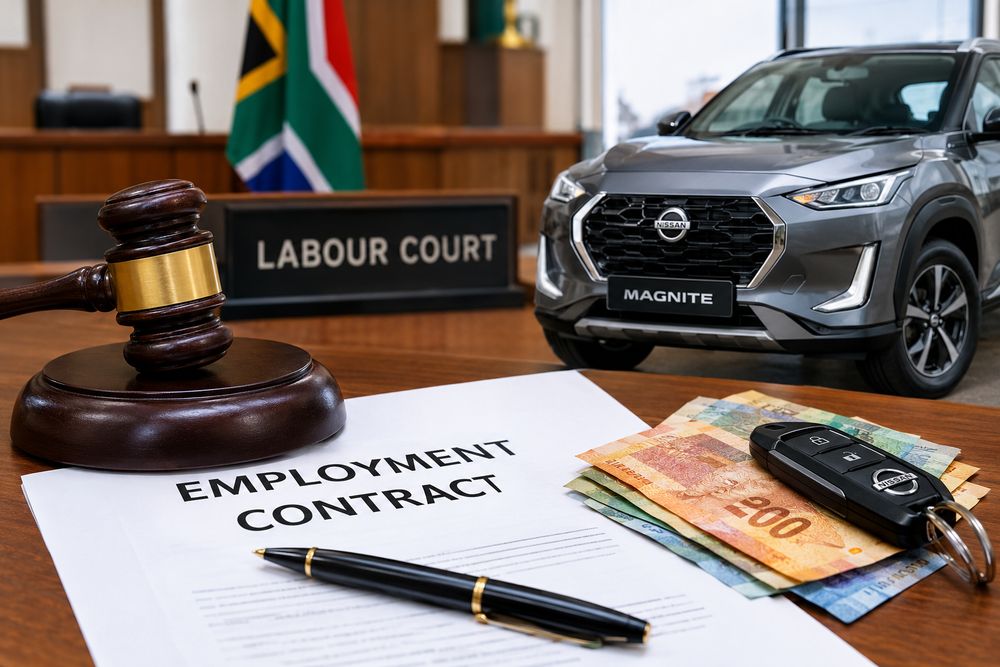
Company says Nissan Magnite replaced employee’s disputed R10,000 salary increase.
An employee is locked in a legal battle with her former employer over an alleged R10,000 monthly salary increase which the company claims was replaced by an agreement to provide her with a Nissan Magnite.
The Labour Court in Cape Town referred the dispute to oral evidence after finding a material dispute of fact over whether the salary increase was ever agreed upon.
The employee, A Da Silva, worked for Ram Self Adhesive Labels (Pty) Ltd from January 2022 until October 2025.
Da Silva approached the Labour Court seeking an order declaring that the company breached her employment contract and compelling it to pay outstanding remuneration, annual leave pay and notice pay.
According to Da Silva, she received a salary adjustment under which her monthly salary was increased by R10,000 with effect from February 2024.
She claimed that although other terms of the amended agreement were implemented, the salary increase was never paid.
As a result, she alleged that she was short-paid by R10,000 a month between February and June 2024.
The dispute became more complicated after employees received a 10% wage increase in July 2024.
Da Silva claimed that the 10% increase was calculated on her original salary of R40,000 instead of the alleged increased salary of R50,000.
This meant she received R44,000 instead of what she calculated should have been R55,000.
She further claimed that when an 8% increase was granted in June 2025, it was again calculated on the lower salary, resulting in remuneration of R47,470 instead of R59,400.
According to her calculations, she was short-paid a total of R228,640.
Da Silva also argued that the failure to implement the R10,000 increase had a knock-on effect on other payments.
She claimed that her leave payout, three months' notice pay, UIF, Skills Development Levy and bonus provisions had all been incorrectly calculated and should be recalculated.
Ram Self Adhesive Labels disputed that Da Silva was ever entitled to the additional R10,000 a month.
The company said Da Silva had submitted a draft employment contract containing the R10,000 increase and had been instructed to print two copies, with one left with the company for consideration.
However, according to the employer, the agreement was never signed.
The company said discussions subsequently took place between the parties and resulted in an agreement that it would purchase a Nissan Magnite for Da Silva's use instead of paying her the R10,000 salary increase.
The employer also relied on the fact that Da Silva did not raise the alleged failure to implement the salary increase until 17 months after it was allegedly supposed to take effect.
It said she also did not raise the issue when the general salary adjustments were made in July 2024 and July 2025.
The company further alleged that Da Silva's dispute was actually linked to the vehicle benefit.
It said that after referring the matter to the Commission for Conciliation, Mediation and Arbitration, Da Silva complained that she had been deprived of the vehicle during her three-month notice period.
The company claimed she had understood that the Nissan Magnite would eventually become her personal property.
However, the employer maintained that the agreement was always that the vehicle would remain its property and that Da Silva would merely be allowed to use it.
The company therefore denied that a salary increase had ever been agreed.
The Labour Court said the central issue was whether the alleged amended employment agreement had actually been concluded.
The court noted that a letter from the company's attorneys dated November 12, 2025, referred to a contract of employment and a clause which the company alleged Da Silva had breached.
However, the court found that the clause referred to in the attorneys' letter did not correspond with the clause in the proposed agreement relied upon by Da Silva.
The court held that the issue concerning the conclusion of the agreement constituted a material dispute of fact.
The court explained that motion proceedings are generally used where a dispute of fact is not anticipated. Where such a dispute arises, a court has three options: refer the disputed facts to oral evidence, resolve the dispute using the Plascon-Evans rule, or dismiss the application.
The Labour Court ultimately decided that the matter should proceed to oral evidence rather than dismissing Da Silva's application.
Acting Judge May said the purpose of labour legislation included the effective and speedy resolution of labour disputes and that dismissing the application could potentially close the door on Da Silva as a litigant.
The court therefore exercised its discretion in favour of referring the matter for oral evidence.
The parties were ordered to attend a pre-trial conference within 15 days and to attempt to reach agreement on the issues that would need to be determined at trial.
The court's order does not finally determine whether Da Silva was entitled to the R10,000 salary increase or whether the Nissan Magnite was agreed upon as a replacement benefit. Those disputed issues will be considered through oral evidence.
Each party was ordered to pay its own costs.