Ermelo wastewater plant linked to sewage pollution, DWS says - IOL
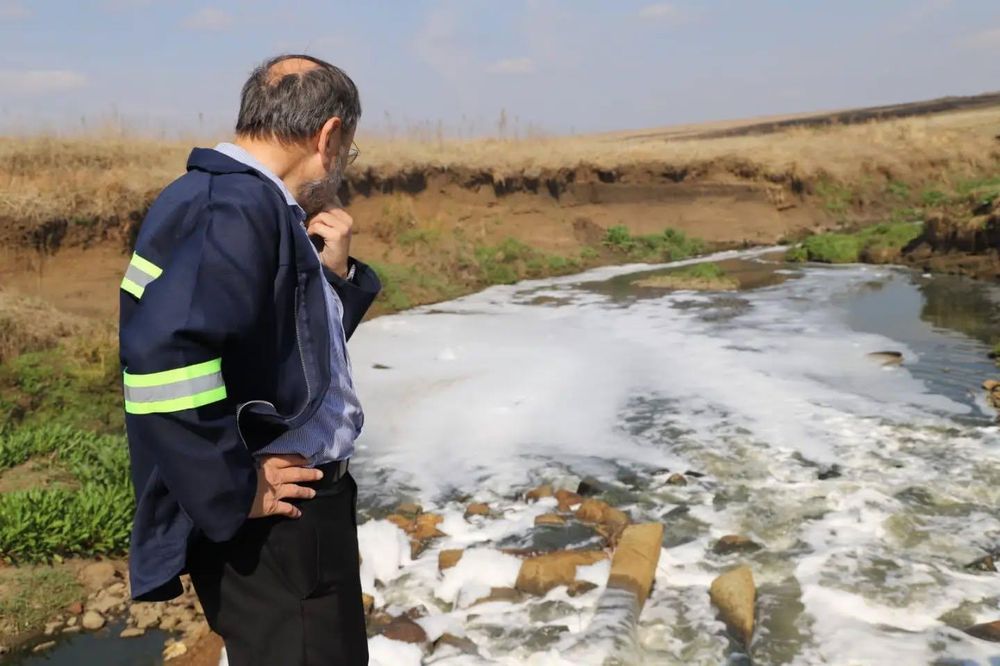
Water and Sanitation Deputy Minister Dr Jack Bloom on an oversight visit to assess the level of water pollution caused by the Ermelo Wastewater Treatment Works.
The Department of Water and Sanitation is concerned that the Ermelo Wastewater Treatment Works sewage was discharged straight into water resources because of poor maintenance.
The DWS said investigations revealed that the Ermelo plant was not authorised to engage in water uses and there were poor operations and maintenance of the plant, resulting in the sewage bypassing the process units.
Dr Jack Bloom, Water and Sanitation Deputy Minister, together with Gert Sibande District Municipality Executive Mayor Walter Mngomezulu and Msukaligwa Local Municipality Mayor Mapulane Nkosi, undertook an oversight visit in Ermelo on Monday to assess the level of water pollution caused by the plant that has negatively affected the surrounding communities and agricultural activities in the area.
The DWS said untreated and poorly treated sewage bypassing treatment units from the plant directly affects local water resources including the Pet Dam, Brummer Dam, Vaal River Catchment, and Nels River.
Wisane Mavasa said the department had issued several directives to the municipality for failure to take reasonable measures to prevent pollution of water resources.
“A criminal case was also laid, and the Middelburg High Court found the municipality guilty of polluting the water resources and ordered it to take corrective measures to stop the discharge of poor-quality effluent and prevent further pollution of water resources,” Mavasa said.
Bloom inspected the Breyton and Ermelo plants, Brummer Dam and the affected farming areas. In August 2025, Nkosi officially handed over a project to a contractor to upgrade the Ermelo plant and to launch a new bulk sewer pipeline installation for Ermelo Ext 44 – Phase 1.
During the launch, Nkosi highlighted to the community of Wesselton (Ward 3) that the plant’s current capacity of 9 megalitres per day would be expanded to 33 megalitres per day, ensuring it meets the needs of the rapidly growing Msukaligwa population.