
EU and UK strike 'landmark deal' to strengthen ties after Brexit
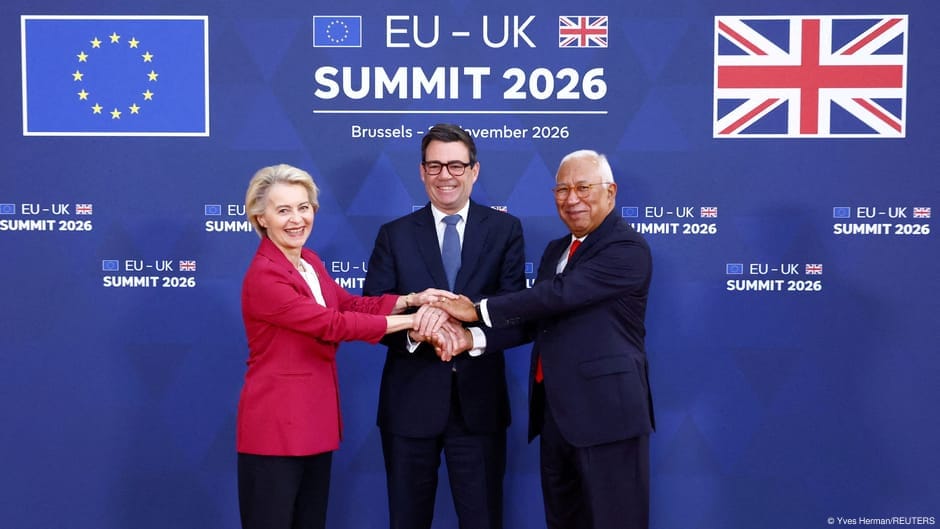
UK Prime Minister Andy Burnham is seeking to build closer ties with the EU after BrexitImage: Yves Herman/REUTERSAdvertisementEuropean Union top officials and UK Prime Minister Andy Burnham announced deals on trade and youth mobility at Friday's Brussels summit.
This might be the first step to rebuild ties, a decade after Britain voted to leave the EU.
During the delegations' meeting, Burnham said the deal was a "landmark agreement," while European Commission President Ursula von der Leyen called it a "turning point" in relations.
"This is a good day for Britain. This is a good day for Europe," Burnham said.
Speaking at the joint press conference, European Council President Antonio Costa said the bloc respected the British decision to leave the EU and would respect its choice to strengthen ties in the post-Brexit era.
He said jokingly that the EU and UK "may drive on the opposite sides of the road, but what matters is they are heading for the same direction."
Burnham said that the deals were made with young people in mind, adding: "This deal is for you. This deal really is about lifting your life chances.
He went further and said "Brexit took opportunities from young people," and that they have to "open up new opportunities" for young people.
Von der Leyen said the youth experience project would "open horizons and create friendships that will last a lifetime."
She said the trade agreement is a "two way street" and it means "more choice for the customers."
Von der Leyen also mentioned the agreement on the carbon market, saying that it would cut emissions and generate investments in cleaner industries.
She also said Britain will rejoin the Erasmus+ program, adding, "We miss them so much."
In September, Burnham said he would seek a political consensus on the country's future relationship with the EU, even suggesting he could campaign to take Britain back into the bloc at the next election.
Brussels said the agreements would only take effect if a deal is reached to lower university tuition fees for EU students studying in the UK.
"Britain and Europe share values, interests and a global neighborhood. In a more dangerous world, we are stronger together. A closer partnership with Europe is good for working people, good for Britain and good for Europe," Burnham said as he arrived in Brussels.
UK prime minister, who was greeted on arrival by a string quintet, said Britain should explore different options for its future relationship with the EU, including rejoining the bloc.
On Monday, he said it was the "obvious truth" that Britain had lost more than it had gained from Brexit.
Three key agreements were discussed in Brussels: one to simplify food exports by reducing red tape, another to link the UK and EU emissions-trading systems, and a third to establish a "youth experience scheme."
It aims to facilitate British companies exporting food to Europe, as well as enabling young people to travel between the UK and EU for work and study without being subject to existing visa requirements.
A key obstacle was securing a commitment from the UK to reach a future agreement that would reduce university tuition fees for EU students to the same level paid by British students. The EU made the implementation of the other agreements conditional on reaching such a deal.
The two sides had agreed on these initiatives shortly before the summit started, DPA news agency reported, citing EU diplomats and officials.
According to DPA, the agreements will only take effect if both sides reach a deal to lower tuition fees for EU students at British universities. They aim to reach an agreement on this issue within the next six months.
Polling firm YouGov runs a regular tracker on whether the UK was right or wrong to vote to quit.
Since mid-2022, a majority of people surveyed said Britain was wrong to leave.In September, the "Bregret" camp rose to 60% — the highest ever.

