Europe struggles to find its voice

GOOD MORNING.This is Sebastian Starcevic, writing to you from sunny Dublin. I’ll be getting a pint of Guinness later at Grogan’s; thanks to Ireland’s foreign minister for the suggestion. Read on for other recs from POLITICO’s Irish contingent.
— Europe’s leaders will hash out who should speak for the bloc in Ukraine-Russia talks.
— Australia’s government insists it can get its trade deal with the EU through the parliament in Canberra.
On this week’s Brussels Playbook Week Ender: Anne McElvoy talks to Belarusian opposition leader Sviatlana Tsikhanouskaya about talks to end the war in Ukraine and Green MEP Hannah Neumann and Gordon Repinski about the rise of Ilse Aigner.
**A message from TikTok: Did you know TikTok advertising generated €31 billion in economic output across the EU in 2025? New research shows the platform helped businesses grow, supporting €13 billion in additional economic output for small and medium-sized businesses and helping millions of businesses reach customers across borders.**
WHO SPEAKS FOR EUROPE? European Council President António Costa is emerging as the front-runner to represent the EU in eventual Russia-Ukraine peace talks. But resistance from Europe’s biggest powers and deep divisions over the role of top diplomat Kaja Kallas threaten to derail the efforts to secure the bloc a seat at the negotiating table.
As EU leaders gather in Dublin today to thrash out who should speak for Europe, Playbook’s conversations with leaders, diplomats and officials reveal a growing consensus around Costa — though the bloc’s most powerful capitals might not accept being represented by Brussels at all.
Look no further: If you ask Estonian Prime Minister Kristen Michal, the answer is obvious: it should be Costa and Kallas. “Putin does not have to like them,” he told me in an interview in Dublin. What’s important is they are “accountable” to the EU and will presumably hold their positions until 2029.
The pair makes sense on paper: Costa’s role means he represents the EU on the world stage, while Kallas handles matters of foreign policy. The Baltics, Luxembourg, Poland, Italy and others support Costa taking the lead, diplomats and officials told Playbook.
But while most diplomats we spoke to are on board with Costa, some are far less keen on Kallas, who is seen as too hawkish on Russia. “That’s a joke, right?” a European diplomat (granted anonymity for obvious reasons) said, adding that Kallas is “probably the worst person you could pick.”
Then again: Her hawkishness is precisely what makes her the right pick, a second senior European diplomat argued. “It would make much more sense,” they told my colleague Zoya Sheftalovich. “That’s what Putin would do. He would pick whoever you don’t want to talk to.”
Both Kallas and Costa have signaled they’re up for the job. Kallas told reporters in Dublin yesterday that she and Costa were chosen for their roles in 2024, two years after the invasion of Ukraine, on the understanding that they would be the ones talking to Russia someday. And Costa stressed in his letter to Italy’s Giorgia Meloni on this topic that the EU is represented by its institutions.
Non and nein: That might not fly with France and Germany, my colleagues Jacopo Barigazzi, Giorgio Leali and Hans von der Burchard report. The EU’s two biggest countries will oppose any format that means giving up their seat at the table, a diplomat and an EU official said.
Wild card: Another name that has come up is that of Jonathan Powell, the U.K.’s national security adviser (and chief of staff to Tony Blair when he was PM), a European diplomat in Britain told my colleague Esther Webber.
Lower your expectations: The summit today is unlikely to result in an envoy being formally selected but will result in an “understanding” around the leaders’ table, a senior EU official said. “The individual or the structure itself, I think, is something that we need to tease through a little bit more,” Irish Foreign Minister Helen McEntee told me.
Whatever happens, you’ll want to tune in today: “It has endless possibilities. You could even have a TV show about it,” Michal joked, adding that the topic had already come up briefly among leaders on Thursday. “But we are saving the best part for tomorrow.”
We’ll bring you the best of the action in our live blog.
HOW THE MACRON CONSPIRACY THEORY BLEW UP: My colleague Marion Solletty has a must-click piece out this morning tracing how the false claims about Brigitte Macron went from a fringe theory to a global story — and became a cautionary tale on the limits of political influence in the digital age.
SHAKE-UP MEETUP: The Commission’s HR chief Piotr Serafin will meet this afternoon with union leaders to talk through the biggest administrative overhaul of the institution in two decades, which has already got the thumbs-up from the Renouveau et Démocratie staff union.
PARLIAMENT PLAYS FOR TIME: The European Parliament might postpone a key vote on the EU’s next seven-year budget to January to gain leverage over governments pushing to cut farmers’ subsidies and regional payouts, EPP negotiator Siegfried Mureșan told Playbook. (More here for Morning Agriculture & Food subscribers.)
FUEL FOR CONCERN: NATO forces could face jet fuel shortages in a future war as Europe’s transition away from fossil fuels and shrinking oil refining capacity create dangerous vulnerabilities, a new study has warned.
WHAT TO WATCH TODAY: Artificial intelligence may be the official focus in Dublin, but leaders have a packed side agenda — from Ukraine’s place in peace talks to the race for the top job at the European Central Bank, Gerardo Fortuna reports. Here are five things on our radar:
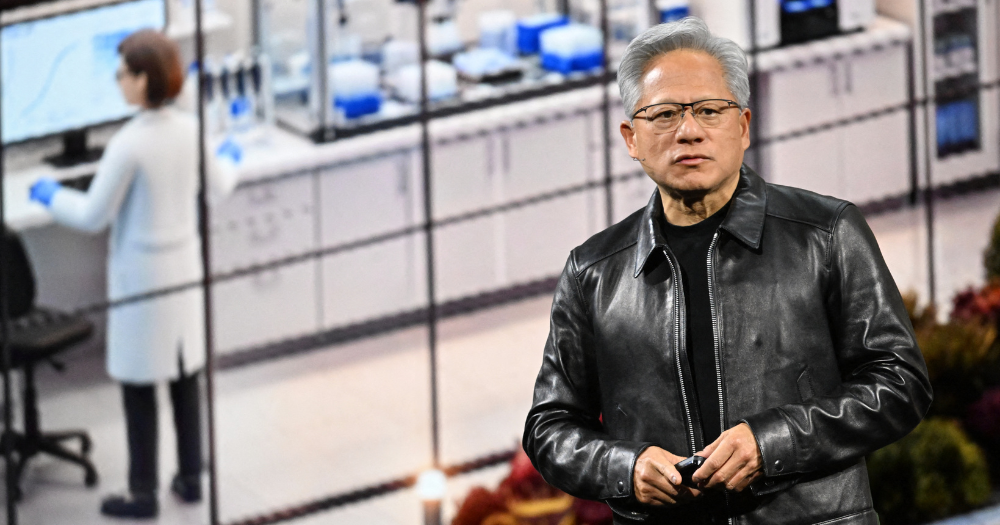
1 — AI frontier: Jensen Huang’s fall has been a reminder that Europe has largely been a spectator in the global AI race, Pieter Haeck writes. Leaders will debate whether Europe should build frontier models to rival U.S. and Chinese developers or focus on applications. António Costa wants Europe to become “a leading and sovereign player” across the AI value chain — the obstacle is funding computing power and infrastructure. Mistral CEO Arthur Mensch and AI pioneer Geoffrey Hinton will address leaders.
2 — The Ukraine envoy question: Costa agreed to put the issue formally on the agenda after Giorgia Meloni called the EU’s approach “all over the place.” The bloc remains deeply divided over who it should choose as its representative — yet the task of choosing has become increasingly urgent after U.S. envoy Steve Witkoff said Europeans would be invited to the next round of Ukraine negotiations.
3 — Ukraine’s €70 billion gap: While peace talks gather pace, Kyiv is also facing a massive funding shortfall next year. German Chancellor Friedrich Merz wants Ukraine financing linked to talks on the EU’s budget, which is being resisted by governments wary of tying the two together.
4 — The MFF: The EU’s next long-term budget is another issue not formally on the agenda, but with the clock ticking, each meeting is a potential arena to narrow the gulf between the warring camps’ positions ahead of a new negotiating document expected around Nov. 21. Merz is set to discuss the budget with Macron, though no breakthrough is expected.
5 — ECB jobs bargain: Macron and Merz are also expected to discuss the race to succeed Christine Lagarde. Spain’s Pablo Hernández de Cos and former Dutch central banker Klaas Knot are leading contenders. The contest also covers two other senior ECB posts, with Paris and Berlin both coveting the chief economist job, according to two officials.
Much of the prep work for today’s informal leaders’ meeting will have been done by sherpas … but what are they? Sherpas are personal representatives (or chief negotiators) who carry out behind-the-scenes work for ministers, heads of state and government ahead of international summits. Named after the Himalayan mountain guides who lead climbers up peaks, political sherpas are meant to guide leaders through difficult diplomatic terrain.
TALK TO PLAYBOOK: WhatsApp us on +32 491 050629 and listen from 7 a.m. to hear if we give you a shout-out.
EXCLUSIVE — IGNORE THE NOISE: Canberra is “absolutely confident” the EU-Australia free trade agreement will get through Australia’s parliamentary processes, despite the opposition coalition threatening to bring it down, Australia’s Industry Minister Tim Ayres told Zoya Sheftalovich.
The trade deal is “unambiguously” in the interests of Australian businesses and workers, he said. “You’d have to have rocks in your head to oppose it.”
Damage control: The bullish comments come after Australia’s opposition’s trade spokesperson Matt Canavan, who previously called the country’s agreement with the EU the “worst trade deal ever,” again took aim at the agreement, criticizing its terms for farmers and climate commitments. In response, the European Parliament’s Australia delegation Chair Seán Kelly warned that if Australia reneges on the deal, it could be “buried” for decades, with Brussels having already shut the door to reopening negotiations.
The worrying math: Canavan’s opposition coalition cannot kill the deal on its own, but it could help block the laws needed to put it into effect in Australia’s Senate.
History lesson: Negotiated over eight years, the deal will cut tariffs and open market opportunities, while deepening the EU’s access to Australian critical minerals. Talks collapsed in 2023 over farm access and product names, but Donald Trump’s tariffs and concerns about reliance on China’s critical minerals gave the deal fresh geopolitical urgency earlier this year. The two sides reached an agreement in March.
On the Horizon: Ayres was in Brussels to formally sign up to Horizon Europe, which will give Australian researchers access to the EU’s €95 billion research program.
**Twenty years of POLITICO. One search away. Every fight in politics has happened before, in some form, and we were probably there for it. The new POLITICO app lets you search nearly twenty years of our reporting from your phone, across articles, newsletters, podcasts and people at the same time. Ask about a bill, a minister, a trade dispute or a budget standoff and get the whole story back: what happened last time, who was involved and how it ended. It's the backstory in seconds, wherever you are. Handy before a meeting, essential before a vote, and (we're told) slightly addictive on a long train journey. Get the new app.**
LAGARDE FOR PRESIDENT? Christine Lagarde’s early departure as European Central Bank chief fuels speculation that she could join the race to become French president next year — something she’s rejected in the past but not since announcing her early ECB exit. If she does enter the fray, new polling by Cluster17 for POLITICO suggests she’d fare as well as centrist candidate Edouard Philippe, as Pauline de Saint-Rémy reported yesterday. Here’s what that looks like.
CALLING OUT DUBLIN: Academics and digital rights advocates Shoshana Zuboff and Johnny Ryan want the European Parliament to launch an inquiry into Ireland and the European Commission over Dublin’s track record on GDPR enforcement, according to a paper seen by Morning Cyber’s Ellen O’Regan (for subscribers). DON’T IGNORE US: Exiled Belarusian opposition leader Sviatlana Tsikhanouskaya is urging the EU not to overlook Belarus in negotiations over Ukraine and Europe’s future security, Anne McElvoy reports.
TROUBLE IN THE HEARTLAND: Pedro Sánchez officially launched his reelection campaign yesterday in Andalusia, but the center-left is on the ropes even in a region that has been a political stronghold for decades.
BORDER CROSSINGS KEEP FALLING: Irregular crossings into the EU dropped 29% in the first 10 months of 2026, according to new Frontex figures out today and seen in advance by Playbook. The central Mediterranean route saw a 55% decline, while the western Mediterranean bucked the trend with a 21% rise.
DECLASSIFIED: In his weekly humor column, Paul Dallison asks whether the person most likely to get through to Vladimir Putin is judo star Teddy Riner, if he becomes president of France.
WEATHER: Partly sunny, with a chance of showers in the afternoon. High of 9C.
WHEN IN DUBLIN: We’re taking a brief interlude from our Brussels-focused tips to acknowledge those logging on from the Irish capital this morning. And what better way to mark the end of two days of summitry than to head out for a pint?
Good things come to those who wait: Irish Foreign Minister Helen McEntee urged me to go to The Hairy Lemon, which describes itself as “one of Dublin’s trendiest pubs.” Or better yet: Grogan’s. “It’s an institution if you’re looking for a pint of Guinness,” McEntee said. Our Irish POLITICOs also recommended the Long Hall, an iconic Victorian watering hole, and the Dawson Lounge (which claims to be the smallest pub in Dublin)
Those in the mood for some live traditional Irish music can head to the Cobblestone Pub. Only the hardiest of drinkers should brave the tourist-magnet Temple Bar on a Friday night, but it’s still name-checked by our colleague, who says it’s worth it … for one drink.
Missed your favorite? Feel free to send us your tips!
BACK IN BRUSSELS … PROTEST NO. 1: Municipal and CPAS/OCMW workers gather at Place Rogier at 10 a.m. to protest budget cuts, staff reductions and growing pressure on local public services.
PROTEST NO. 2: Brussels librarians are fighting doomscrolling the old-fashioned way: by reading books. Staff from Dutch-language libraries will ride Metro Line 1 from 10 a.m. to 11 a.m., hoping to tempt commuters away from their phones.
TOO EARLY FOR CHRISTMAS? At Playbook, we think so. But if you’re ready to get festive — and risk losing “Whamageddon” before December even starts — Mixed Trees opens Friday at MIX Brussels, with nearly 60 Brussels brands and designers reinventing the Christmas tree using their own materials and crafts. Free entry, all weekend. Just don’t blame us if you find yourself exposed to “Last Christmas.”
WEEKEND PLANS? Grrrabuge takes over LaVallée in Molenbeek on Saturday and Sunday, bringing together around 60 natural-wine producers, plus cider, beer, alcohol-free drinks and street food. It also wins Playbook’s entirely unofficial award for the best non-AI poster in Brussels. In the age of AI slop, that’s worth raising a glass to.
SPOTTED … at the presentation of the IMF’s Regional Economic Outlook for Europe, where sparkling wine flowed and a mysterious carbonara-flavored vol-au-vent stole the show: Economy Commissioner Valdis Dombrovskis and his cabinet members Ana Apse-Paese and Arnolds Eizenšmits; the European Commission’s Paul Haguenauer; MEP Jonás Fernández; Johannes Kleis, spokesperson for the Eurogroup president; the ECB’s Boris Vujčić; the IMF’s Mateusz Szczurek and Martin Caudron; European University Institute’s Maria Demertzis; Bank of America’s Daniela Cuciureanu; Euronews’ Maria Tadeo; the FT’s Paola Tamma; Rapporteur’s Thomas Møller-Nielsen; ANSA’s Sabina Rosset; and POLITICO’s Gerardo Fortuna.
Berlin: Friedrich Merz’s threat to block the EU budget unless all countries stump up for Ukraine is set to be a flashpoint at today’s summit in Dublin — but the chancellor has no intention of backing down.
Paris: Sébastien Lecornu is dangling €725 million in farm aid to get his budget passed, even as a slowing economy makes his deficit target harder to hit.
Madrid: Spain’s televised election debates kick off tonight with a clash on the economy, in which Carlos Cuerpo will make the case for the Socialist-led government.
London: Andy Burnham is back in Westminster after his diplomatic blitz, preparing for a week that could define his approach to the welfare state and Britain’s relationship with the EU.
Read more from our Playbook family: Washington … Ottawa … Canberra.
— EU leaders meet for an informal European Council meeting in Dublin. Arrivals from 9:30 a.m. and press conference around 4:45 p.m. Watch live.
— Coreper II meets in Brussels at 9 a.m. and Coreper I at 10 a.m.
— Defense Commissioner Andrius Kubilius visits aerospace companies Thales Alenia Space Italia, Altec and Argotec in Turin.
— European Parliament President Roberta Metsola will present the European Order of Merit to Mary Robinson, former president of Ireland.
— Mediterranean Commissioner Dubravka Šuica is at COP31 in Antalya, Turkey, where she attends the launch of the Union for the Mediterranean’s Climate Action Plan and delivers opening remarks at a high-level event on energy-transition finance.
— Executive Vice President Teresa Ribera visits the Flanders Marine Institute and meets its General Director Jan Mees, West Flanders Acting Governor Koen Surdiacourt and Ostend Mayor John Crombez.
— Environment Commissioner Jessika Roswall addresses the Circular Valley Forum in Wuppertal and visits LyondellBasell in Wesseling, Germany.
— Preparedness Commissioner Hadja Lahbib visits Greenland’s government in Nuuk and travels to Kapisillit and Atammik.
— Research Commissioner Ekaterina Zaharieva delivers opening remarks and participates in the fourth meeting of the European Startup and Scaleup Forum in Brussels.
— Enlargement Commissioner Marta Kos delivers the opening speech at an event marking 30 years of Transparency International Switzerland in Basel.
MEP Diana Iovanovici Șoșoacă; former MEP Adam Szejnfeld; Cefic’s Steven Van de Broeck; EUinsight’s Daniel Fritz; author and former politician Ayaan Hirsi Ali; POLITICO’s Tamer Schiller.
Celebrating Saturday: MEP Bernd Lange; former MEPs Heidi Hautala and Constance Le Grip; FSI Europe’s John O’Brien; King Charles III; former U.S. Secretary of State Condoleezza Rice.
Celebrating Sunday: Former MEP Ashley Fox; Deputy Director-General of DG ENV Patrick Child; FT’s Silvia Sciorilli Borrelli; Albert Rivera, former Ciudadanos leader and POLITICO 28 alum. Day of the German-speaking Community in Belgium.
Playbook is brought to you by POLITICO’s EU Politics team: Gerardo Fortuna, Nicholas Vinocur, Gabriel Gavin, Zoya Sheftalovich, Max Griera, Mari Eccles, Hanne Cokelaere, Lucia Mackenzie, Gregorio Sorgi and Sebastian Starcevic. And: reporters Milena Wälde and Daria Zakharova, editors Alex Spence and James Panichi, and producers Dean Southwell and Hugh Kapernaros.
**A message from TikTok: Did you know TikTok advertising generated €31 billion in economic output across the EU in 2025? The platform helped businesses grow, acting as a discovery engine for opportunity across the European economy new independent research shows. The impact goes well beyond the app. Advertising on TikTok helped generate €13 billion in additional economic output for small and medium-sized businesses, while more than 6.5 million EU businesses used TikTok to reach customers across borders. Discovery on TikTok helps small businesses connect with new customers, creators reach new audiences, and useful ideas and skills travel between countries. These connections can translate into real-world growth, from increased sales for local businesses to new opportunities for entrepreneurs and creators. Across the EU, TikTok is turning online discovery into economic activity, helping businesses grow and connecting people and products across borders.**
SUBSCRIBE to the POLITICO newsletter family: Brussels Playbook | Brussels Playbook Capitals | London Playbook | London Playbook PM | Playbook Paris | Berlin Playbook | Madrid Playbook | Sunday Crunch | EU Influence | London Influence | D.C. Playbook | D.C. Influence | Decoded | Canada Playbook | POLITICO Forecast | Canberra Playbook | All our POLITICO Pro policy morning newsletters