Ex-apartheid cop convicted of murder now running for mayor in Nelson Mandela Bay - IOL
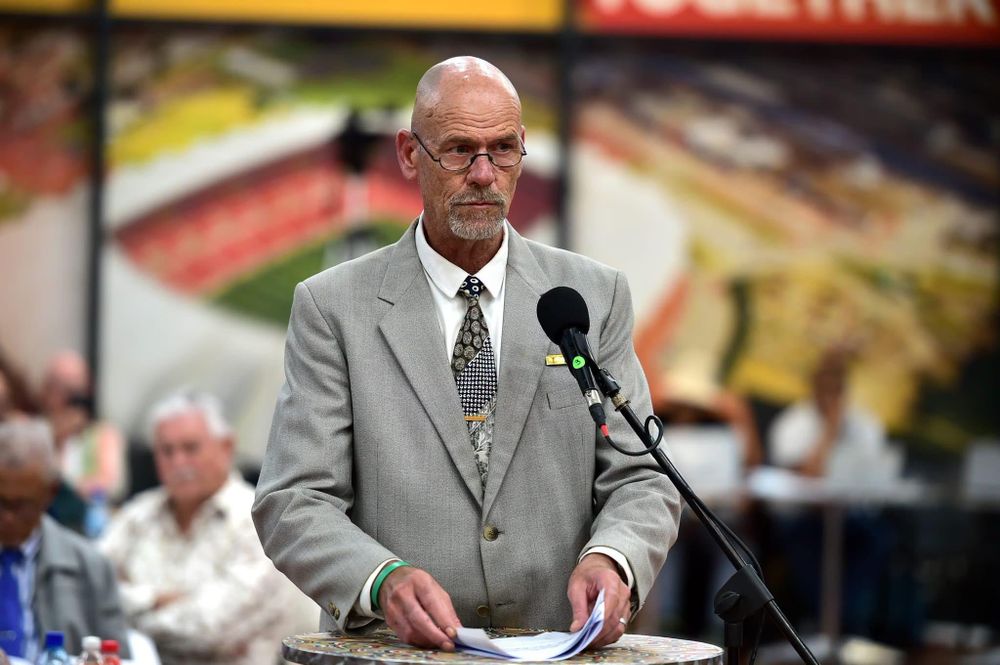
The FF Plus says its mayoral candidate Bill Harington should not face lifelong punishment for a murder conviction dating back more than 30 years.
The Freedom Front Plus's mayoral candidate for the Nelson Mandela Bay Metropolitan Municipality is a former apartheid-era police officer who spent almost 14 years in prison for the 1991 murder of ANC activist Mbongeni Jama.
But the party says Bill Harington should not be punished for the rest of his life over a murder conviction dating back more than three decades.
The FF Plus announced Harington as its mayoral candidate earlier this month, sparking debate over his past and his bid to lead the metro.
Harington said the party had been aware of his conviction since he first joined the FF Plus.
Harington was 21 when he was involved in Jama's killing in KwaZulu-Natal in 1991.
He was a young police officer and section head of a unit of young Inkatha special constables.
One of the constables under his command shot Jama with a shotgun at close range.
Harington did not pull the trigger, but was convicted of murder based on his role as the section head.
He was initially sentenced to eight years in prison, which was later increased to 18 years on appeal, and he ultimately spent 13 years and 10 months behind bars.
During the Truth and Reconciliation Commission (TRC) proceedings, Harington apologised to Jama's parents and family.
The FF Plus says the TRC found no evidence that Harington and his two co-accused had acted on instructions from higher command.
FF Plus MP and chairperson Wouter Wessels said the party had known about Harington's conviction for years.
He also questioned why his criminal record had suddenly become an issue ahead of the local government elections.
"Bill was convicted of murder when he was 21 years old for his involvement as a police officer in the said murder. He did not pull the trigger himself but because of the command structure of the unit, was held accountable. This happened in a very volatile environment in KwaZulu-Natal," Wessels said.
He said Harington had served his sentence, apologised to Jama's family and demonstrated remorse.
"Through his recent actions and dedication to serving the broad community, we were satisfied in 2021 that he has remorse about what happened 30 years ago and that he is dedicated to making a contribution towards a better South Africa for all," Wessels said.
Harington was selected as a candidate in 2021 and subsequently served as a councillor in Nelson Mandela Bay. Wessels said he was again placed in the number one position on the party's list for the upcoming election.
"There is no reason to exclude Bill and to punish him for the rest of his life. He already faced retribution."
Wessels said the party conducts criminal record checks on its candidates and assesses each case individually.
"Each case is assessed on its own merits. The party was aware of Bill's past and assessed if he stands for and promotes the values and principles of the party," he said.
He said Harington had learned from his past, showed genuine remorse and had dedicated himself to community upliftment.
The FF Plus is defending its decision to field convicted murderer Bill Harington as its mayoral candidate in Nelson Mandela Bay.
Independent political analyst Goodenough Mashego said he did not believe the FF Plus stood much chance of winning the metro.
"I don't think FF Plus stands any chance of winning in Nelson Mandela Bay, because while the politics have shifted to the right, they've not shifted to the right enough for FF Plus to be able to win," he said.
Harington's nomination could instead draw attention to gaps in South Africa's electoral legislation.
"If the IEC law allows for such people to stand for office, the blame cannot really be on FF Plus, the blame lies with the IEC," Mashego said.
He pointed to other politicians who have served prison sentences before entering public office, including Patriotic Alliance (PA) leader Gayton McKenzie and City of Johannesburg MMC for Transport, Kenny Kunene.
He said the issue raised broader questions about whether people who had served their sentences should continue to face restrictions on political participation.
Political analyst Dr Bernard Sebake, dean of students at the University of Mpumalanga, questioned how the party would convince voters that Harington had been rehabilitated and was ready to lead the community.
"Because a person has been convicted, to what extent do we say this person has been rehabilitated? They're ready to not only be integrated in society, but to take an active role in leading the very same society," Sebake said.
He said the issue was particularly sensitive because of Harington's involvement in an apartheid-era killing.
Sebake said the party needed to explain to voters why it believed Harington had changed and why he was suitable to serve in public office.
"When you think as a party that this person is ready to serve the society, what kind of a narrative do you put to the society to satisfy them that indeed we agree this person has not been good in the past, but we think he has rehabilitated?" he said.
Sebake also said voters were primarily concerned with issues such as jobs, safety and basic service delivery.
He did not believe Harington's candidacy would significantly affect the FF Plus's performance in Nelson Mandela Bay, given the party's relatively small support base in the metro.
Asked whether former convicts, including people implicated in apartheid-era violence, should be prevented from contesting elections, Sebake said serving a criminal sentence did not generally result in a permanent ban from democratic participation.
"The bigger problem is that if you're convicted and you have served your dues, there's not any other law that will make you not participate in any democratic process," he said.
Restrictions could apply while a person was still serving a sentence or under correctional supervision, but once officially released and integrated into society, a person could participate in democratic processes, subject to the applicable legal requirements, Sebake said.