Ex-Election Commissioner questions legality of SIR procedure amid EC report row
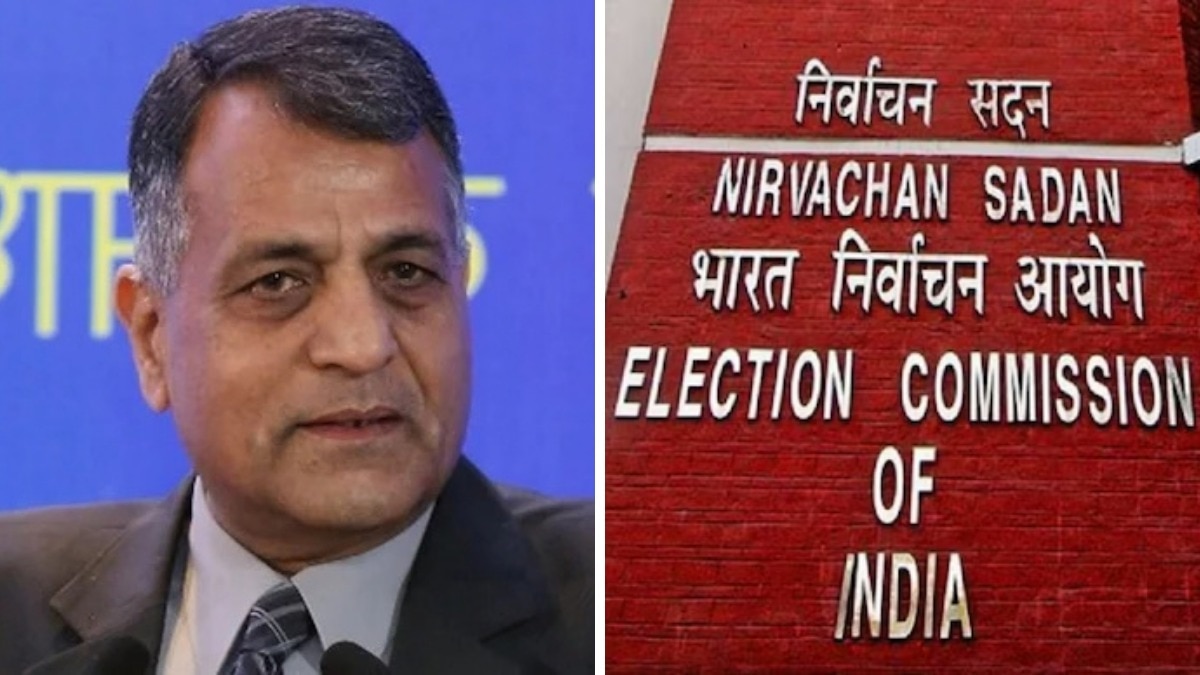
Former Election Commissioner Ashok Lavasa on Wednesday raised questions over the legality of certain procedures adopted during the Special Intensive Revision (SIR) of electoral rolls, asking the Election Commission to clarify whether reported changes to Form 6 and the ERO-Net system followed due process.
His remarks came amid a row over a report in The Indian Express that Election Commissioners Sukhbir Singh Sandhu and Vivek Joshi had formally objected 14 times over the past 10 months to decisions and orders related to the SIR exercise.
The reported objections included changes to Form 6, used for new voter registration, and the centralisation of the electoral roll database. Lavasa said these issues warranted scrutiny independent of whether all three commissioners had agreed to the changes.
"Even if all the three commissioners agreed, was it legal for them to change the Form 6 without going through the necessary approval process? That is a question which is open," Lavasa said in an exclusive interview with India Today.
Lavasa also questioned whether the ERO-Net system had affected the statutory powers of Electoral Registration Officers (EROs), who are responsible for decisions on the inclusion and deletion of names from electoral rolls.
Referring to a reported case in Goa, where an ERO was allegedly unable to add 97 people to the final roll despite being satisfied about their eligibility, Lavasa said such a situation would raise concerns.
"If the ERO felt constrained that he could not admit 97 people in spite of being sure about their eligibility, then that certainly is a problem," he said.LAVASA QUESTIONS CENTRALISED POLL ROLL DATABASE
Lavasa said centralising the electoral roll database was not a problem in itself, but stressed that EROs must retain the ability to exercise their statutory powers.
"Election Commission of India has no jurisdiction in deciding on the fate of an elector, whether he should be in or out. Therefore, it is the ERO which exercises the entire jurisdiction," he said.
A centralised database could be maintained, he said, as long as the legally authorised ERO had access to the relevant part of the system and could modify the electoral roll within their jurisdiction.
"The legally authorised person must have access to his limited jurisdiction, so that he can modify the electoral roll according to law," Lavasa said.DIFF OF OPINION NOT DISSENT: LAVASAOn the reported objections by Sandhu and Joshi, Lavasa said a difference of opinion within the poll panel did not automatically amount to formal dissent, echoing the Election Commission's remarks at a press conference shortly before.
He said the Election Commission should disclose the full details of the communications, including whether the two commissioners took the same position on specific issues, whether their views were considered and whether they eventually agreed with or were overruled on the decisions.
"If an opinion has been expressed by somebody in a communication, the Election Commission took note of that before arriving at a decision, that is for the Election Commission to explain by giving full facts and record," he said.
Lavasa said formal dissent would arise when commissioners took opposing positions on an agenda before the Commission.
"Dissent is when some agenda has been put up before the Commission. Two persons have one view and one person has another view. That is dissent," he said.
He also questioned why an Election Commissioner would write to the Cabinet Secretary on matters concerning the poll panel's internal functioning, saying the Election Commission should explain the circumstances behind such a communication.
"There have to be checks and balances," Lavasa said, adding that an additional layer of oversight would strengthen accountability and supervision.
The Election Commission has maintained that its decisions, including those related to SIR, were unanimous and that individual communications or differences of opinion should not be construed as institutional dissent.
Lavasa said the controversy could not be assessed conclusively without the full records. "All these things call for a lot of clarification to be given," he said.- EndsPublished By: Shipra ParasharPublished On: Sep 23, 2026 16:37 IST