Ex-FSSAI chief seeks changes to junk food warning label plan
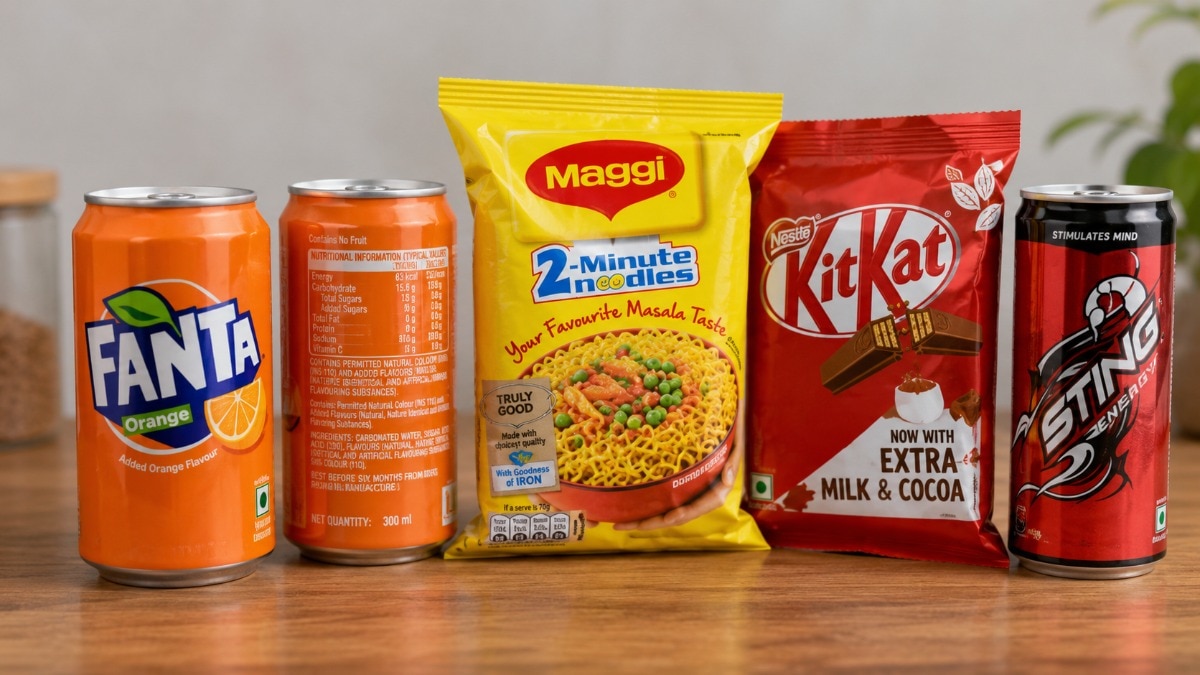
Former Food Safety and Standards Authority of India (FSSAI) CEO Pawan Kumar Agarwal has moved the Supreme Court seeking changes to the proposed front-of-pack warning labels (FOPL) on packaged foods, arguing that applying warnings to 94% of products would be impractical.
His intervention, however, has drawn criticism from public health advocates ahead of 28 September, when the court is expected to take up the long-running issue.
The intervention, filed through Food Future Foundation (FFF), where Agarwal is CEO, comes as the food regulator has placed its latest proposal before the court.
FSSAI has finally proposed a FOPL warning framework for foods high in salt, sugar and fat, bringing the question of how prominently such products should flag health risks closer to a decision.
The case has been years in the making, with public health groups pressing for clear, standardised warnings that help consumers identify unhealthy packaged foods. The debate has centred on the nutrient thresholds that trigger a warning, the design of the label and how quickly the rules should be implemented.
Agarwal, who led FSSAI between 2015 and 2020, has defended the intervention filed by his nutrition literacy platform, telling India Today that that warning labels covering such a large share of packaged foods are not realistic.
FSSAI's August 28 affidavit proposed a red hexagonal warning for products high in at least two of three nutrients – added saturated fat, added sugar and salt - using thresholds in the 2024 Indian Council of Medical Research-National Institute of Nutrition (ICMR-NIN) dietary guidelines.
A second phase would extend warnings to products high in any one nutrient.
The regulator said the phased approach would give consumers time to adjust and manufacturers an opportunity to reformulate.
But the SC questioned whether the second phase could be indefinitely postponed and, on 10 September, sought a scientifically justified timeline and further details on the labels. It also asked how nutritional literacy could be incorporated into school education. The matter was then listed for 28 September.
The proceedings stem from a 2024 public interest petition by 3S and Our Health Society seeking mandatory, interpretive warning labels on packaged foods. In April 2025, the court directed an expert committee to make recommendations.
After delays in the regulatory process, the court renewed its scrutiny in 2026, saying in August that meaningful progress was urgently needed.DELAY, THRESHOLDS DISPUTED
In a statement on September 23, public health advocacy group Nutrition Advocacy in Public Interest (NAPi) criticised FFF's proposals to progressively tighten thresholds over three to five years, potentially delaying full implementation until 2030.
It also objected to the proposal to use added sugar instead of total sugar and defer the question of ultra-processed foods to a separate process.
The group questioned FFF's assertion that it has no commercial or pecuniary interest, citing reported funding and partnerships involving food giants Hindustan Unilever and DSM India, as well as associations with ITC, Amul, Tata Consumer Products and Nestl.
Agarwal rejected the allegation of industry links and defended the evidence cited in his application, stressing that while his organisation had briefly done two programs with HUL and DSM, it had no connection with other companies.
He also stressed that his organisation "believes in working with all stakeholders, including government, academia, civil society and industry, while maintaining independence on matters of public health policy".
Speaking to India Today, he insisted that industry should come forward much more strongly to support nutrition literacy and healthier food environments, areas in which its engagement has so far been limited.
According to him, ICMR-NIN thresholds draw on a WHO survey conducted around a decade ago, which he claimed was not based on a large sample. The NatFirst analysis cited in FFF's application, he said, was "very robust."
NAPi, however, argued that a high proportion of products crossing nutrient thresholds is a reason to strengthen warnings, not relax them. It cited a peer-reviewed study of 10,501 Indian-market products, which found that 68% would attract at least one warning under the WHO South-East Asia Region or Chilean warning-label models.
NAPi convenor Dr Arun Gupta said the court should consider FFF's institutional and financial links when weighing its proposals, particularly its request for a phased rollout that could push full implementation to 2030.
But Agarwal said that he stood by his proposal for a progressive but time-bound rollout of warning labels.
Such an approach, he said, would give consumers time to gradually shift their eating habits towards foods lower in salt, sugar and fat, while also providing industry with a clear incentive and reasonable transition period to reformulate existing products and introduce healthier alternatives.
He added that the issue of *ultra-processed foods (UPFs), while important, is considerably more complex and should be addressed separately rather than being conflated with the immediate task of introducing nutrient-based FOPL.
UPFs are typically food items prepared at an industrial level that have low nutrient value, are high in salt, sugar and fat and also contain additives not typically used in kitchens.
The former FSSAI chief also emphasised that warning labels are only one part of the solution. “Equally important are the other issues highlighted in our application – building universal nutrition literacy and creating healthier food environments across the country," he said.
Warning consumers about unhealthy products must go hand in hand with enabling them to understand those warnings and making healthier choices easier and more accessible, according to Agarwal's intervention.
“With FoPL now moving closer to implementation, I hope the food industry will not see warning labels merely as a regulatory obligation. It should use this opportunity to reformulate products, support nutrition literacy and contribute more actively to creating a healthier food environment,” Agarwal said.- EndsPublished By: Sumi DuttaPublished On: Sep 23, 2026 19:10 IST