Exclusive: China Ambassador Reveals Deals and ‘Red Lines’ of Trump-Xi Talks - Newsweek
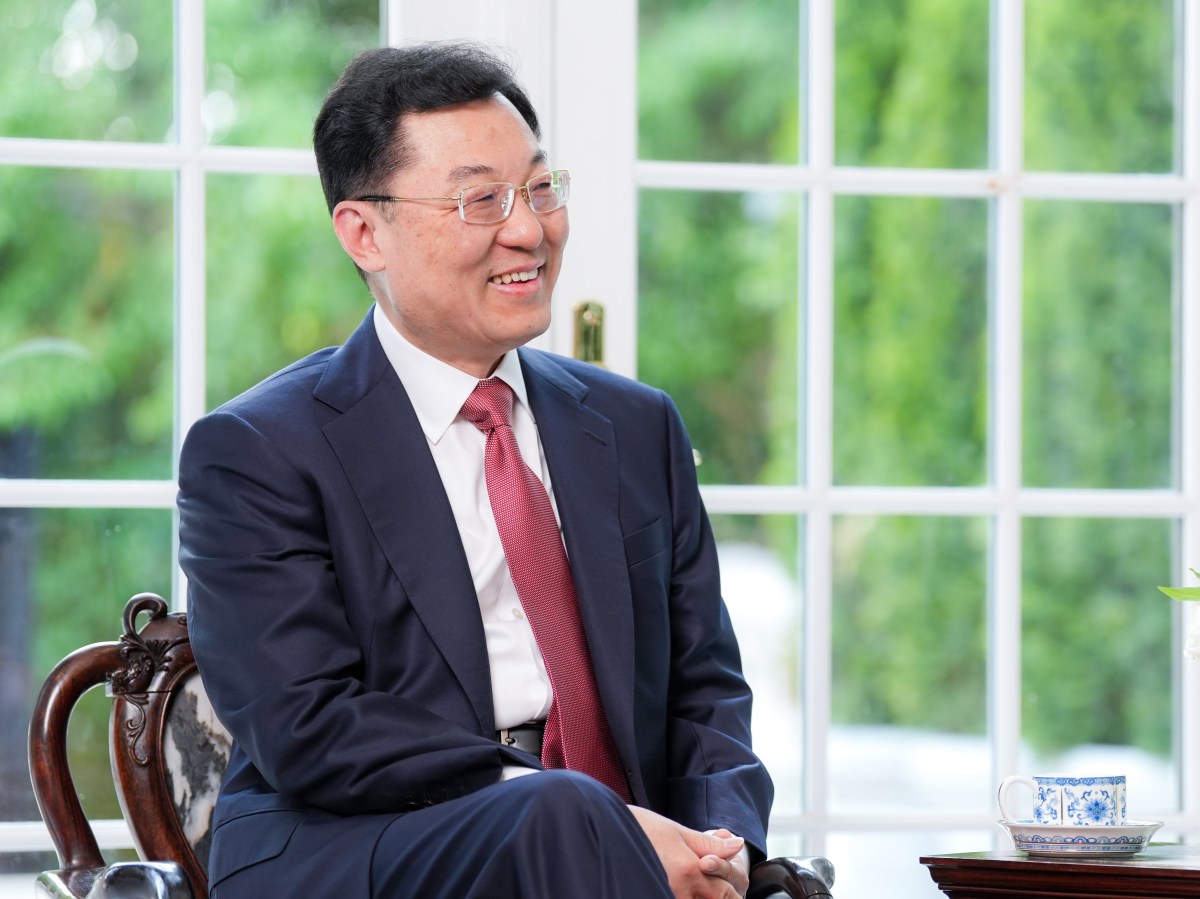
China's top diplomat in the United States has shared new details on agreements reached between President Donald Trump and Chinese President Xi Jinping during their recent summit in Washington, as well as four issues on which he said the White House would have to respect Beijing's position.
Chinese Ambassador Xie Feng participated directly in the ceremony surrounding Xi's first visit to the U.S. in more than a decade last Wednesday. He hailed Trump's grand welcome as having met "the highest-standard protocol."
Beyond the ceremony, Xie offered Newsweek an exclusive look in a written interview at what was discussed and Beijing's expectations following a summit he said "made history and set a new milestone" in U.S.-China engagement.
These include a number of "key deliverables and understandings." They cover fostering closer direct ties between the two presidents, maintaining a stable relationship between the two powers, creating new areas of cooperation on trade, anti-narcotics and military communication, cultivating cultural exchanges and issuing mutual commitments to world peace.
On artificial intelligence (AI), Xie introduced the Chinese leader's message to Trump and issued a call for cooperation in this field for the sake of humanity. Xie also outlined discussions surrounding the U.S. war with Iran, on which Beijing supports the return of a ceasefire.
Xie acknowledged both "extensive common interests" and "differences and disagreements" between the U.S. and China. He identified "four red lines" from Beijing's side on "the Taiwan question, democracy and human rights, China’s path and system, and China’s development right."
These are issues on which he said China "should not be challenged."
"The two sides also need to make good use of the political and diplomatic channel, as well as the economic and trade consultation mechanism, to build trust, dispel misgivings, seek common ground while managing differences, and properly address each other’s concerns, so as to install a buffer for bilateral relations," Xie said.
Newsweek: The meeting between President Donald Trump and President Xi Jinping was among the most highly anticipated events in September. Both sides described the visit and the talks as positive, constructive and friendly. Some observers were somewhat surprised by the extent to which President Trump praised President Xi during their summit. A lot of attention was also dedicated to the degree of protocol and ceremony dedicated by the White House for the summit. Having personally participated in the whole process, what is your impression of the significance of the summit?
Xie Feng: It was indeed a great honor to participate in the whole visit and witness the historic moment. In every way, this visit has made history and set a new milestone in engagement between China and the United States.
First, this was the first state visit by President Xi Jinping to the U.S. after 11 years. During the past 11 years, tremendous changes have taken place in China, the U.S., the China-U.S. relationship, and also the entire world. Through President Xi’s visit to the U.S. at President Trump’s invitation, both sides have reaffirmed the strategic value of the China-U.S. relationship in the new era.
Second, from the Beijing meeting in early summer to the Washington gathering in golden autumn, the two presidents have exchanged visits within less than half a year. This has shown how much both sides cherish the good working relationship between the two top leaders, and also the shared commitment of both sides to seizing the opportunity to further stabilize and improve bilateral relations.
Third, the U.S. side hosted President Xi Jinping and Madame Peng Liyuan with the highest-standard protocol, making thoughtful arrangements and creating many memorable highlights. President Donald Trump and First Lady Melania Trump personally greeted President Xi and Madame Peng at the airport. The arrival ceremony at the White House was solemn and grand, the State Dinner was attended by many distinguished guests, the conversation over tea was cordial and heartwarming, and Chinese elements were meticulously incorporated throughout the visit.
The U.S. side mentioned that such arrangements were to reciprocate the warm hospitality extended to President Trump during his visit to China in May. This reflects a pattern of interaction grounded in mutual respect and reciprocity between the two sides.
Fourth, substantive and weighty outcomes were achieved during the visit, leading to new development in the constructive China-U.S. relationship of strategic stability. The two presidents had a candid and in-depth exchange of views in a friendly atmosphere of mutual respect on strategic and overarching issues concerning China-U.S. relations and the broader global landscape, so as to explore ways to transcend the “Thucydides Trap,” [the idea that when a rising power threatens to displace an established one, the result is often war], chart the course for finding the right path for our two major countries to get along, and usher in a brighter future for humanity.
This not only has advanced the well-being of both our peoples, but is also a blessing for world peace, stability, and prosperity.
What new substantive outcomes or deliverables were achieved? We have noted that one of the outcomes in the Chinese side’s official readout is about Iran. Could you further elaborate on China’s position on the issue?
The visit attracted global attention and had far-reaching influence. The key deliverables and understandings reached are reflected in the following five aspects:
First, the visit has opened a new chapter in heads-of-state diplomacy. During the visit, the two presidents agreed to support each other in successfully hosting the APEC Economic Leaders’ Meeting and the G20 Summit. They also intend to attend each other’s meetings. This will sustain the momentum of close interactions between the two leaders.
Second, the visit has provided new guidance for China-U.S. relations. The two presidents added more substance to the characterization of bilateral relations, and agreed to build “a constructive China-U.S. relationship of strategic stability on the basis of respect, fairness, and reciprocity.” This has provided clearer strategic guidance for the improvement and development of China-U.S. relations, marking an important step toward overcoming the “Thucydides Trap” and finding the right path to get along.
Third, the visit has opened up new avenues for mutually beneficial cooperation. The two sides achieved practical outcomes in economic and trade cooperation, including agreeing to extend tariff suspension, and reaching an arrangement for a US$30 billion reciprocal tariff reduction.
The two presidents tasked the law enforcement agencies of the two countries with continuing to strengthen cooperation and jointly combat transnational crime. China has scheduled and tightened export controls on more precursor chemicals. The two militaries also agreed to conclude a memorandum of understanding on crisis communication and prevention as soon as possible, and continue their cooperation to search for the remains of missing U.S. servicemembers in China.
The list of cooperation in various areas keeps expanding, and the network of dialogue at all levels continues to grow and deepen.
Fourth, the visit has built new bridges for interactions between our two peoples. President Xi announced a series of new measures, including inviting 100,000 young Americans to visit China for exchanges and study in the coming five years, and leasing two giant pandas, Ping Ping and Fu Shuang, to Zoo Atlanta, which were warmly welcomed by President Trump.
These will further cement the bonds of friendship between the Chinese and American peoples.
Fifth, the visit has demonstrated both sides’ renewed commitment to world peace. This year marks the 80th anniversary of the opening of the Tokyo Trials. The two presidents recalled that China and the U.S. were allies in World War II, fought side by side to win the war, and agreed to jointly safeguard the victorious outcomes of the war.
The two presidents also had an in-depth exchange of views on artificial intelligence, as well as major international and regional issues including the situation in the Middle East, the Ukraine crisis, and the Korean Peninsula, agreeing to strengthen coordination to make due contributions to world peace and development.
As a responsible major country, China has always held an objective and just position on the situation in Iran. We are committed to facilitating the end of fighting, promoting peace, and helping cool down the situation. We do not believe maximum pressure would bring peace, and oppose unilateral sanctions or “long-arm jurisdiction.”
President Xi put forward a four-point proposal on promoting peace and stability in the Middle East, and also a four-point proposal on building a new security architecture in the region.
During the visit, President Xi emphasized that the sovereignty and security of all countries should be respected, encouraged relevant parties to stay committed to peace, and supported the U.S. and Iran in returning to the Islamabad Memorandum of Understanding [a framework agreement signed in June between the U.S. and Iran to end hostilities and establish a 60-day negotiation period for a comprehensive settlement], resuming dialogue and negotiations at an early date, and ultimately reaching a comprehensive agreement covering the nuclear issue.
China will continue to make unremitting efforts for an end to the conflict and for peace.
Since the summit in May, the two sides have agreed on building “a constructive China-U.S. relationship of strategic stability.” During this visit, the two presidents further expanded the concept to “a constructive China-U.S. relationship of strategic stability on the basis of respect, fairness, and reciprocity.” What does this mean and what does the vision entail, with some politicians in the U.S. continuing to emphasize the competition component of the relationship?
One of the most important political deliverables of this visit is that the two presidents further enriched the substance of the characterization of China-U.S. relations, and agreed to build “a constructive China-U.S. relationship of strategic stability on the basis of respect, fairness, and reciprocity.”
Respect means respecting each other’s sovereignty and territorial integrity, respecting each country’s choice of social system and development path, and respecting the other side’s core interests and major concerns.
The Taiwan question, democracy and human rights, China’s path and system, and China’s development right are four red lines for China, which should not be challenged. China will never waver in its resolve to safeguard national unity and territorial integrity. We hope the U.S. side will adhere to the correct position of opposing “Taiwan independence,” and handle the Taiwan question with caution.
Fairness means pursuing mutually beneficial cooperation and handling differences through consultation, rejecting a zero-sum game in which one side’s gain comes at the expense of the other’s, and not seeking unilateral absolute advantage. China and the U.S. do not need to avoid mentioning competition, but our competition should be fair, rules-based, and kept within bounds. It should be a race of catching up with one another, not a wrestle in which one either wins or loses.
Reciprocity means that the two countries are equal in sovereignty, that neither side stands above the other, that neither engages in hegemonic nor bullying behavior, that each side’s concerns are addressed on an equal basis, and that cooperation across various fields develops in a balanced manner.
China and the U.S. share extensive common interests. Meanwhile, it is only natural that we should have differences and disagreements. The two sides need to lengthen the list of cooperation by both consolidating cooperation in traditional areas such as economy, trade, and energy, and actively fostering new drivers of growth in military-to-military relations, law enforcement, public health, agriculture, tourism, science and technology, people-to-people exchanges, and beyond.
The two sides also need to make good use of the political and diplomatic channel, as well as the economic and trade consultation mechanism, to build trust, dispel misgivings, seek common ground while managing differences, and properly address each other’s concerns, so as to install a buffer for bilateral relations.
The two sides agreed to extend their trade truce by two months, which is shorter than the one-year extension expected by some. What progress was made at the latest round of economic and trade talks, and does China retain options to counter further challenges from the U.S.?
From September 20 to 23, the economic and trade teams of China and the U.S. held the eighth round of economic and trade consultations in New York and Washington, D.C., reaching ten deliverables of practical cooperation.
Namely, the two sides agreed to establish the Board of Trade and the Board of Investment; agreed to reduce tariffs on about US$30 billion worth of goods imported from each other on a reciprocal basis; agreed to establish an agricultural working group to expand practical cooperation in agriculture; reached a consensus in principle on financial services; established a dialogue on artificial intelligence; extended tariff suspension through January 10, 2027, and agreed to continue actively discussing the issue; exchanged views on increasing direct passenger flights; and renewed their commitment to fully implementing the consensus reached in previous rounds of economic and trade talks. China will also import U.S. coal.
All these outcomes will help stabilize bilateral economic ties, expand trade, and strengthen our cooperation in agricultural products, energy, manufactured goods, and consumer goods. They will also contribute to the stable growth of the global economy.
I would like to emphasize that the economic and trade relationship between China and the U.S. is mutually beneficial in essence, and strengthening cooperation is both an inherent need of both sides and the right choice. Cooperation should be a two-way street.
China is willing to be a partner and friend of the U.S. We hope the U.S. side will actively respond and take action to work with China in the same direction to lengthen the list of cooperation and shorten the list of issues. We should not refrain from doing a good deed because it is too small, nor commit a bad deed because it is too small.
In this way, we can not only bring tangible benefits to both our peoples, but also instill stability and positive energy into the world economy.
One major topic the presidents discussed was AI, and the two sides have agreed to establish channels of communication to mitigate its risks. But shortly after the visit, the U.S. government again stressed the pursuit of AI dominance over China. Is this in some ways the next form of “arms race” or “space race” and will it exacerbate the existential threats that emerging technologies such as AI pose?
China always maintains that technology should be people-centered and developed for the positive and for good, so as to serve the progress of humanity. As leading nations in AI, China and the U.S. share a special responsibility. We need to jointly install guardrails and brakes, rather than engaging in an arms race or drawing down an iron curtain.
During this visit, President Xi pointed out that China and the U.S. have both the capability and responsibility to develop and manage AI for good, and to ensure that the development of AI is always under human control and serves the well-being of the people. We may have competition, but we may cooperate even more. The right thing to do is to draw on each other’s strengths, not guard against each other.
The two sides held the first AI Dialogue in September, and will hold the next round in November, to exchange views on risks and benefits related to AI and jointly prevent the misuse and abuse of AI. The two sides have also agreed to establish a bilateral communication channel for AI incidents. This proves that AI can very well become a new frontier for China-U.S. cooperation, rather than a new arena for confrontation or conflict.
In recent years, Chinese large AI models such as Deepseek, Seedance and Kimi have evolved rapidly and gained popularity among developers worldwide, including in the U.S. Global downloads of the models have exceeded 10 billion. When an AI model escaped the sandbox in the U.S. in July, it was an open-weight model developed by a Chinese company that came to the rescue.
Facts have proven that open source and openness do not create insecurity; rather, technological decoupling, enclosure, and self-isolation are the real recipe for risk. We hope the U.S. will work with China in the same direction, help each other succeed with an open mind, and live up to our shared responsibility through cooperation, so as to jointly ensure that rather than heralding the dusk of humanity, new technologies such as AI will usher in the dawn of a new era.
China’s cultural influence continues to gain traction on social media, with trends such as “Chinamaxxing” indicating a concrete impact through an increase in tourism. How will President Xi's visit further shape people-to-people exchanges between the two countries, and do you identify opportunities to translate cultural exchanges into achieving progress on other areas of U.S.-China relations?
As President Xi noted, the hope for the China-U.S. relationship lies in the people, its foundation is in our societies, its future depends on the youth, and its vitality comes from exchanges at subnational levels. The latest visit was exactly a visit to carry on our friendship.
President Xi fondly recalled the history of China and the U.S. starting trading with each other, fighting shoulder to shoulder against fascist aggression, and “moving the globe with a small ball” through Ping-Pong diplomacy. He shared the touching story of Chinese desert control worker Yin Yuzhen and American teacher Ronald Sakolsky reuniting after 27 years, and also announced a series of new measures to promote bilateral people-to-people exchanges.
The friendship between our two peoples is the most profound, steadfast, and enduring force driving the development of our bilateral relations.
When I arrived in the U.S. in 2023, I felt that the so-called “political correctness” of being tough on China was spreading across American society. So I decided that one of my tasks would be to find all those friends who stand for developing China-U.S. relations, so we can put in the effort together
It is encouraging to see that, under the guidance of the two presidents and with the joint efforts of people in both countries, American public opinion toward China has shown a sustained positive rebound after five years, and a recent poll by the Chicago Council on Global Affairs found that 57 percent of Americans favor friendly cooperation and engagement with China.
American tourists ranked first among visitors to China from non-neighboring countries in the first half of this year, as more and more American friends are making the most of China’s 240-hour visa-free transit policy to travel to China, experience “China Cool”, and enjoy “China Haul.”
We hope the U.S. government will respond to the people’s aspirations, increase direct flights, facilitate visa and border entry procedures, keep the channel for two-way people-to-people exchanges open, and support dialogue and cooperation between our youths, as well as in various areas such as education, culture, tourism and sports.
We also encourage our two peoples to keep the momentum going, dispel the chill with the warm currents of close interactions, and nurture the flower of China-U.S. friendship so that it may bask in the sunshine and bloom in all its splendor.
Contact Newsweek editor on this story: Tony Phillips.