Exclusive / Democrats offer Republicans an ‘open door’ on Medicaid cuts - Semafor
One of the incoming Democratic Congress’ top priorities next year is reversing the GOP’s Medicaid cuts. The new majority might even get Republican votes to do it.
Democrats are already deep in internal discussions about whether to court support across the aisle for delaying the steep Medicaid reductions passed as part of last year’s GOP megabill — which will result in large coverage losses. While they’re ready to pursue a party-line spending bill if Senate Republicans mount a filibuster, Democrats also sense an openness in President Donald Trump’s party to roll back the cuts.
“There’s disquiet on the Republican side about implementing these at all,” said Sen. Tim Kaine, D-Va. He described an “open door” for bipartisan discussions about changing the Medicaid cuts, which the Trump-backed bill phased in through 2028.
The prospect of a bipartisan vote to change the cuts grew more real after the Trump administration announced last week that it would give states an extra six months to enforce the megabill’s Medicaid work requirements. Democrats viewed that as a sign that even Republican-led states are having difficulty complying with the new rules, which require verification of Medicaid beneficiaries’ continued qualifications for the low-income healthcare program.
How Democrats approach reversal of the Medicaid cuts will be a crucial early test of whether the party can deliver on a cost-of-living agenda that delivered large blue majorities in both chambers in the midterm elections.
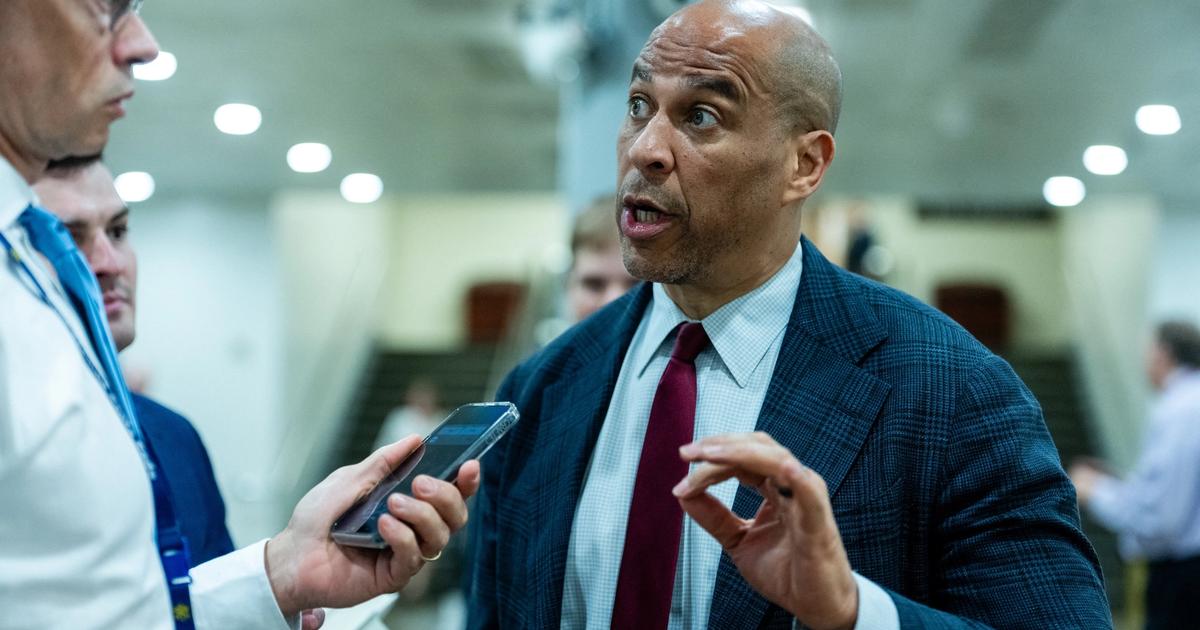
Sen. Cory Booker, D-N.J., said he has recommended to Minority Leader Chuck Schumer and other top Democrats that the party start off with targeted bills addressing the work requirements and the megabill’s cut to the provider tax, a mechanism states use to finance their Medicaid programs. Booker said he’s had private conversations with Republicans already about the Medicaid changes.
“My strategy, advice I’m giving to leadership and others is, the more finite bills we pass, the clearer it makes the issue for the American public. When you pack in these big bills, it makes it easier to give a pass to Republicans,” Booker told Semafor. He also said he’s open to broader negotiations with Republicans: “We’ve got to negotiate with them to get to 60.”
Sen. Ron Wyden, D-Ore., who will chair the Finance Committee, said Democrats want to pull out the Medicaid changes “from the roots.” He wants Democrats to use the six-month pause in enforcement of the work requirements to “make sure the country sees what’s going on.”
But he declined to commit to a finite approach or a broader package: “I’ve been meeting with my colleagues on and off the committee. I don’t want to front run them.”
Battleground-seat Democrats are signaling a particular willingness to negotiate with Republicans over the work requirements, even as the whole party pushes to roll back as many of the Medicaid changes as possible. Even though their sizable House majority would allow Democrats to pass their preferred Medicaid bill, they’ll still have to contend with the Senate filibuster.
“I’ve always been willing to compromise on the work stuff,” said Rep. Darren Soto, D-Fla., who just narrowly won his race. “There’s already been a history of work requirements in our state and a lot of these different programs over the years. So I don’t think we get caught in the weeds on that just yet.”
But Democratic leaders are doubtful a deal is possible.
“We’re going to move forcefully and expeditiously to reverse all of the damage that was in the ‘one big, ugly bill.’ If the Republicans are willing to come to the table, we’ll have that discussion. That hasn’t been the case to date,” House Minority Leader Hakeem Jeffries told reporters.
He’s pledged a multi-pronged health care agenda next year, including an expansion of Medicare eligibility, saying on Tuesday that “a return to the status quo is not acceptable.”
Sen. Josh Hawley, R-Mo., told Semafor that Democrats won’t get his vote to reverse the work requirements. But he also said he would work with them to protect Medicaid benefits and blunt the pending changes to the provider tax.
“When it comes to benefits, when it comes to the provider tax … I not only want to reverse that; I think we ought to provide a new dedicated stream of funding to rural hospital emergency rooms to see that no more of them close,” Hawley said. “We’ve got whole counties now in Missouri, they don’t have hospitals within 50, 60, 70 miles.”
The majority of Republicans are, at this point, not in favor of delaying or scrapping the work requirements. The crop of swayable GOP votes for most of what Democrats want to do is not large, unless there’s a broader deal or Trump gets involved.
“It’s not a Medicaid cut. Medicaid was never designed to say that an able-bodied adult with no kids and no disability should be able to get free healthcare,” said Sen. Bernie Moreno, R-Ohio, who will chair the chamber’s GOP campaign arm next year.
The Trump administration’s decision to give states six months of flexibility to enforce the Medicaid work requirements may be an early sign that further delays could be on the horizon. In fact, the GOP megabill allows the Centers for Medicare and Medicaid Services to grant extensions of up to two years to states that are encountering difficulties implementing and enforcing work requirements — as long as they are making a good-faith effort.
Yet even if Democrats are simply going through the motions by talking about courting GOP votes for Medicaid changes, that exercise may be worth the trouble for their purple-district members. A lot of newly elected Democrats, even some progressives, say they’ll start off the 120th Congress willing to work with Trump and across the aisle.
Few in Washington see compromise as likely, but it’s not impossible. A Trump veto of party-line legislation to claw back Medicaid cuts could set up a politically disastrous scenario for the GOP if millions of Americans on Medicaid suddenly find themselves without coverage in the middle of the 2028 presidential campaign.