
Exclusive / More MAGA than MAGA: How the Daily Caller turned on MAGA and Trump - Semafor
When Tucker Carlson co-founded the Daily Caller in 2010, it was to be the Republican Party’s answer to The New York Times.
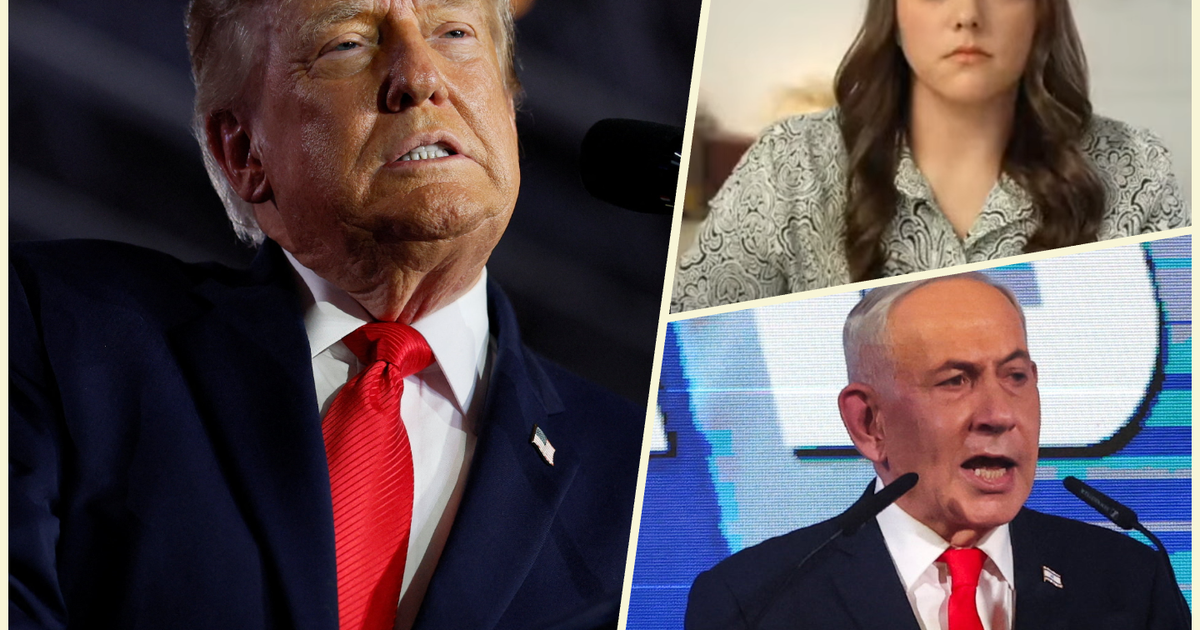
A few identity crises later, the publication has followed Carlson into a hard turn against Donald Trump’s war in Iran, and against Israel — choices that have injected into the publication the digital energy of the new online right, and cost it the support of some of its backers.
“I’ve had some of the most aggressive donor pressure over this — the single most aggressive donor pressure over this, of anything I’ve seen in journalism in 20 years,” Daily Caller publisher Neil Patel told Semafor. He wouldn’t detail the cost of lost financial support to the Caller, which includes both a for-profit firm and the nonprofit Daily Caller News Foundation, but acknowledged that there had been costs.
The Caller has been a pillar of Washington’s conservative media scene since its launch, an important voice in internecine Republican conflicts and a pipeline of journalistic talent whose alumni include employees of both conservative and mainstream outlets.
Now it’s at the vanguard of a Republican civil war that Carlson has helped unleash.
“The Iran war is a huge turning point for the conservative movement,” Editor-in-Chief Amber Duke told Semafor on Friday.
Nowhere has that shift been clearer than in the outlet’s X feed since the United States went to war with Iran in February. The organization has taken to tweeting the price of diesel every day, emphasizing the war’s cost on drivers, and posts screenshots of Trump’s posts about the war in Iran, adding spicy commentary.
“What if instead of “banning” a term, we stopped spending endless amounts of money on foreign wars?” the outlet wrote of Trump’s command that AI be referred to as “super intelligence.”
The Daily Caller has similarly gone after Israel, questioning its decisions in the Middle East. It has blasted Benjamin Netanyahu and his policies, and repeatedly highlighted Israeli settler violence, particularly against children. The criticism has gotten the attention of pro-Israel hawks, who have accused the publication of antisemitism and crudely implied it is pro-Islamic propaganda.
“Daily Caller means Al Jazeera in Arabic,” Fox News host and commentator Mark Levin wrote.
The fissures at the Caller — and in the broader conservative movement — began widening when the activist Charlie Kirk was assassinated last September, according to most of the nine current and former Caller employees who I spoke to over the last week. The movement that had united around Donald Trump devolved into a frenzy of unfounded conspiracy theories, many blaming Israel for Kirk’s death.
The podcaster Candace Owens drove those theories, infuriating her former employer, Daily Wire founder Ben Shapiro. Shapiro laid into Owens for perpetuating what he said were antisemitic conspiracy theories, attacked podcaster Megyn Kelly for not condemning Owens, and criticized Carlson for what he described as a cozy interview with self-proclaimed white nationalist Nick Fuentes.
The Daily Caller, long a younger and slightly edgier outlet than other right-leaning publications like the Washington Examiner, The National Review, or even Breitbart, followed that online energy. Some on staff noted that former editor Dylan Housman left the publication the Friday before the Iran war started, and the tone shifted significantly following his departure. Duke, a former Caller staffer, replaced him and encouraged the publication to adopt an aggressive posture on social media.
Employees also said they sensed that Patel seemed to side with Carlson, Patel’s longtime friend and business partner. While Carlson has long been unaffiliated with the outlet, Patel retains business connections with Carlson, while Carlson’s brother Buckley Carlson has served on the Daily Caller nonprofit’s board.
Patel told Semafor he is not involved in day-to-day operations at the Caller, on which he defers to Duke and others, and stressed that Carlson’s stances had no bearing on the outlet.
Still, he said he encouraged the Caller’s leaders to remain independent and reflect the publication’s values.
That reality for average Americans, he said, has turned against Trump.
“Things just aren’t going that well today. I think if you’re at all looking at this objectively, it’s hard to make the case that things are going great in a lot of areas. And so if our coverage has changed, I think it’s changed just to reflect that,” he said.
The concern, of course, is whether it could go too far. Some former Daily Caller staff told Semafor they are worried the publication has drifted a bit too close to the “groyper” wing of the right, whose criticism of Israel reflects its antisemitism.
In October, Semafor reported that the Daily Caller tweeted a cartoon of Bill Gates and the devil posing with disgraced financier Jeffrey Epstein wearing an Israeli flag Speedo. The post was quickly deleted, but not before it caught the attention of Republicans who have grown increasingly concerned about the Caller’s anti-Israel turn. The publication told Semafor that while the post didn’t meet the publication’s standards, it hadn’t been posted with any “malicious intent.”
Other Caller alumni suggested to Semafor that the recent pivot could threaten what in the last decade has become an important talent pipeline and incubator for the right. The Daily Caller has brought up some of the most prominent young political media figures in America, some of whom have left the conservative media sphere (like CNN’s Kaitlan Collins and Semafor’s Shelby Talcott), and others who have built major franchises in independent media (like Breaking Points’ Saagar Enjeti) or moved into positions within the Republican Party apparatus.
The previous generation’s crowd is clearly uneasy with the new crop.
The Daily Caller is clearly positioning itself for a landscape not just post-midterms but post- Trump, and for a bitter and intensifying intra-party media battle.
The issue of how each side talks about Israel and the war in Iran has played out in both parties, as was clear on Sunday when Rep. Haley Stevens, the former Michigan Democrat Senate candidate, endorsed the Republican in the race over the Democratic nominee Abdul El-Sayed, citing her view that he had not done enough to condemn antisemitism.
While Israel has garnered much of the attention, the Caller has taken stances against Republican Party orthodoxy on other issues. The publication has published critical pieces about the impact of artificial intelligence and the coziness between business interests and the Trump administration. It recently feuded with The Daily Wire, mocking the company for defending Kalshi.
“I’ve always said the best thing we can do for young men is introduce them to crippling gambling habits. Glad Ben gets it too,” Caller writer Adriel Gonzalez wrote.
The Caller’s loss of donors exposes how much of a gamble this has been. For readers who may not have been paying close attention, it may be surprising to see an outlet that once dedicated much of its output to criticizing the Gulf states and antisemitism suddenly spending more of its time covering some of the same topics as state outlets in the Gulf.
The shift also comes at a precarious time for audience traffic. One person told Semafor that the publication, which has long relied on generating a large volume of web traffic, has experienced the kind of steep declines other digital news sites have suffered in recent years, likely driven by a combination of new user habits and technological changes.
Duke, the editor-in-chief, argues the publication reflects where younger American media consumers are heading. She told Semafor the audience is rapidly growing on algorithmically driven platforms like TikTok and Instagram, where its anti-war, anti-corruption content is resonating.
Duke emphasized that for all the attention that its criticism of Trump and Israel gets, the Caller dedicates much of its attention to the left, liberals, and Democrats. She argued that the Daily Caller had published negative pieces about Trump during his first term, and had been critical during the first year of his second term for not going far enough on immigration enforcement.

