Experts warn firearms are driving a rising share of femicides - IOL
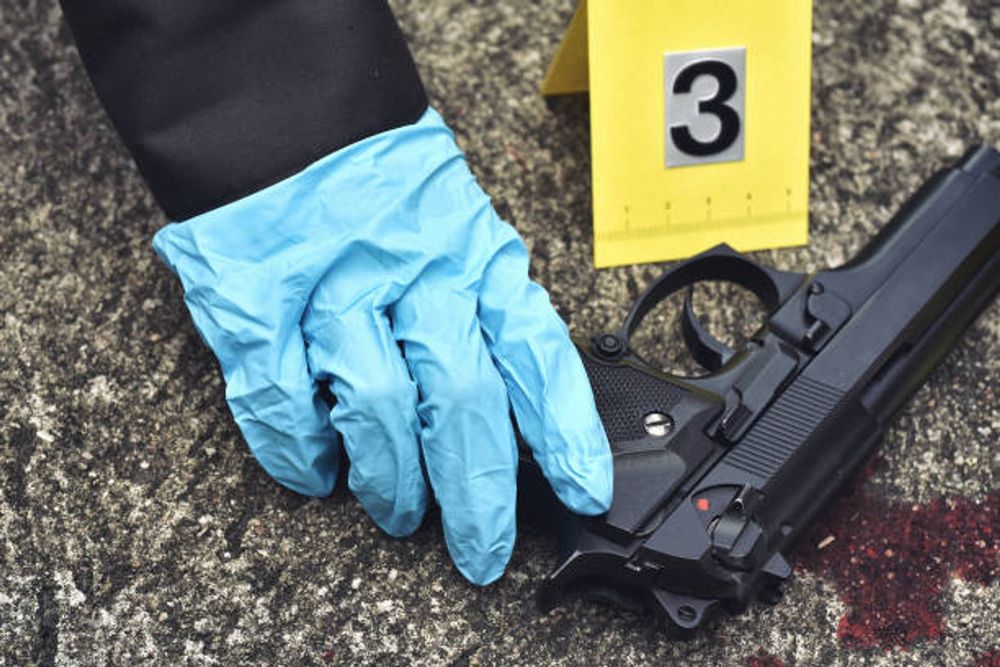
Gun availability and femicide around the world.
While South Africa is being recognised globally for its firearm controls, experts warn that guns remain the number-one weapon used to kill women — a pattern that has become common internationally in countries such as the United States, Brazil and Mexico.
Among other countries South Africa, Mexico, Brazil, and the United States this week participated in an international dialogue called the “Global Coalition for WHO Action on Firearm Violence”.
The discussion focused on firearms as a critical blind spot in global efforts to prevent violence against women and femicide.
Experts and activists from the participating countries highlighted the importance of data sharing in the fight against femicide caused by gun violence.
The webinar, which included more than 300 people, also featured Claire Taylor, an expert consultant from Gun Free South Africa. She spoke about how tighter gun laws helped reduce gun violence against women, but said there had been an increase in later years.
This was also the case in other countries, where participants said gun availability and a lack of data were factors that needed to be considered.
Taylor shared slides highlighting a call by the World Health Organisation (WHO) and UN Women for more urgent guidelines on dealing with gun violence against women.
“The urgency we need with the guidance from the global agencies to address the highs of gun violence in South Africa, these agencies have largely been silent on gun violence perpetrating against women,” she said.
“For the last 15 years the WHO has treated firearms as a blindspot, it is particularly obvious in a framework.
“When Global institutions like the WHO and UN women do not name and measure the risk, then countries like South Africa do not either.”
Taylor said South Africa was one of the few countries globally to have tracked femicide for more than 20 years. She said it had one of the strongest laws limiting access to firearms and determining who could own them, but that this had changed over the years.
“What is shown is what our femicide rate is, 1999, over 24.2 per 100 000 dropped down to 12.6 in 2009, and that decline has sustained.
“We want to try to understand what happened in that big jump between 1999 and 2000, one of the interventions was that South Africa got a new gun law.
“It is called the Firearms Controls Act which was introduced in 2000 and phased in over four years.
“It introduced a range of limits, regarding the availability of guns, for example it placed a limit on the gun owner to 16 and comprehensive background check and it also put limits on the amount of guns people could own, the types and its use. So it is said that you need to have a genuine need to own a firearm.
“Under five pillars that looked at gun control in South Africa which resulted in the reduction of gun availability.
“Professor Naeema Abraham who is a well known researcher (South African Medical Research), has been able to show that the firearms control act and the limits that it included resulted in the significant decline in South Africa’s femicide rate from 24.2 down to 12.6.”
While showcasing a graph of the decline, she said that intimate-partner femicide had decreased from 50% in 1999 to 17% in 2009.
“What it meant was that South Africa’s overall femicide dropped from four women killed by a partner everyday, to three women killed everyday,” she explained.
“However this didn’t carry on. In 2011 we started seeing changes of the rate of per 100 000, remained and sustained, we saw an increase in gun deaths.
“While we still have three women murdered a day by an intimate partner, the percentage of women who are shot and killed increased by 75% between 2009 and 2021.
“What does gun violence in South Africa look like today, guns are the leading women used to murder women, including in mass shootings which has become more common since 2020/2021.
The percentage of women who have been shot and killed, has reached the highest level ever recorded since we started tracking it.
“Legally owned guns play a major role including those working in security and police officers, which involves killing and threats and intimidation of women.”
She said this could be seen in the context of South African Police Service members or security officers who were legal firearm owners, but that there was a lack of systems in place.
“South Africa’s National strategic plan to address GBV and Femicide does not mention firearms once, last month president Cyril Ramaphosa tasked a four point plan to address GBV, it does not mention firearms once,” she said.
“Guns are designed to kill and access to guns are the most strongest and modified predictors of when violence against women becomes fatal.”
Jacquelyn Campbell, representing the United States, said they had seen the same pattern, but that deaths from intimate-partner homicide were increasing. She applauded South Africa for its data management.
“The lack of reported and population based data on intimate partner gun violence in the USA is one risk factor we found” she said.
“The other issue which is present in the United States and many other countries, is homicides, suicides, that is homicides of the male partner.
“A report done in 2013, demonstrates the lack of data in much of the African countries, South Africa is a wonderful exception.
“In terms of the regions around the world, world rate of female intimate partner homicides are again intimate partners, the world rate went down until 2020 and then started increasing.
“We in America, see the highest rate now, driven by the USA, in Europe, has seen a decline considerably related to the approach they have to guns."
In Mexico, Monica Meltis of Data Cívica shared that feminist organisations in Mexico use data to understand different forms of violence, such as political violence and violence against women.
“At Data Cívica, we have been working for ten years on the issue of GBV against women.
“We looked at the perspective of data and what tells us specifically about women’s bodies, those that are killed, and what it tells us about femicides,” she said.
“Which strategies can be done to reduce that violence.”
She added that, in Mexico, they have seen a change in how women and people in general are killed.
She explained that, seven years ago, women were killed mostly by drowning, strangulation and poisoning, and now two out of three women are killed with firearms.
“The availability of women has increased; we have very little information about the weapon,” she added.
“The public health sector is moving forward in registering cases. Now, 40% of homicides of women fall into femicides. Femicide is carried out with firearms, and whenever there is a firearm in the home, the risk goes up.”
In Brazil, another speaker said that firearm incidents occurring in the home involved intimate partners.
They said that access to weapons from 2022 was due to new policies and legislation that enabled people to obtain these weapons.
In reaction to increased calls for data control and access to firearms, Siyabulela Monakali of Ilitha Labantu said it was calling for stronger firearm regulation and improved systems of data collection as South Africa continues to grapple with high levels of violence against women.
“The availability of firearms to individuals who pose a known risk to women can significantly increase the likelihood that incidents of abuse will result in fatal consequences,” he said.
“The findings presented in a recent report by the Global Coalition for WHO Action on Firearm Violence, examining firearm violence in Brazil, Mexico, South Africa and the Western Balkans, raise important questions about the extent to which firearm access is adequately addressed within existing strategies to combat Gender-Based Violence and Femicide (GBVF).
“The National Strategic Plan on GBVF and the President’s four-point plan must be supported by measures that directly address the availability, ownership and use of firearms in acts of violence against women.”