Explained: What is 'American COVID' driving UK hospitalisations?
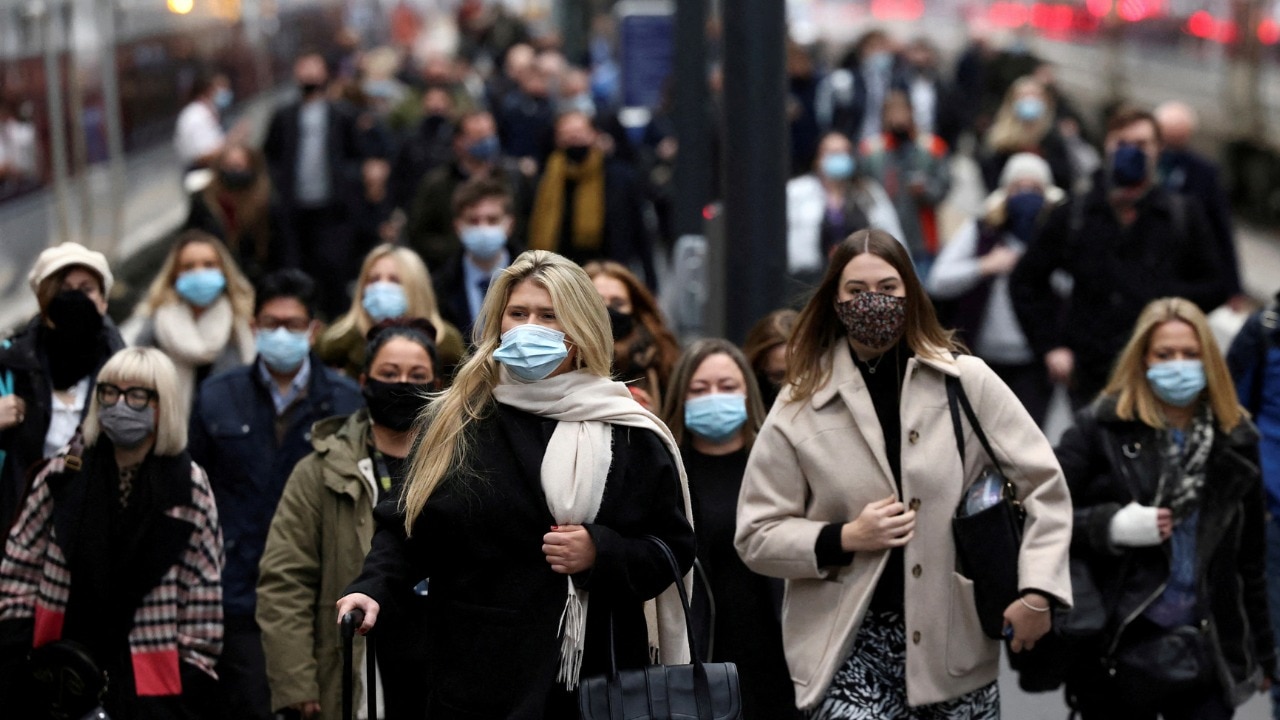
A rise in COVID-19 infections and hospital admissions in the UK has put the spotlight back on a familiar virus – but this time, on a newer strain being dubbed “American COVID” or "Stratus."
The name refers to XFG, a SARS-CoV-2 variant that is currently spreading in several parts of the world. More than half of the positive COVID-19 samples sequenced in recent UK data were identified as XFG, while the country's COVID-19 hospital admission rate rose from 0.81 to 1.20 per 100,000 in the latest week – an increase of about 48%. London recorded an even sharper rise.
But the increase should not be mistaken for evidence of a new, more dangerous COVID wave.
The UK Health Security Agency (UKHSA) says COVID activity has increased, but remains at a low level. The World Health Organisation (WHO) is also monitoring XFG as a Variant Under Monitoring, rather than classifying it as a variant of concern.
Available evidence does not show that XFG causes more severe disease than other circulating variants.What is XFG?
XFG is not a completely new coronavirus. It is a descendant of the Omicron family and was first documented in January 2025. The WHO describes it as a recombinant lineage derived from LF.7 and LP.8.1.2, with its first documented sample collected on January 27, 2025.
The term “American COVID” is largely a media label linked to its circulation and prominence in the US. It is not an official name for the variant, nor does the label mean that the virus originated in the US.
By August 2026, XFG had become the most prevalent variant among sequences submitted globally to the WHO, accounting for nearly half of reported sequences in the week ending August 23.
The WHO, however, said available evidence did not indicate an additional public-health risk compared with other circulating variants.
The symptoms also do not appear dramatically different from those associated with previous Omicron descendants. Sore throat, cough, fever, fatigue and hoarseness have been reported, alongside other familiar respiratory symptoms. Symptoms alone cannot establish whether someone has XFG; laboratory testing is required for confirmation.
So why are hospital numbers rising in the UK?
One explanation is simply that COVID-19 continues to move in waves. Changes in social mixing, schools reopening and increased indoor contact can help respiratory viruses spread.
The UK rise is occurring while overall COVID levels remain relatively low, and older people continue to account for a disproportionate share of severe disease and hospitalisation. In the latest UKHSA data, people aged 85 and above had the highest admission rate.
For people who are older, immunocompromised or living with chronic illnesses, even a virus that causes relatively mild disease in most healthy people can still lead to hospitalisation.WHAT ABOUT INDIA?
For India, the immediate picture is considerably less alarming.
“COVID-19 has become a cyclical disease with periodic increases followed by a spontaneous decline,” pointed out Dr Rajeev Jayadevan, a gastroenterologist and medical researcher based in Kerala who has been associated with the Indian Medical Association (IMA)'s COVID committee.
He said the clinical features of current variants are not more severe or fundamentally different from those seen with earlier variants.
Dr Jayadevan also pointed out that XFG and LF.7, along with RF.5, are among the variants circulating in India, and that these viruses have already been detected in the country.
Widespread immunity from previous infection and vaccination, along with the evolution of the virus towards less severe disease, means severe COVID has become much less common.
In case of India, however, is that it is difficult to know the true scale of community transmission. “Testing for COVID in India is uncommon except in severe cases where the diagnosis is unclear,” Dr Jayadevan said.
That means routine case numbers are likely to capture only a fraction of infections.
This makes comparisons with countries such as the UK difficult. Britain has a more systematic respiratory-virus surveillance system, including hospital testing and genomic sequencing. In India, many people with mild respiratory symptoms may never be tested for COVID-19, so infections can go unrecorded.
There is also another respiratory infection competing for attention. Dr Jayadevan said influenza is currently a bigger problem in India, pointing to Kerala, where flu-related deaths have already exceeded twice the number recorded during the whole of the previous year.- Ends