
‘Fair, spoke English’: Why court set aside State argument to deny caste benefit - The Indian Express
When officials examined M Ravikumar’s claim to belong to a Scheduled Caste community, they considered his family’s religious history, his documents and something else: Their appearance. They were fair, tall and well-built, spoke Tamil and English, and had curly hair, they noted.
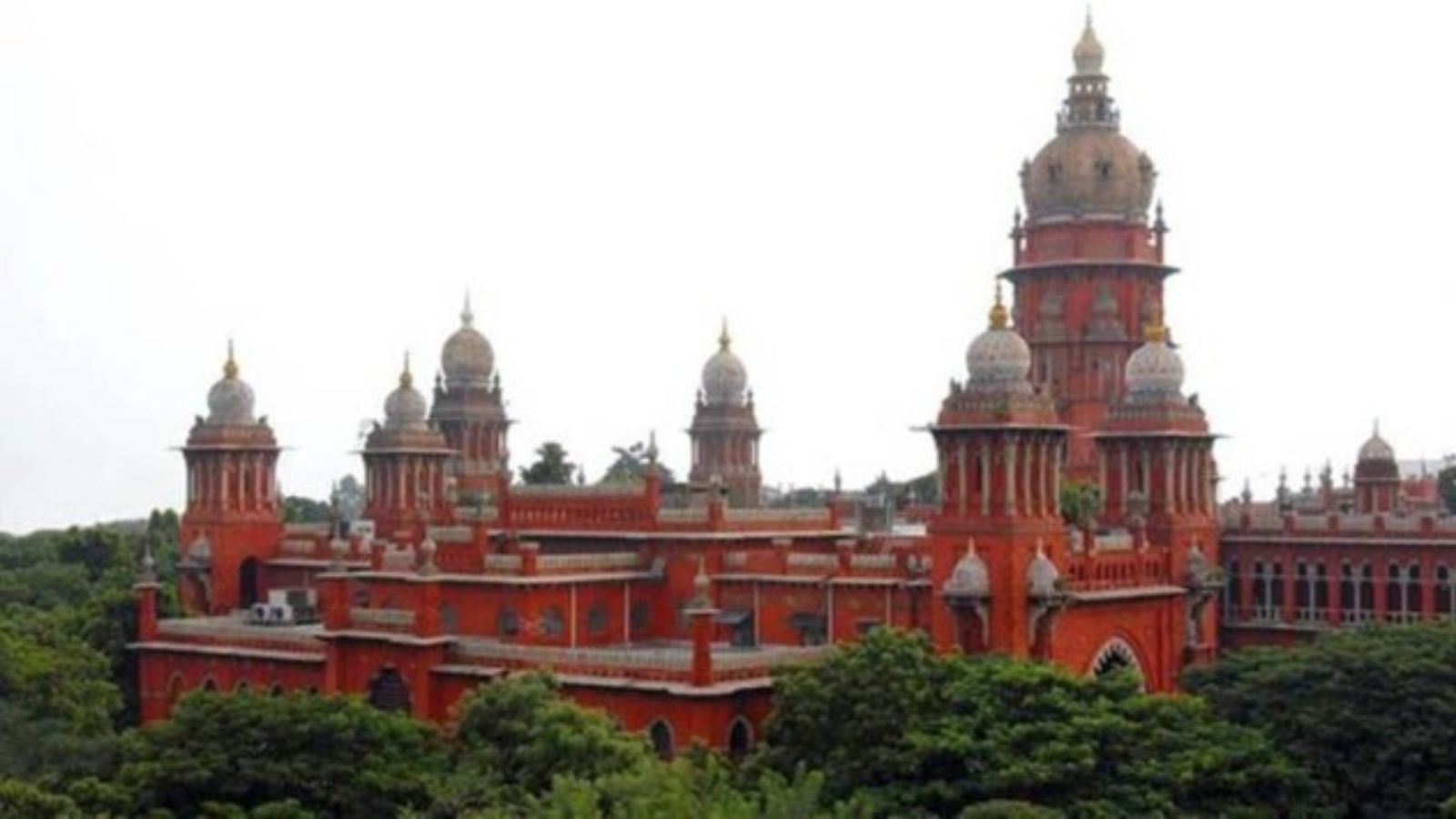
The Madras High Court, though, has set aside the decision that declared his community certificate “not genuine”, finding that those physical and linguistic characteristics might have no relevance to the inquiry, while other conclusions lacked supporting evidence.
The September 11 order by Justice D Bharatha Chakravarthy requires the Tiruvannamalai District Level Vigilance Committee to reconsider the case. The order, uploaded on September 18, does not finally settle Ravikumar’s entitlement.
Ravikumar, an Assistant Commissioner in the Chennai Customs department, had obtained his Hindu Adi Dravidar community certificate in December 1986 and secured employment on its strength. According to the order, verification began shortly before his scheduled retirement on May 30, 2026. The committee’s adverse decision was dated May 4.
At the centre of the dispute was whether his return to Hinduism was genuine and whether his community had accepted him. “In this case, there is no dispute that the petitioner belongs to Scheduled Caste,” the judge wrote, identifying the contested issue as the genuineness of the claimed reconversion.
Ravikumar’s father, originally a Hindu Adi Dravidar, converted to Christianity in 1960. Ravikumar was born into a Christian family in 1966. According to his account, the father-son duo embraced Hinduism in 1983 through ceremonies at the Arya Samaj Centre in Chennai.
His father’s name changed from R Ayyavoo James to R Munusamy; his own changed from A Soundararajan to M Ravikumar. The 1986 certificate expressly recorded the history of conversion and reconversion.
Before the committee, Ravikumar said he and his wife practised Hinduism, raised their children as Hindus and worshipped Hindu gods. His lawyer said an anthropologist had visited their home and seen the prayer room. Photographs showed his marriage, his children’s tonsuring and ear-piercing ceremonies, and his daughter’s wedding conducted according to Hindu customs.
The authorities questioned that account. The state’s lawyer argued that the family appeared to continue practising Christianity while claiming Hindu identity for employment and reservation benefits. She cited his father’s burial in a Christian cemetery and defended consideration of physical features in assessing the case.
She also referred to findings that Ravikumar had lived in Chennai and Bengaluru, that his mother lived outside the Adi Dravidar colony, and that the community had not accepted him.
Counsel for the Customs commissioner pointed to records that continued to use his father’s earlier name after the claimed reconversion, including the 1986 certificate. A church letter also used their original names.
Ravikumar’s lawyer said his younger brother, who remained Christian, had cared for their father and arranged the burial while Ravikumar worked in Chennai. His father’s burial, he argued, could not determine Ravikumar’s faith. The court found that the burial might be relevant. Other reasoning did not withstand scrutiny.
One finding stated: “In 1994 Ration Card, his daughter’s name was in Christian”. Ravikumar said his first daughter was born only on November 10, 1998. The judge found the State’s conclusion unsupported by evidence and apparently unsustainable.
The finding about community acceptance, likewise, lacked concrete reasons or facts. The observations about appearance and language were not presented in the context of an anthropologist’s evaluation, the court said.
“Therefore, while some of the reasons, contained in the proceedings of the first respondent, are relevant; however, they are not supported by detailed reasons, while some of the reasons are unacceptable,” the court said. Citing Supreme Court precedent, the judge said reconversion and acceptance by members of the caste could establish entitlement to a certificate.
The court directed Ravikumar to appear before the committee within four weeks of receiving a web copy of the order, submitting photographs and other evidence of his religious practice. He could also produce evidence of acceptance by the community. The committee must give him a personal hearing and issue a fresh decision within eight weeks of his appearance, the court said. The panel may seek additional evidence, it added.
Formal conversion alone would not suffice, the judge said; what mattered was “an unequivocal and categorical following and belief in the religion.”
Arun Janardhanan is an experienced and authoritative Tamil Nadu correspondent for The Indian Express. Based in the state, his reporting combines ground-level access with long-form clarity, offering readers a nuanced understanding of South India’s political, judicial, and cultural life - work that reflects both depth of expertise and sustained authority. Expertise Geographic Focus: As Tamil Nadu Correspondent focused on politics, crime, faith and disputes, Janardhanan has been also reporting extensively on Sri Lanka, producing a decade-long body of work on its elections, governance, and the aftermath of the Easter Sunday bombings through detailed stories and interviews. Key Coverage Areas: State Politics and Governance: Close reporting on the DMK and AIADMK, the emergence of new political actors such as actor Vijay’s TVK, internal party churn, Centre–State tensions, and the role of the Governor. Legal and Judicial Affairs: Consistent coverage of the Madras High Court, including religion-linked disputes and cases involving state authority and civil liberties. Investigations: Deep-dive series on landmark cases and unresolved questions, including the Tirupati encounter and the Rajiv Gandhi assassination, alongside multiple investigative series from Tamil Nadu. Culture, Society, and Crisis: Reporting on cultural organisations, language debates, and disaster coverage—from cyclones to prolonged monsoon emergencies—anchored in on-the-ground detail. His reporting has been recognised with the Ramnath Goenka Award for Excellence in Journalism. Beyond journalism, Janardhanan is also a screenwriter; his Malayalam feature film Aarkkariyam was released in 2021. ... Read More

/data/photo/2014/02/28/2318182ping-pong780x390.jpg)