
Fairford Offers Trump the NATO Test He Wants - Newsweek
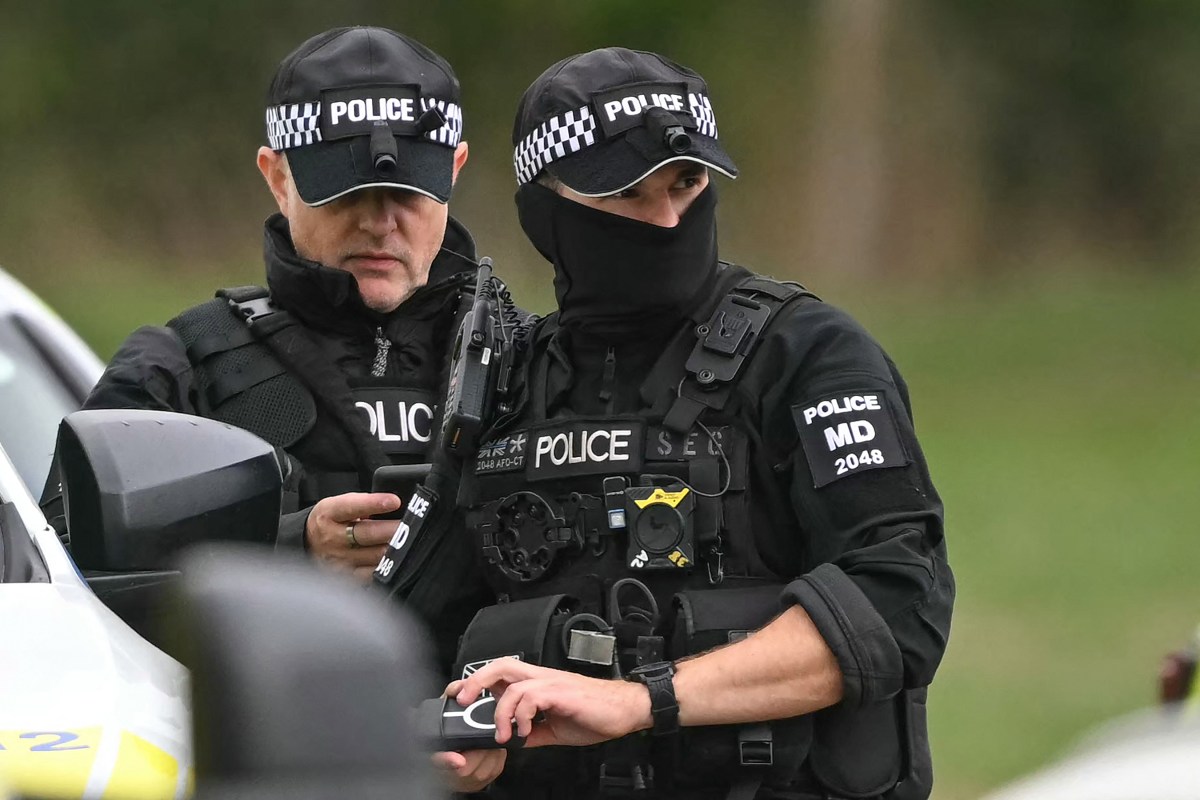
Shortly before 1 a.m. Sunday, a farmer driving home through Whelford, a village in England located next to a major air base, came upon three white vans and what she later described as "hooded and masked men" running into the fields.
Naturally, she called the police. Within hours, five men had been arrested on suspicion of explosives offenses, then later on suspicion of preparing a terrorist act, an apparent major crisis averted by perhaps minutes.
Some 85 local households were evacuated while Army bomb-disposal teams examined the vans—all near a runway at RAF Fairford used by American bombers during strikes against Iran.
It might just be the incident President Donald Trump has needed after months of frustration with NATO allies.
In March, after European allies rebuffed his request for help reopening the Strait of Hormuz, Trump called NATO a "one way street," and cast the mission as a test of the alliance.
Fairford now offers a test closer to NATO’s purpose—defending an ally’s own soil.
Mercifully, no one was reported hurt on Sunday, and security forces intervened in time. It’s the best outcome for Whelford and, in cold political terms, a gift to the American president.
Here is a vivid picture of the danger facing an ally that hosts American bombers, without a tragedy attached.
If investigators establish an Iranian connection, as is currently suspected, Trump can—and probably will—ask the allied governments that declined to join his strikes on Iran how they will answer a threat on British soil.
A harder question is whether any answer short of joining the fight against Iran will satisfy him.
Investigators’ initial view is that material in the vans is consistent with improvised explosive devices, though tests of their viability continue.
Police have not disclosed the suspects’ motive or target, though they are British nationals in their twenties from London.
An anonymous source told Reuters that investigators consider an Iran-linked motive the most likely, with Russian sabotage and an Islamist plot also being examined.
Iran's London embassy said it “categorically rejects and strongly condemns the recent unfounded and malicious speculations," denying any involvement.
Trump was somewhat less guarded in his first comments on the matter, saying the men were "looking to do big damage" and had long been "under view" by British and American authorities.
Police have not yet confirmed that, but Iran’s Revolutionary Guards had warned in July that any base used against Iran was a "legitimate target," naming Fairford’s bombers.
Iran is known to have sleeper cells across the globe. Whether they were in operation here is an open question. We should have an answer soon.
Hormuz lies well outside NATO’s treaty area, despite Trump’s imploring of allies to join his war, citing the consequences for global energy flows if the regime in Tehran is not defeated.
American allies were uneasy about Trump’s Iran policy and, though many, like the U.K., allowed U.S. forces to strike from bases within their countries, none participated directly in the strikes.
Fairford, however, sits within NATO’s treaty area and raises an interesting question.
The treaty covers allied territory in Europe and allied forces stationed there, British soil and American airmen alike, so an internationally directed armed attack on the base could bring into play Article 5: an attack on one is an attack on all.
We don’t yet know for sure the details of what was planned and why. Or, most importantly, who orchestrated it.
NATO judges the Article 5 threshold case by case and excludes purely domestic terrorism, so an Iranian link would supply the international element, not the attack.
The attacked ally—in this case, the apparent target U.S. forces inside the U.K.—must also request or consent to collective action.
The only Article 5 invocation came after 9/11, for the U.S., and even then each ally was bound to assist but free to take "such action as it deems necessary," which doesn’t need to be military in nature.
Article 4, which lets any member call consultations on how to respond to an incident, is the simpler tool, invoked recently over suspected Russian drone incursions into allied territory, for example.
In March, NATO air defenses shot down a ballistic missile that Turkey said Iran had fired toward its airspace. Tehran denied aiming at Turkey.
Allied ambassadors met the next day and condemned Iran’s targeting of Turkey, and backed an enhanced alliance-wide missile-defense posture.
Pete Hegseth, Trump’s Pentagon chief, said there was "no sense that it would trigger anything like Article 5."
That is a template allies could offer Britain, one of defense and consultation. But Trump may seek to push the alliance further.
And there is a key difference between the Turkey missile and Fairford: obvious intentionality.
A wayward missile is a mistake, but explosives-packed vans are certainly not.
Europe has argued that Trump wants allies to share the costs of a war they didn’t choose, or were even consulted on beforehand.
They did not agree with Trump’s combative approach to resolving the Iranian nuclear question, and were committed to an earlier 2015 deal that he had walked away from.
"This is not our war, we have not started it," Germany’s defense minister, Boris Pistorius, said in March.
Berlin said it had not been consulted and that Washington had called European help neither necessary nor desired.
Fairford undercuts the one-way-street charge leveled by Trump. Britain had said yes, lending the base for limited defensive strikes, a policy Prime Minister Andy Burnham kept when he succeeded Keir Starmer in July.
NATO Secretary General Mark Rutte has said the U.S. campaign would have been "very difficult to do without Europe," whose bases supported up to 5,000 sorties before the April ceasefire.
What Trump has really wanted, despite downplaying the significance at the same time as decrying its absence, was a NATO response that saw allies rally to his side against Iran and join the fight fully.
He may use Fairford to make the case once again, as he mulls renewing strikes against Iran after the midterms, should the latest round of diplomacy fail again.
NATO’s July summit declaration named Russia the long-term threat and gave Iran a single sentence. If Iran is shown to have directed a bomb plot on British soil, protecting Whelford is no favor to Trump, it is what allies owe one another.
The help NATO gave America after 9/11 was mostly enabling: intelligence-sharing, overflight rights, security for U.S. facilities, access to airfields, though many European and Canadian troops did join the war in Afghanistan too.
Allies could offer all of that without joining a single strike and still fail Trump's test.


