Far left wins Berlin, far right in another state polls; Merz calls result 'disaster'
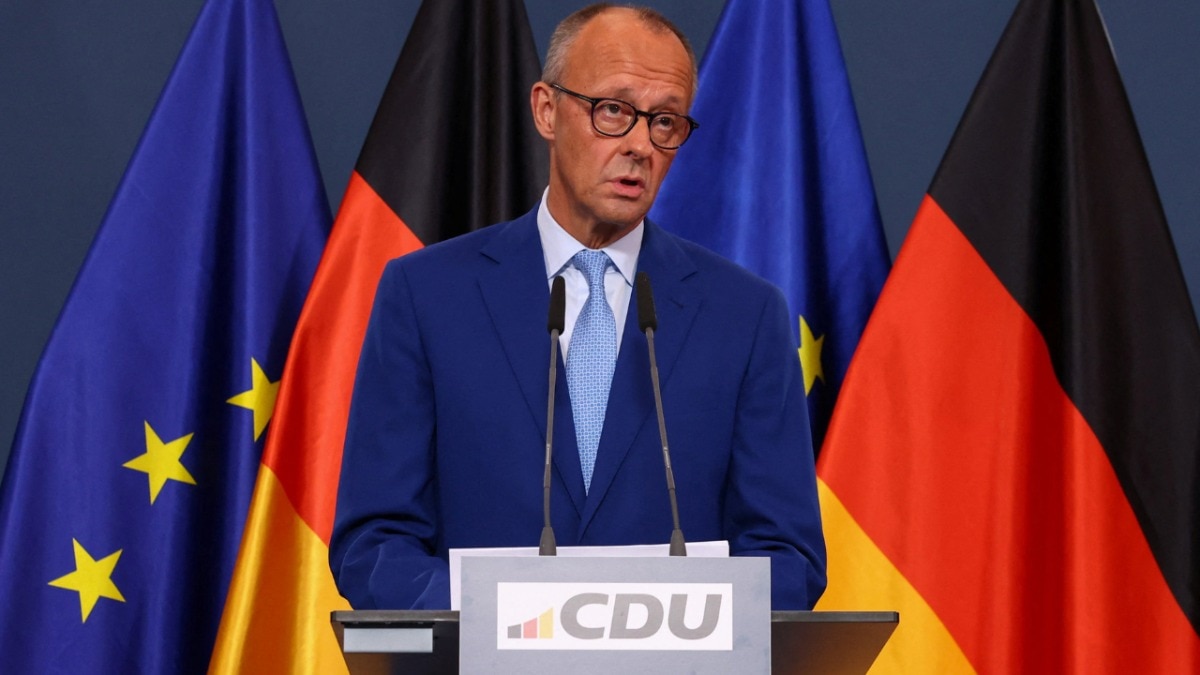
Germany's ruling centre-right party was squeezed from both sides on Sunday, exit polls showed. The far-left Die Linke took the lead in Berlin, while the far-right AfD topped the vote in Mecklenburg-Western Pomerania, handing Chancellor Friedrich Merz's Christian Democratic Union (CDU) another bruising election setback.
The German Chancellor, who has been in office for just 16 months, has vowed to stay in office and press ahead with his economic reform agenda after his centre-right CDU suffered heavy losses in two state elections, including its worst state-level result since the postwar era. He admitted the scale of the setback but rejected suggestions that he should step aside.
"It's a disaster," he said after the exit polls were released, referring to the CDU's performance in Mecklenburg-Western Pomerania.
However, the chancellor's immediate response was not to retreat. Instead, he doubled down on the programme of economic, tax and welfare reforms that his government says is needed to revive Germany's sluggish economy.
"The reforms have to come," he insisted. "I am taking on this responsibility, because I want to move our country forward".
"I would even go so far as to say that these reforms are the antidote to the authoritarian poison that, with the fascination of authoritarianism, is penetrating ever deeper into our society," Merz added.CDU SUFFERS HISTORIC SETBACK
The scale of the CDU's defeat was starkest in Mecklenburg-Western Pomerania, a largely rural state in Germany's former communist east.
Exit polls put the AfD at about 37-38 per cent, narrowly ahead of the centre-left Social Democrats (SPD), while Merz's CDU was projected at only around 5 per cent. That would mark the party's worst result in a German state since the Second World War. The result is particularly damaging because the AfD has now established itself as a major force in another eastern German state election, just weeks after its strong performance in Saxony-Anhalt.
The AfD has been kept out of regional governments because Germany's established parties have refused to form coalitions with it. That political isolation, often described as the "firewall", remains in place despite the party's growing electoral support.
In Berlin, meanwhile, Die Linke was projected to lead with roughly 25-26 per cent, while the CDU was on around 20 per cent. The AfD also made gains in the capital, reaching the mid-teens in exit polls.MERZ REFUSES TO CHANGE COURSE
The elections had been closely watched because Merz's political position had already come under scrutiny. His government was elected on promises to revive Germany's economy, cut bureaucracy and tackle structural problems facing Europe's largest economy. But voters have continued to express frustration over living costs, energy prices, pensions and other reforms.
Merz has also faced criticism over his handling of immigration and his attempts to shift the CDU's position to the right. The strategy has not stopped the AfD from gaining ground, while critics on the left have accused him of moving too far towards its positions.
Rather than changing course after Sunday's results, Merz argued that the difficult economic situation made his reform plans more urgent.
"What needs to be done now requires backbone, steadfastness, and patience," he said. "I would go so far as to say that these reforms are the antidote to the authoritarian poison that is penetrating ever deeper into our society, driven by the allure of authoritarianism."COST OF LIVING BECOMES ELECTION ISSUE
Economic frustration was a major theme during the campaign.
Voters in Mecklenburg-Western Pomerania spoke about rising costs and pressure on household budgets. Carlotta Heick, who voted in the state capital Schwerin, told Reuters: "Here in Schwerin, with these wages, you can hardly afford anything anymore."
Another voter criticised government spending abroad, saying: "We need our money here, for our country, for children and pensioners."
Merz's government has tried to respond with measures aimed at easing the burden on consumers. On Friday, he presented a relief package that included tax cuts on petrol and diesel. But the measures have not erased wider frustration with the federal government.
The SPD's popular state premier in Mecklenburg-Western Pomerania, Manuela Schwesig, also campaigned on concerns about the direction of national policy. She openly criticised both the AfD and some of the federal government's reforms. She argued that opposition to Germany's support for Ukraine was also helping the AfD win voters.
Sunday's results are unlikely to immediately force Merz from office, but they add another layer to a leadership crisis that has been building for weeks.
Earlier this month, the AfD's strong showing in Saxony-Anhalt intensified speculation that Merz could face an internal challenge if the CDU's fortunes failed to improve. Eight state leaders backed the chancellor earlier this week, signalling support as pressure mounted.
The setback has intensified pressure on Merz, yet the chancellor showed no sign of backing down, insisting he would stay the course.- EndsWith inputs from agenciesPublished By: Satyam SinghPublished On: Sep 21, 2026 01:47 IST