
Far-right social media star emerges in Brazil’s House race - Valor International
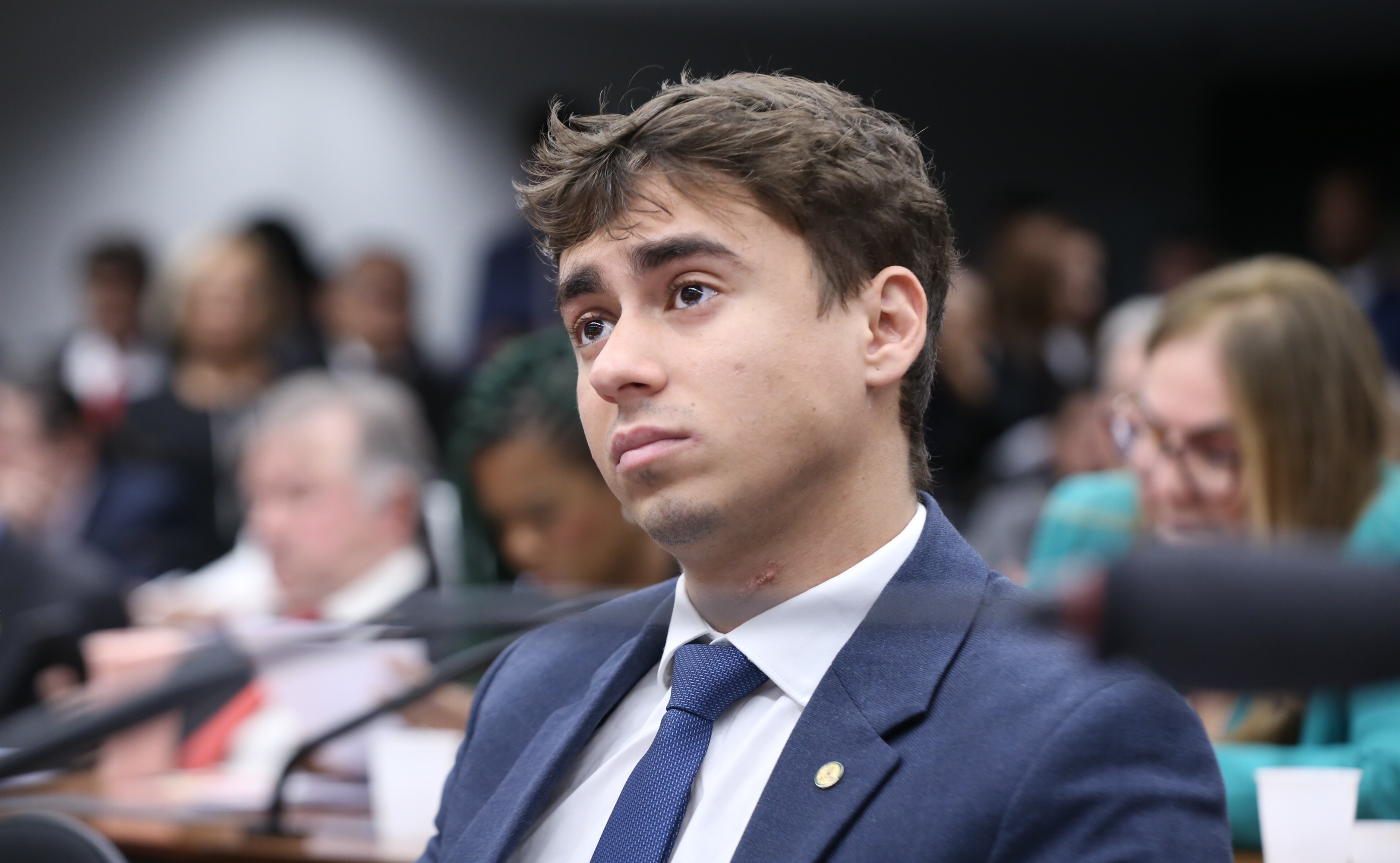
Brazil’s largest party in the Lower House is divided over whether to challenge Speaker Hugo Motta’s re-election bid or join the coalition backing him, as fielding a far-right lawmaker with a massive social media following exposes tensions between ideological confrontation and political influence.
The Liberal Party is considering nominating Nikolas Ferreira, a 30-year-old congressman from Minas Gerais who has built a national profile through social media and his outspoken opposition to President Lula. But a more pragmatic faction wants to preserve the party’s influence over key congressional committees by joining a 15-party alliance supporting Motta.
Discussions over possible challenges to Motta, a member of the Republicans party from Paraíba, gathered pace on Wednesday (18). The right-wing New Party (Novo) formally nominated Paulo Martins, a politician from Paraná who is due to return to Congress in the next legislative term. At the same time, the Liberal Party began considering Ferreira as a potential candidate.
The 15-party coalition backing Motta’s re-election brings together centrist and left-wing parties. The Liberal Party supported Motta’s election as Speaker in 2025 but subsequently distanced itself from him as he moved closer to Lula’s administration.
In a statement, Liberal Party president Valdemar Costa Neto described Ferreira as “one of the party’s most capable and promising figures.”
Costa Neto initially questioned whether the congressman was old enough to hold the position. Since the Speaker is in the presidential line of succession, he suggested the office might require a minimum age of 35, the constitutional threshold for becoming Brazil’s president.
Hours later, however, Costa Neto issued another statement saying that the Constitution does not expressly establish a minimum age for serving as Speaker of the Lower House and that Ferreira would therefore be eligible to run.
The Speaker’s position carries considerable institutional power. In addition to presiding over the Lower House and influencing its legislative agenda, the office is part of the presidential line of succession.
According to Liberal Party leader Sóstenes Cavalcante, a congressman from Rio de Janeiro, the party should reach a decision this week or next. He said the decision would be unanimous, whether the party joins the coalition supporting Motta or fields its own candidate.
“Nikolas called me and said that, if the Liberal Party confirms it will have its own candidate, he wants to put his name forward. He’s a good candidate and has enormous appeal on social media,” Cavalcante told Valor.
On the other side of the debate, Deputy Speaker Altineu Côrtes, also a Liberal Party congressman from Rio de Janeiro, favors joining the coalition. He argues that the party should preserve its positions on the House’s governing board and its chairmanships of strategic committees.
The Liberal Party currently chairs five committees, including those responsible for health, public security and foreign affairs.
Leaders of the centrist parties that make up Brazil’s so-called Centrão, a loose alliance of pragmatic, mostly center-right political groups, are reluctant to admit the Liberal Party into the coalition. Its entry could force other parties to give up positions in negotiations over committee chairmanships and other posts.
Lula’s Workers’ Party is also working to prevent the Liberal Party from joining the alliance.
“If we don’t join the coalition, the Liberal Party will have the 16th pick in the distribution of committee chairmanships, behind every party in the bloc,” Côrtes said.
“If the Workers’ Party doesn’t want us in the coalition, that must mean it’s good for us to be there,” the deputy speaker added.
If the Liberal Party joins the coalition, its position as the largest caucus in the Lower House would give it first pick of committee chairmanships. According to calculations by party lawmakers interviewed by Valor, it could secure control of six or seven committees.
Cavalcante said he sees no problem with losing positions in the House’s leadership structure if the party decides to field its own candidate.
In that scenario, he said, the Liberal Party intends to seek control of committees dealing with human rights, culture and women’s rights, which he described as “ideological.”
The party leader also pointed to pressure on social media over the Liberal Party’s position in the Speaker’s race. He said that pressure has made it increasingly difficult for the party to support Motta.
Lawmakers from the party’s more moderate wing, however, are trying to persuade their colleagues that retaining committee positions is important.
Committee chairmanships provide influence over the allocation of congressional earmarks—funds designated by lawmakers for specific projects—and over the progress of legislation on strategic issues.
This faction has proposed joining the coalition supporting the incumbent Speaker while allowing individual Liberal Party lawmakers to vote for whichever candidate they prefer, including an alternative candidate from another party.
One possibility under discussion is supporting the New Party’s nominee, announced on Wednesday.
If the Liberal Party chooses to field its own candidate, the names initially discussed were Cavalcante and Luiz Philippe Orleans e Bragança, a congressman from São Paulo.
Cavalcante, however, has been reappointed as the party’s leader in the Lower House.
With Ferreira now offering to run, his strong voting record and large social media following could make him the caucus’s choice if the party decides to nominate its own candidate.
Ferreira had initially said publicly that he could not run because he was only 30.
According to Brazil’s Superior Electoral Court and the Constitution, however, there is no minimum age requirement to serve as Speaker of the Lower House.
The question arises because the Speaker is in the presidential line of succession, while the Constitution requires the president to be at least 35 years old. Other lawmakers have also questioned how these provisions would apply to a Speaker younger than that threshold.
The Liberal Party caucus has already held two meetings to decide its position on the election of the House’s governing board. Both ended without an agreement. The party will now try again to build consensus. Meanwhile, the New Party formally launched Martins’s candidacy on Wednesday.
Opposition leader Cabo Gilberto, a Liberal Party congressman from Paraíba, attended the announcement to express support for Martins, who has yet to take office. “Of course, other opposition lawmakers are also being put forward, but I couldn’t miss the opportunity to come here and show my support,” he said.
“May we end up with the most competitive candidate. Let’s build a consensus so we can have a single candidate and a chance of winning.”
Martins said he would continue talks with the Liberal Party to pursue a united opposition candidacy. He is returning to the Lower House in the next legislative term, after serving there from 2016 to 2023. In 2024, he was elected deputy mayor of Curitiba.
This article was translated from Valor Econômico using an artificial intelligence tool under the supervision of the Valor International editorial team to ensure accuracy, clarity, and adherence to our editorial standards. Read our Editorial Principles.

