Farmers Slam Trump Over Record Diesel Prices: ‘We Can’t Survive’ - Newsweek
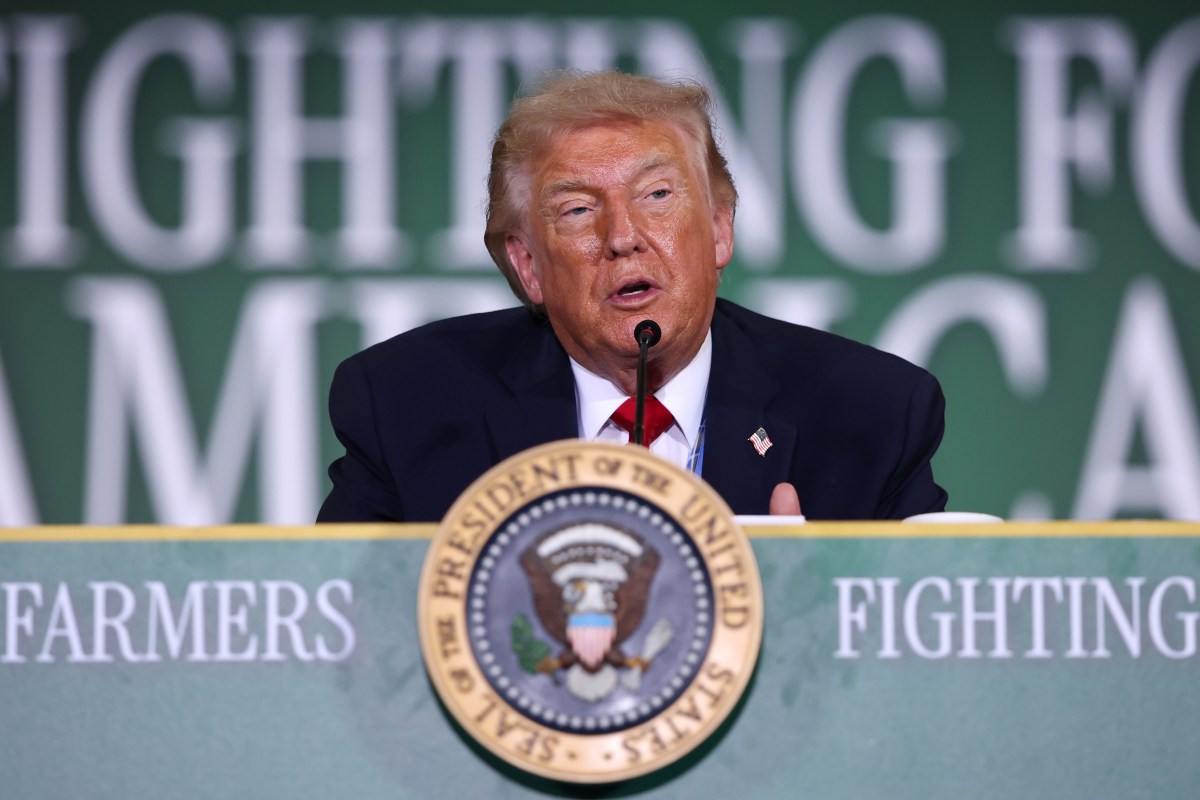
Farmers are grappling with soaring fuel prices just as harvest season hits top gear, compounding the strains on those President Donald Trump has long cast as the country's backbone.
Diesel surpassed its all-time high in early September, and has continued surging further above the $6-per-gallon mark amid supply constraints caused by the Iran war and other global pressures. The nationwide average reached $6.31 on Wednesday, per AAA data, and certain parts of California are seeing the fuel close in or surpass $10 per gallon, leaving stations at a loss for how to display prices on their three-digit displays.
"Trump says the United States is winning the war in Iran and we are in control the Strait of Hormuz. Based on 10-dollar diesel fuel we are losing the war," John Boyd, founder and president of the National Black Farmers Association, told Newsweek.
And diesel continues to notch new all-time highs at the peak of crop-harvesting season, and as farmers attempt to fuel combines and tractors, and to bring in critical crops like corn and soybeans. Boyd, a grains and cattle farmer based in Virginia, told Newsweek that he is currently harvesting corn for $5 per bushel, while paying $7 a gallon to fill up his combine harvester. The vehicle takes 140 gallons, balancing out to just under $1,000 per full tank.
Boyd says his fellow farmers "just can't survive" the current squeeze on top of their many other long-running financial struggles.
Newsweek has contacted USDA for comment and is awaiting a response.
Trump had enjoyed the support of farmers prior to and immediately after the 2024 election, but his popularity with this group has remained shaky since returning to office due to ongoing inflationary pressures, tariffs and proposals to boost domestic beef supplies with foreign imports.
Jason Kurtz, a farmer who voted for Trump in 2024, told Fortune that "cash-strapped" farms were struggling amid the record, rising diesel costs, and were having to make cuts just to ensure they can make it through harvest.
"We have to harvest," he told the outlet this week. "We have to run the machines. We have to use the diesel, so it cuts into our bottom line."
And the price of diesel continues to rise—up around 37 cents in the past week—despite Trump striking what he called a "historic" deal granting the U.S. control over more than 65 billion barrels of Venezuelan oil. The president said in late August that the agreement would help double American oil reserves and "substantially lower Gas Prices for all Americans."
The U.S. has also secured control over the Strait of Hormuz, according to Trump, who said that this too would curb further increases in the global price of oil.
"Trump has said he secured the largest oil deal with Venezuela, and that the Strait of Hormuz is now run by the United States; he also said we are winning the war in Iran," Boyd told Newsweek. "If true, why are we facing the highest diesel fuel prices in history!"
Boyd added that "struggling farmers are paying the price, losing our profit margin and going out of business."
According to a report published in July by Democrats on the Joint Economic Committee, farmers had spent $1.4 billion more on diesel during the 2026 planting season than a year prior—a 63 percent jump in planting costs that was recorded before the fuel’s latest spike.
Some, like JPMorgan director and investment strategist Kriti Gupta, argue that the U.S. economy can weather the effects of record-high fuel prices.
"The same gasoline price increase that would have meaningfully squeezed household budgets two decades ago, or even four years ago, now represents a materially smaller drag on spending power," Gupta wrote in a recent note.
But for farmers, the spike comes at the end of an already trying period marked by rising bankruptcies, trade policy shifts and surging prices for fertilizer and equipment among other inputs.
Taken together, the American Farm Bureau Federation (AFBF) forecast in July that the nation’s croppers will end the year with $31 billion in losses, a figure that is expected to swell to $32 billion in 2027.
"Crop farmers continue to face elevated production costs, lower commodity prices and tight margins—with no relief on the horizon," the researchers wrote.