First in 100 years! A new cat species discovered - Milliyet
Milliyet AppUygulamayı AçWebWeb'de Devam Et ENFirst in 100 years! A new cat species discoveredNewsFirst İn 100 Years! A New Cat Species DiscoveredFirst in 100 years! A new cat species discovered20.09.2026 - 00:46 | Last Updated: 20.09.2026 - 00:46
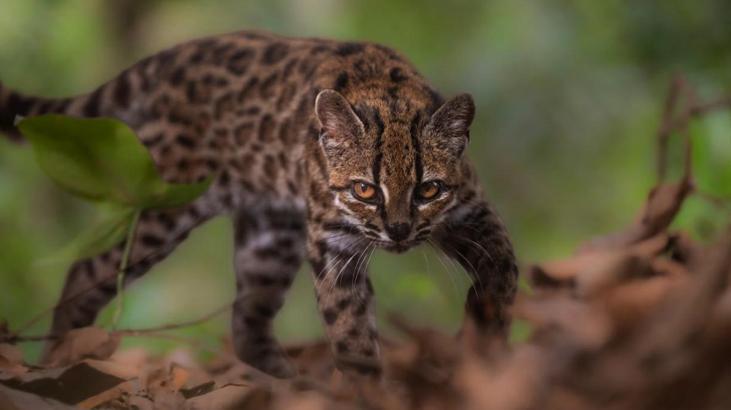
It has been revealed that a small, spotted cat living in the forests of Bolivia had been mistaken for other wild cats until now. DNA analysis solved the mystery, and the animal was identified as a new species for the scientific community; researchers emphasized that the discovery shows the world is still full of unknown creatures.
About the size of a domestic cat, this small wild cat could not be distinguished from similar species in the region for over 100 years due to its spots and stripes. It was only through genetic analysis that scientists discovered this animal is a distinct species.
The new species was named Leopardus tilcayo. The species, described as the “Tilcaya cat,” was identified as belonging to the group of small wild cats known as “leopard cats,” which are found in South and Central America.
Researchers noted that the discovery highlights the biological diversity found in Bolivia’s largely unexplored forests.
The most important clue in the discovery of the new species was Tigrino, a 10-year-old cat living at a rescue center in Bolivia. When Tigrino was found in the forest years ago, the person who discovered him mistook the small animal for a domestic kitten. However, as the animal grew, its behavior and appearance revealed that it was quite different from an ordinary house cat.
Bolivian scientist Paola Nogales-Ascarrunz also noticed that Tigrino was different when she saw him at the center where she volunteered.
As a result, researchers began examining similar sightings of wild cats in Bolivia’s Yungas region.
The researchers collected DNA samples not only from Tigrino but also from other living animals and museum specimens. The comparisons revealed that these cats, which had previously been considered very similar to one another, actually possess a more complex genetic structure.
The study, published in the journal*Current Biology*, suggested that there may be five distinct species within the tiger cat group, rather than the three previously thought to exist.
The study’s findings have also drawn attention in the scientific community. Andrew Kitchener, a mammal expert at National Museums Scotland who was not involved in the study, noted that classifying small-spotted South American cats has long been difficult due to their close resemblance to one another and the limited number of specimens available.
One of the most striking details of the discovery is that, for now, there is only one confirmed living specimen of the new species .
Scientists state that Tigrino is the only confirmed living representative of the Leopardus tilcayo species. However, researchers believe that other individuals may also be found in the forests of Bolivia.
Caroline Sartor, a co-author of the study from the University of Oxford, emphasized that the discovery is also significant for conservation efforts, stressing that it is impossible to protect a species without knowing what it is and where it lives.
Ocelots are found across a wide geographic range in South and Central America, from Costa Rica to Bolivia and Argentina. However, their striking resemblance to one another makes it difficult even for scientists to distinguish between some species.
Deforestation, habitat loss, and poaching pose significant threats to these small wild cats.
The scientific community had previously identified 41 living cat species. It is noted that this number could rise to 44 or more if new discoveries and potential new distinctions within the jaguar cat group are confirmed.
Thus, a small wild cat that had gone unnoticed among other cats in the Bolivian forests for years has been officially recorded as a new species by the scientific community thanks to DNA analyses.