First-Time Homebuyers Could Get $50,000 Under New Bill - Newsweek
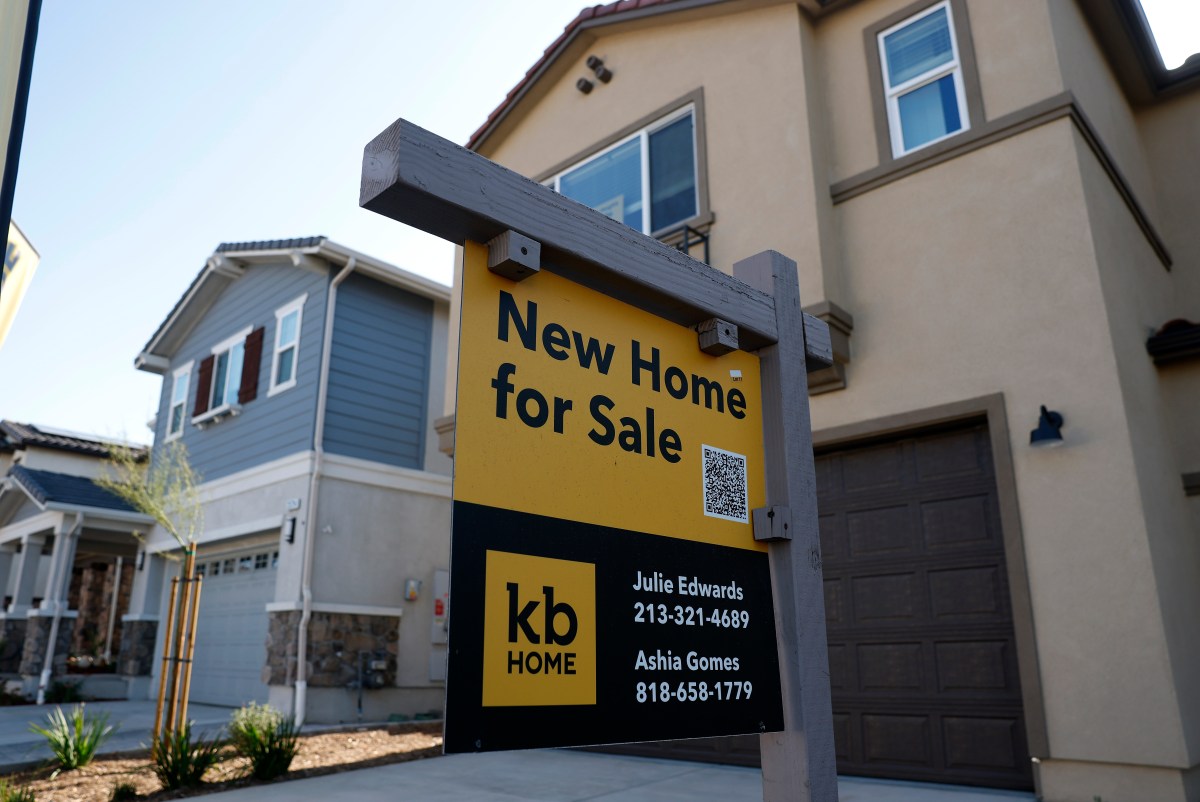
First-time homebuyers of any income level could get up to $50,000 in federal funds for a down payment on a house, under a newly proposed bill introduced in the Senate this week.
The Homeownership Promise Act, introduced Wednesday by Oregon’s Senator Jeff Merkley, a Democrat, and co-sponsored by another Oregon Democrat, Senator Ron Wyden, would allow U.S. homebuyers to open "Homeownership Promise Accounts" and save on their first-time home purchase.
Newsweek contacted Merkley and Wyden’s offices for comment by email on Friday and is awaiting responses.
The dream of homeownership has slipped out of reach for millions of Americans over the last few years, especially after home prices and borrowing costs skyrocketed in the wake of the COVID-19 pandemic. While housing affordability has been strained for all households, with rising property taxes and homeowners insurance premiums, first-time homebuyers have taken the brunt of the crisis.
After years of price hikes, less than 40 percent of non-homeowner households in the U.S. are now able to afford a typical starter home, a traditionally affordable option for first-time buyers, according to a recent LendingTree analysis.
Their struggles to break into the housing market are reflected in recent data by the National Association of Realtors (NAR) showing that, last year, the share of first-time homebuyers dropped to a record low of 21 percent and the typical age of first-time buyers climbed to an all-time high of 40 years. That was up from 33 years in 2019.
Affordability was supposed to improve modestly this year thanks to expected declines in mortgage rates. But despite falling to 5.98 percent in late February, borrowing costs actually started rising again after the start of the war in Iran, and are now above 7 percent.
Being unable to step onto the property ladder has clear, financial consequences for young Americans. An analysis by Realtor.com found that purchasing a home by age 30 yields a 22.5 percent higher net worth (roughly $119,000 more) by age 50 compared to buying a home by age 40.
The proposed bill would establish a new standard for first-time homebuyers in the U.S. For any one dollar saved, the federal government will contribute $5. Essentially, any first-time homebuyer who saves can get a five times matching down payment grant, up to $50,000.
This matching down payment grant would be set up by the U.S. Secretary of Housing and Urban Development (HUD) and will be called a "Homeownership Promise Account."
These accounts must be opened at participating Community Development Financial Institutions (CDFIs) certified by the Treasury Department.
Under the draft, employers and nonprofits would also be able to contribute on an individual’s behalf to help them achieve their savings goals even faster. After a few years, these combined funds could be used to purchase a median priced home, the bill states.
"Working families should be able to afford a decent home in a decent community," Merkley said in a statement. "For millions of young Americans, homeownership remains further out of reach than ever before, keeping them from establishing the foundation that has enabled middle-class families to build equity for generations."
"My new Homeownership Promise Act would restore the promise of homeownership—one of the foundations that working families need to thrive—by allowing all Americans to save for a home and live that piece of the American Dream," he added.
While there is no income limit on getting the down payment match, first-time homebuyers would have to complete HUD-approved housing counseling and they would be limited to homes priced at or below the median home in their purchasing area.
After being introduced by Merkley on Wednesday, the bill was referred to the Senate Committee on Banking, Housing and Urban Affairs.
The passing of a landmark housing bill by Congress earlier this year has shown that there is bipartisan support for reforms aimed at improving housing affordability.
But Merkley’s bill is unlikely to move forward in a Republican-controlled Senate and House, especially as the Trump administration has promised its own measures to solve the housing affordability crisis, which it still has to deliver on.
Things could look a lot rosier for the bill if Democrats regain control of Congress after the midterms, as they hope they will. But there is another potential issue: an infusion of cash in the sleepy housing market could further push up home prices, forcing more people to compete for a limited supply of affordable homes.
Ken Johnson, a professor of finance and the Walker Chair of Real Estate at the University of Mississippi, told Realtor.com that offering widespread down payment assistance would be like "throwing gasoline on an already on-fire housing market."
The only answer to the current housing affordability crisis, Johnson said, is building more affordable homes. "We’re dangerously short in supply. We just cannot build homes fast enough," he said. "You can’t make it easier for people to buy homes, and offer easier credit to buy homes, when you have the housing market so overpriced."