
Florida’s dengue outbreak is now the largest in the continental US in decades - Toronto Star
State health officials reported this week that more than 250 locally acquired cases of the mosquito-borne disease have been tallied so far this year. There has been one dengue death in Florida this year.
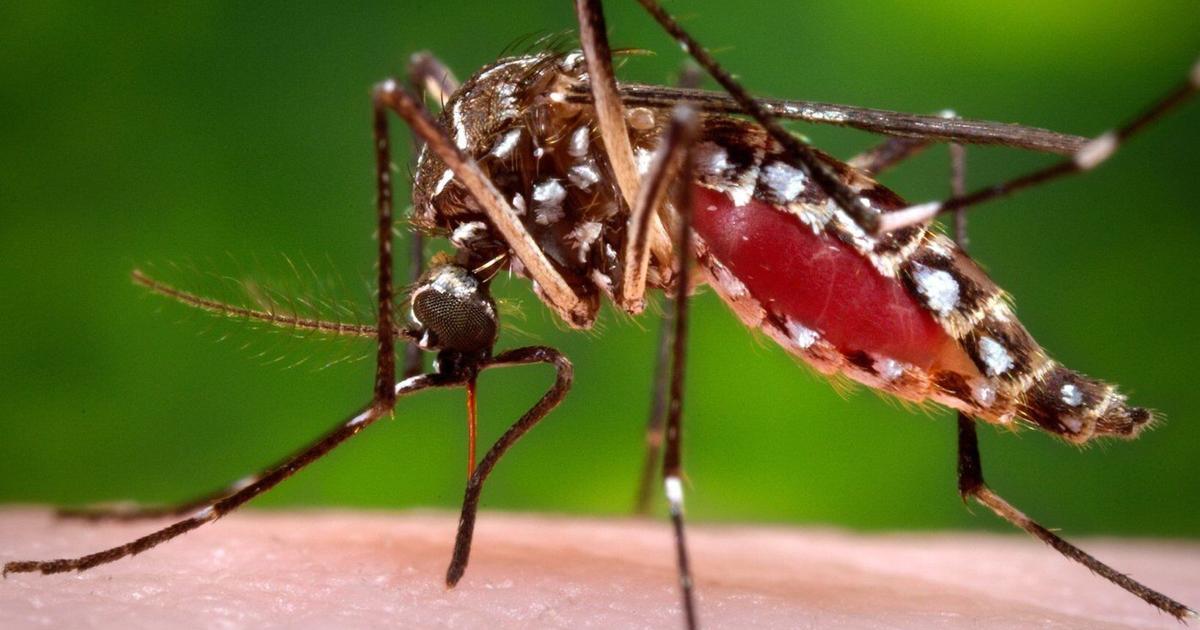
This 2006 photo provided by the Centers for Disease Control and Prevention shows a female Aedes aegypti mosquito in the process of acquiring a blood meal from a human host.
NEW YORK (AP) — Florida’s current dengue outbreak appears to be the largest in several decades in the continental United States.
State health officials reported this week that more than 250 locally acquired cases of the mosquito-borne disease have been tallied so far this year. The vast majority of them were in Hillsborough County, home to Tampa.
Federal health officials say their data on dengue outbreaks is limited. But available information from state health departments and medical journals suggests the Florida outbreak marks the most cases in a calendar year for any state since at least the 1940s.
Puerto Rico is consistently hit hard by dengue, with numbers much higher than what’s seen in any of the 50 states. But in the continental U.S., Florida usually gets the most locally transmitted cases. The state’s previous worst year was 2023, when just under 200 locally spread cases were reported.
Officials in Hillsborough and surrounding counties have declared local emergencies, and workers in the Tampa area are spraying day and night to tamp down the population of disease-transmitting mosquitoes.
Dengue (pronounced DEHN’-gay) is caused by a virus spread by a type of mosquito.
Many infected people don’t get sick, but some experience fever, flu-like symptoms and — notoriously — aches. It’s been nicknamed “breakbone fever” for the excruciating pain some people experience. Severe cases can cause bleeding, shock and death.
There has been one dengue death in Florida this year — an elderly Tampa woman on Sept. 4.
There are four types of dengue virus, simply known as 1, 2, 3 and 4. When someone is first infected, their body builds antibodies against that type for life. If they get infected with another type of dengue, the antibodies from the first infection may fail to neutralize the second type — and actually can help the virus enter immune cells and replicate. That’s made it difficult to develop an effective vaccine.
Most people in the Tampa area don’t have prior immunity to any form of dengue, said Dawn Wesson, a Tulane University expert on dengue and other diseases spread by mosquitoes.
The warm-weather mosquitoes that spread dengue live in Florida and some other hotter U.S. locales, but experts say they have been expanding their geographic reach because of climate change.
For decades, most continental U.S. infections were found among people who caught the virus while traveling internationally, along with locally acquired cases in Puerto Rico.
But in 2009-2010, Key West, Florida, reported the first dengue cases acquired in the continental U.S. outside of the Texas-Mexico border since 1945.
The largest outbreak of dengue in any U.S. state since then occurred in Hawaii, where 264 locally acquired cases were reported over a six-month span in 2015-2016. The Tampa-area outbreak, which first came to light in July, is already on the verge of surpassing that.
Across the world, more than 2.2 million infections and nearly 1,200 deaths have been reported this year, according to the World Health Organization.
There have been nearly 1,900 locally acquired U.S. cases this year, most of them in Puerto Rico, according to the Centers for Disease Control and Prevention.
Florida tends to get a lot of dengue in part because the state receives a lot of travelers who have been to Puerto Rico or other places where the disease is present, Wesson said.
Usually most cases are in southern Florida, around the Miami area. It’s hard to say what’s happening in the Tampa area this year, but the surge may be at least partly related to travel patterns, she added.
Locally acquired cases in Florida have actually surpassed travel-associated cases, by a count of 252 to 245 as of last week. But it’s close, and at least 13 Hillsborough County cases were diagnosed in travelers, according to the state.
Traditionally, the CDC would be highly visible in a situation like this, but it hasn’t been this time, Wesson noted.
The U.S. public health agency has to be invited in by state officials, however, and Florida officials have not asked for CDC disease investigators to come in, CDC spokesman Jason McDonald said. The agency has provided $800,000 in assistance to the state health department, he added.
What can you do to prevent infection?
The current outbreak is centered just north of Tampa, and workers have been spraying to kill mosquitoes. They also have been checking properties for pooled water, including in tires, where mosquitoes might breed.
People in an outbreak area can take their own steps for protection, experts say.
The virus-carrying mosquitoes can bite any time of day, so it’s important for people in an outbreak area to apply EPA-registered insect repellents containing active ingredients like DEET, experts say.
Wear loose-fitting, long-sleeved shirts and long pants to cover the skin and make it harder for mosquitoes to bite. Staying indoors, behind screens or in rooms with air conditioning will also lessen the chances for a bite.
Those steps are especially important just after sunrise and around sunset, when mosquitoes tend to be most active, researchers say.
People should also check their property and get rid of any pooled water where mosquitoes might breed.
Climate conditions and persistent mosquito populations will likely make local dengue outbreaks a more frequent problem, Wesson said.
“There’s a good chance that this is the new normal,” she said.
The Associated Press’ health and science coverage receives financial support from the AP Fund for Journalism and private foundations. AP is solely responsible for all content. Find AP’s standards for working with philanthropies, a list of supporters and funded coverage areas at AP.org.
