Food basket dips in August, but South African households remain under pressure - IOL
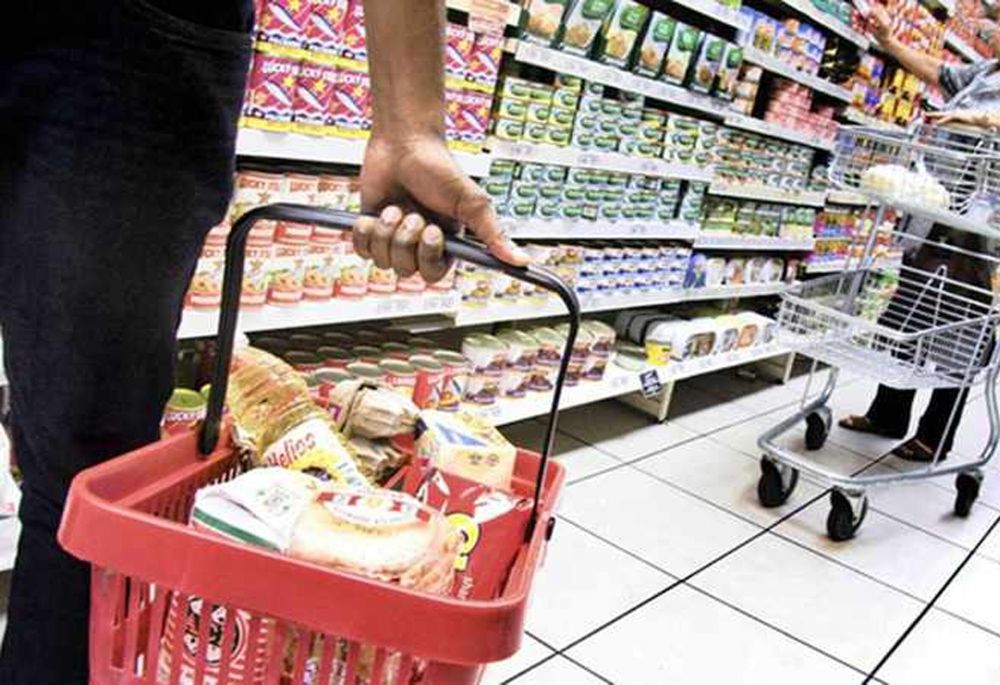
Food basket. THE cost of putting food on the table may have dipped slightly in August, but for many South African households, making it through the month remains a daily struggle.
THE cost of putting food on the table may have dipped slightly in August, but for many South African households, making it through the month remains a daily struggle.
According to the Pietermaritzburg Economic Justice & Dignity Group’s (PMBEJD) Household Affordability Index for August, the average household food basket cost R5 479.80 nationally.
In Durban, the basket cost R5 360.38, while in Pietermaritzburg it stood at R5 261.04.
The basket tracks the cost of 44 commonly purchased household food items, including 30kg of maize meal, 10kg of rice, 5kg of samp, 5kg of sugar beans, 5L of cooking oil, 6L of full-cream milk, 10kg of potatoes, 10kg of onions, 6kg of tomatoes, six tins of pilchards, 10kg of white sugar, 10kg of frozen chicken portions and 3kg of apples.
It also includes 25 loaves of bread and 1kg of margarine.
While the basket became R50.72 (0.9%) cheaper than the R5 530.52 recorded in July, it was still R99.18 (1.8%) more expensive than in August 2025, when it cost R5 380.62.
Statistics South Africa, meanwhile, reported that the annual consumer price inflation (CPI) increased slightly to 4.4% in August 2026, from 4.3% in July.
Food and non-alcoholic beverage inflation also accelerated for the first time since November 2025, rising to 1.1% in August from 0.9% in July.
Higher annual inflation rates were recorded in categories including cereal products, fish and other seafood, milk, other dairy products and eggs, fruit and nuts, vegetables and cold beverages.
In addition, repayments of home loans and other debt will now become more expensive after the South African Reserve Bank (SARB) increased the repurchase rate (repo rate) by 25 basis points from 7% to 7.25% last week.
The repo rate is the interest rate at which SARB lends money to local commercial banks.
Mervyn Abrahams, PMBEJD’s programme co-ordinator, said households had been trapped in an affordability crisis for more than a decade, with incomes failing to keep pace with the cost of living.
He said although the household food basket had declined by about R50 in August, its cost remained higher than the R4 836.80 national minimum wage.
“Prices increase faster than income, so people have no choice but to cut back and food is their only option.”
Abrahams said rising interest rates added another burden, as households had less disposable income after servicing debt, and that families were often forced to prioritise expenses such as transport, electricity and debt repayments before food.
He said women have told the group that they often prioritised transport, particularly where there was a worker in the home, followed by electricity and debt repayments.
“Transport and electricity alone could consume a significant portion of a household’s income, leaving families with very little for food. So when you look at the amount they can spend on food, households are in a food crisis.”
Abrahams said families were responding to rising costs by buying cheaper, less nutritious foods, including relying more heavily on maize meal because it was filling. As a result, he said poor nutrition could have serious long-term consequences.
He said the government could help ease the pressure by ensuring that increases in essential household costs did not consistently outpace wage increases.
“If Eskom tariffs increase by 8.8% and the wage increase is 4%, then all of that goes towards the electricity hike. So, the wage increase does not bring any relief.”
Abrahams said businesses also had a role in keeping food affordable.
While the figures paint a picture of affordability pressures nationally, for households living on grants or low wages, the struggle is far more personal.
Maliga Naidoo, 70, of Merebank, said she had hoped her later years would be comfortable. Instead, she said each month was a struggle to stretch her R2 400 pensioner’s grant across food, electricity, transport and other basic needs.
“I have to look at what I can afford before I buy anything. Sometimes there is simply not enough money to cover everything,” she said.
Naidoo said she relied mainly on her grant, with her children sometimes helping with food when they could.
“But my children are also struggling to put food on their own tables. I used to buy enough groceries for the month. Now I have to buy what I need and sometimes I have to do without things that I would like to have.”
When her money runs out, Naidoo said she sometimes had to rely on family, neighbours or community and religious organisations.
“There are times when I don't know how I am going to get through the rest of the month. I don't want to always ask people for help, but sometimes I have no choice.”
Naidoo said the issue was not about being able to afford luxuries, but having enough money for basic necessities.
“At my age, you don't expect to be worrying about whether you will have enough food or electricity. You just want to live with some dignity.”
Shantal Munsamy, 31, of Phoenix, said the pressure came from trying to provide for her five-year-old son on a limited income.
Munsamy works part-time as a cashier, earning about R3 000 a month, and also receives a R580 child support grant.
Her income covers rent, food, transport, electricity, childcare and other household expenses.
“A large portion of my income goes towards travelling to and from work. I cannot afford a crèche, so I rely on family to care for my son when I work. This costs R50 to R100 each time.
“I am sometimes forced to skip paying my rent so I can buy food, or I will pay the rent and stretch whatever money I have left for food. It is a never-ending cycle. There are days when I break down as I cannot handle the stress. But my son depends on me so I have to keep going.”
Munsamy believed the child support grant should be reviewed and increased.