
Food delivery platforms take battle beyond Brazil’s major cities - Valor International
Competition among food delivery platforms is entering a new phase in Brazil. After concentrating much of their investment and competitive battles in São Paulo in 2026, the companies are expanding into smaller cities and stepping up their efforts to win over restaurants, consumers, and couriers in regional markets. 99Food and Keeta are entering new municipalities, while iFood and Magazine Luiza are broadening their services. Beyond gaining market share, the companies face the challenge of building profitable operations outside major urban centers.
99Food entered 35 new cities earlier this month, bringing its coverage to more than 150 municipalities, the company told Valor. Keeta, meanwhile, recently announced its entry into 21 cities, all outside state capitals. iFood, which operates in more than 2,000 municipalities, is betting on new service formats to expand its reach in mid-sized cities.
99Food’s expansion is part of a strategy to reach municipalities with up to 250,000 residents. According to Bruno Rossini, the company’s senior communications director, the platform is leveraging the group’s transportation network, which operates in 4,400 cities. “We will continue expanding and growing in cities at a fast pace,” he said.
Keeta is also seeking to expand its footprint, but has faced obstacles to growth in Brazil. For much of the year, the company was limited to 11 cities in São Paulo state and postponed its entry into Rio de Janeiro amid a legal dispute over clauses that prevented restaurants partnered with 99Food from working with its competitor. In an interview with Valor, Danilo Mansano, Keeta’s vice president in Brazil, said the company was spending about R$3 million a day to maintain its operations while some restaurants remained barred from joining the platform.
Of the 21 cities Keeta announced, five have already begun operating on a pilot basis in the states of Mato Grosso, Goiás, and Paraná. The remaining locations are in the process of being launched, with full operations expected by year-end, the company said. With the announced expansion, the platform is expected to reach 32 cities.
“We are not avoiding competition with any player,” Mansano said. The company also plans to enter state capitals in 2027.
While its competitors expand geographically, iFood is seeking to strengthen its offerings in regional markets. The company is bringing iFood Hits, which offers meals at lower prices, and iFood Turbo, its ultrafast delivery service, to mid-sized cities, according to Lucas Pittioni, senior vice president of legal affairs, public policy, and mergers and acquisitions.
Magazine Luiza has also expanded its presence in the segment. The retailer launched Magalu Delivery, a service offering food, grocery, pharmacy, and convenience deliveries in partnership with aiqfome, which it acquired in 2020. Integrated into the retailer’s app, the platform is available in more than 400 cities and can serve 1,170 municipalities through regional delivery aggregators. Aiqfome declined a request for an interview.
The platforms’ expansion is taking place in markets where consumer habits differ from those in state capitals. A survey by Galunion, a consultancy specializing in the food-service industry, conducted in April among 1,020 consumers, found that 17% of respondents in smaller cities said they had used 99Food in the previous three months, compared with 51% in state capitals. For iFood, the figures were 63% and 84%, respectively. WhatsApp, meanwhile, was cited by 61% of consumers in smaller cities as a channel for ordering food, compared with 42% in state capitals. The figures measure reported use of each channel, not market share.
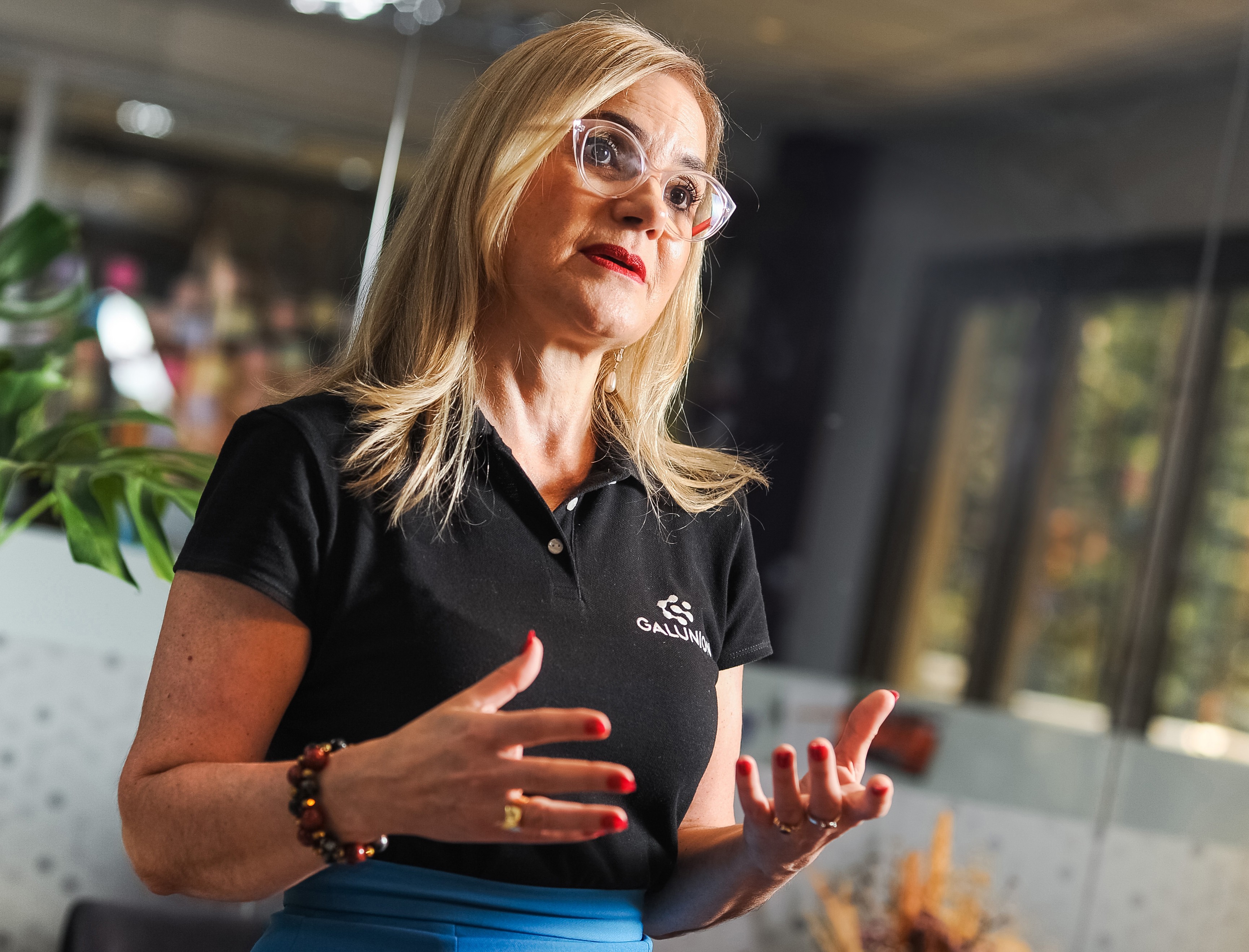
The survey also found differences in what drives consumers’ choices. When two apps offer the same restaurant, a larger discount is the deciding factor for 52% of consumers in state capitals. In smaller cities, delivery time carries more weight: it was cited by 21%, compared with 12% in state capitals. Outside major urban centers, 37% of consumers start their decision-making process with the restaurant rather than the app. “No one is going to win this game alone,” said Simone Galante, Galunion’s founder and president. “This us-against-them competition doesn’t work.”
For restaurant chains, the arrival of delivery apps in new cities can make expansion easier and help attract customers. At Domino’s, delivery accounts for 60% of sales, and more than 30% of its stores are located outside state capitals. “The arrival of aggregators in these markets could accelerate the maturation of new operations,” said Beatriz Gomes Lima, the chain’s operations director.
At Giraffas, more than half of the stores are already located outside state capitals. About 69% of the 30 openings planned for 2026 are in smaller cities or regional hubs. The chain works with seven delivery apps, both national and regional.
Firehouse Subs, owned by Restaurant Brands International (RBI), also plans to expand beyond Greater São Paulo in early 2027, entering three or four markets within 100 kilometers of the state capital, including Jundiaí and Campinas. For Iuri Miranda, head of the company’s Brazilian operations, delivery apps help raise brand awareness in new markets.
Beyond expanding restaurants’ reach, competition among platforms has already changed the commercial terms of food delivery. According to Paulo Solmucci, chief executive of the Brazilian Association of Bars and Restaurants (Abrasel), commissions charged by apps have fallen by 20% to 30% compared with levels before 99Food and Keeta entered the market. A survey by the association shows that 85% of establishments offer delivery, which accounts for an average of 20% of revenue.
Competition, however, is not limited to restaurants. With more platforms operating in the market, companies are also competing for couriers. Miranda said that when an order is delivered within 35 to 40 minutes, food preparation takes about six minutes, while “well over half the time” is spent by the apps trying to find a courier. “Before, you had one platform. Now there are three competing for couriers,” he said. Keeta said the number of delivery-service workers in the city of São Paulo has nearly doubled in a year. 99Food, meanwhile, recruits motorcycle couriers who were already making trips through the group’s app.
Another battleground is the discounts offered to attract consumers. According to Galunion, 65% of respondents said they would order less without coupons and promotions. In state capitals, the figure rises to 70%. iFood said it views promotional spending as “a natural part” of competition, but expressed concern about “subsidy strategies aimed at squeezing out less-capitalized competitors and compressing margins across the sector.”
According to the platform, “Brazil cannot allow foreign companies to adopt one set of practices in their domestic markets and export predatory practices to our country.”
In response, Keeta said iFood is seeking to protect its dominant position and hinder its expansion through exclusivity agreements. It also accused its competitor of trying to divert attention from a probe by Brazil’s antitrust regulator (CADE) into possible noncompliance with an agreement with the agency. Keeta defended the use of coupons, a practice it said iFood also employs and that helps attract consumers.
For Abrasel, concerns that reducing subsidies would hurt the sector are exaggerated. “That’s mostly sour grapes from companies facing competition,” Solmucci said. “High fees charged to restaurants are far riskier for them than the benefits passed on to consumers.”
Keeta’s business practices have also divided restaurant industry associations. The National Restaurant Association (ANR) criticized the platform’s assisted-purchase model, under which employees and couriers place orders at establishments that are not yet integrated into the platform.
Keeta said assisted purchases allow customers to order from restaurants that are not integrated into the platform, partly because of exclusivity agreements. Such establishments are identified as “Assisted Purchase” in the app. The company said it informs consumers about the terms of these transactions and reviews complaints to determine whether refunds are warranted.
Solmucci, of Abrasel, defended the initiative. In his view, the model allows customers to order from brands they prefer while creating opportunities for restaurants and couriers.
Competition for restaurant partners is expected to intensify in 2027, when iFood’s agreement with Cade expires. Signed in 2023, the Consent Decree (TCC) limits exclusivity to 25% of national sales and 8% of restaurants in cities with more than 500,000 residents, for a period of up to 24 months. According to iFood, more than 95% of its partner restaurants already operate on other platforms.
When the agreement expires in August 2027, iFood will discuss next steps with CADE, Pittioni said. Keeta supports a ban on exclusivity agreements. “The ideal scenario—the truly ideal one—would be to prohibit all forms of exclusivity,” Mansano said. Abrasel has also filed a case with CADE seeking such a ban. 99Food, meanwhile, will have to renegotiate some of its contracts, which expire in 2027. Rossini said, however, that restaurants have shown no interest in leaving the platform.
This article was translated from Valor Econômico using an artificial intelligence tool under the supervision of the Valor International editorial team to ensure accuracy, clarity, and adherence to our editorial standards. Read our Editorial Principles.


