Former Japanese diplomat on US-China-Russia talks - NHKニュース

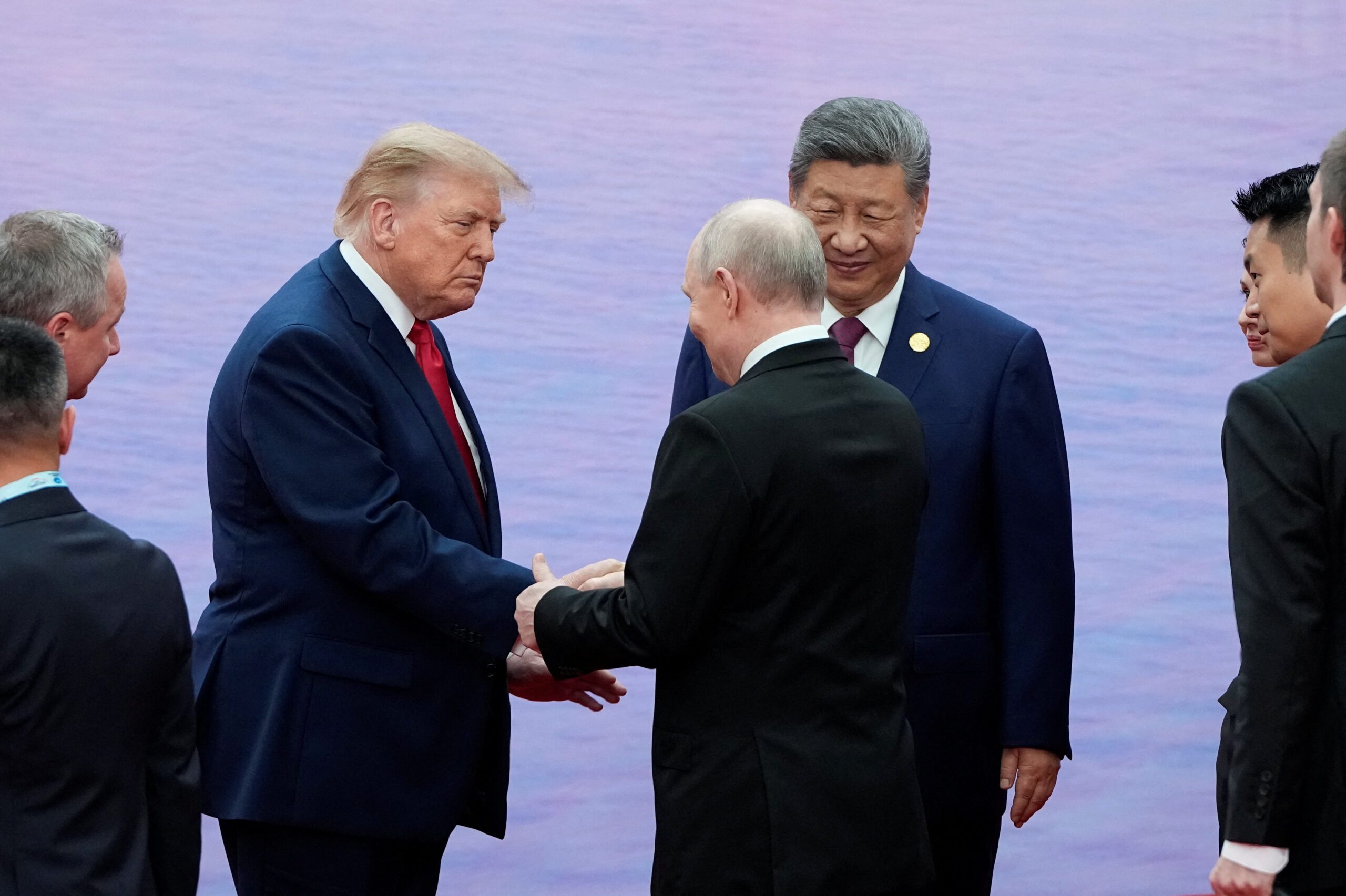
Former Japanese diplomat on US-China-Russia talks The summit between the leaders of the US, China and Russia is drawing close attention in Japan as well. Foreign policy experts here say that although Japan is not a superpower, it has significant influence in the region, and it is an important time for Japan's diplomatic efforts.NHK World spoke with Ishii Masafumi, a former Japanese Ambassador to Indonesia, on the implications of the summit.
Ishii says, "From a wider perspective, my sense is, you should not, you should neither, overestimate nor underestimate the meaning of this meeting." To understand the significance of the US-China-Russia talks, former Ambassador Ishii referred to the Yalta Conference, which was held near the end of World War Two. The meeting brought together British Prime Minister Winston Churchill, US President Franklin Roosevelt, and Soviet leader Joseph Stalin. Their talks helped determine the shape of the international order in the postwar era.
Ishii says: "This is called Yalta 2.0. But Yalta 1.0 had a common agenda, which is to decide how to finish the war, and then how to construct the structure of the sort of order after the Second World War." But to Ishii, this time, there is "no common agenda." Ishii does not think there will be any meaningful agreement, which he says means this meeting is without a common basis. He says: "This meeting is not sustainable. This may be the one-shot meeting, so you should not overestimate it."Ishii went on to say that on the other hand, the summit should not be underestimated, because it may be the beginning of a more radical United States. He added that this comes in the wake of President Trump's defeat in the midterm election because he does not have to worry about the election result, particularly in foreign policy.
The former diplomat points out that international relations may become "more unpredictable." He says it raises concerns about major powers discussing regional issues without the direct participation of countries most affected by them.Ishii warns: "It's bad news for alliance partners because the US is ready to make decisions on things which have an impact on alliance partners in the region, not only Japan, but also Korea, the Philippines, Taiwan maybe. So as I said, this is a sign of the beginning of President Trump becoming, more aggressive, more radical."Ishii pointed to how the possible outcome of the talks could impact Japan: "I think best scenario for us is for all three of them to agree on some sort of, nuclear disarmament in China. Or at least to start a regular dialogue about the nuclear management, nuclear weapon management for China's nuclear arsenal. If that happens, that is the best-case scenario. Worst agenda is consensus to be built by three leaders on the future over North Korea, which would perhaps go against our interests or our wishes, like accepting North Korea as a nuclear weapon state."
The former ambassador explains Japan's influence will ultimately depend on how actively it chooses to engage: "Japan is not a superpower. Japan is not a global power. But Japan is a very important, significant regional power which has the global reach. But Japan does have a global impact. So I think Japan still has the chance to, put it in this way, sort of punching above the weight. And then, it's up to how Japan behaves, what Japan is going to do."Ishii says Japan's role in the region will be determined not by its size, but by the choices it makes and in order for Japan to stay influential, it should be more proactive in the international community.