Former pupils reunite to remember Wentworth’s ‘Cabbage Primary School’ - IOL
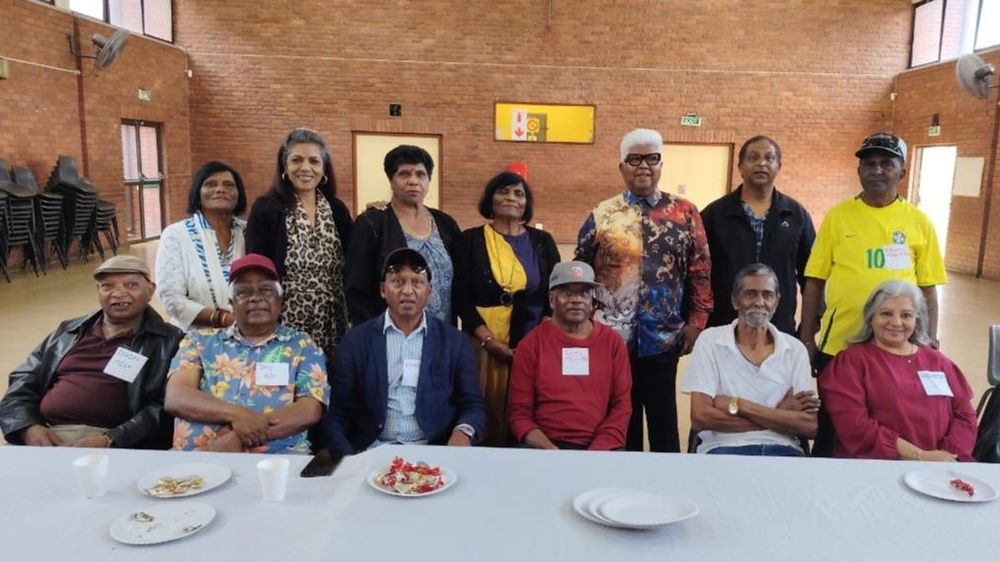
Former classmates of Wentworth 'Cabbage" School at the 60th reunion, standing from left: Valerie Reed, Kogie Ramiah, Joyce Pillay, Kilsie Arran, Reverend Cyril Pillay, Pravin Balliraj and Gonsull Gounden. Seated from left: Dickson Muthlal, Jay Govender, Vinodh Meghrajh, Krish Govender, Juggie Govender and Vasanti Moses.
A SMALL group of elders recently convened at the Greenbury Hall in Phoenix to celebrate a milestone - the 60th reunion of the Wentworth Government Aided Indian School, affectionately known as the Cabbage Primary School due to its surrounding acres of lush cabbage patches.
For the gathering of about fifty former pupils aged between 60 and 80 years from Chatsworth, Merebank, Cairwood, Phoenix, etc, this was not just a reunion; it was a commemoration of shared histories, legacies, and enduring friendships from years gone by.
While the precise date that this school’s doors swung open for the very first time remains difficult to pinpoint, a few octogenarians believe it might have happened in the 1940s.
According to accounts shared by attendees, the school was created to serve the children of indentured laborers who chose to remain in South Africa after completing their service.
Passenger Indians (independent immigrants) who settled in the region in the early 1900s also enrolled their children as pupils at the school.
Families in the area earned a living through fishing and selling vegetables at the local fresh produce market.
As the population grew, the community recognised the need for a school, which led to the establishment of Wentworth Government Aided Indian School near the Wentworth train station.
83-year-old Dan Govender, of Phoenix, reminisced about the school’s early days and the tightly-knit community it served.
“There were about four families who started the building of Cabbage Primary School. The first block had classrooms one to ten built. It took about six months to a year for the block to be completed. This was done solely by the families living in the area. As the money came in, the rooms were constructed. Every family contributed,” he recalled.
Once complete, the school expanded with governmental assistance into a second block, forming an iconic 'L' shape.
Dan Govender, from left, Raj Sirpat, Reggie Andrew, Vivian Pillay, Nundha Govender and Solly Singh.
As the years turned into decades, a number of children traversed the halls of the school, and memories were made. Simple pleasures like sipping tasty cocoa and feasting on a “thick spread of butter and jam on brown bread” were delectable memories for many.
However, as the 1960s loomed, the implementation of the Group Areas Act altered the landscape of the community. Families were forcibly removed, and the eventual dismantling of the school followed shortly after.
Despite the loss of the physical structure, the reunion witnessed a resurgence of nostalgia as former pupils like Solly Singh, 70, of Phoenix, recalled some of their childhood experiences.
Earlier this year, Singh started a WhatsApp group to reconnect with former classmates, which ultimately paved the way for the reunion.
“The pupils who attended the school were from Lingum Road, Dayal Road, Teakwood Road, Euston Road, Bluff, Bayside, Brighton Beach, West, Fynland, Kings Rest, and surrounding areas.
“They pushed wooden carts to carry wood and coal, played games of five-stones and three-tins, and most times they were barefoot,” Singh reflected.
“Sixty years later we met. We have changed with time, but the stories brought so much laughter. The school may be gone, but our memories live on.”
Singh, born in 1955, attended the school from Class (Grade) 1 to Standard 6 (Grade 8). He said his family home was close to the school staff room, and he remembered the teaching staff sharing meals with his family.
“School was fun and exciting for us. We had teachers who cared for us, but also ensured that we maintained discipline at all times,” said Singh, an avid athlete, specialising in javelin throwing and long jump.
He said there were many fruit and vegetable farms around that school that the pupils ate from.
Singh reminisced about picking fruit like guavas, avocados and madonees, and catching guppies from the drains.
“The guppies were used as bait to catch bigger fish to feed our families. We also sold bait to fishermen and used that money to buy sweets.”
The Govenders: Gonavathee, seated, with her brother, Morgan, standing from left, granddaughter Athmikha, grandson Thriyaam, and daughter Kumarie.
Another vivid memory was shared by Gonavathee Govender, 83, of Mount Edgecombe Estates, who reflected on the treats brought home by her father from the active whaling station nearby.
“My father would bring pieces of whale meat for us,” she said.
“We would wash, boil and cook the meat in a curry.”
Gonavathee Govender at age 11, crowned Miss Diwali.
At age 11, she was also crowned Miss Diwali, as part of the annual Diwali festivities at the school.
She said the event was not merely a beauty pageant but a celebration of cultural pride.
“All the young girls dressed up and paraded during the festivities. I remember we had to use red food coloring as lipstick because the make-up aunty was not around.”
Govender, who was also active in sports, recalled how pupils carried bricks from their home to build the school’s tennis court.
At age 16, she had to leave school to care for her younger siblings.
“My teachers came home to convince my mother to let me remain in school because I was doing well all-round, but she refused. My mother was business-minded and helped at the market stall my uncle had. She later also sold vegetables at the market. My father worked at API (Amalgamated Packaging International) in Mobeni, making cardboard and gift boxes, etc for local and export."
As the elders each took a turn to introduce themselves and shared their memories, a commitment was made by those present to initiate more reunions and to commit their oral history to a book.