Frank Strada resigns after failed Pike execution. Here's what to know - Newsweek
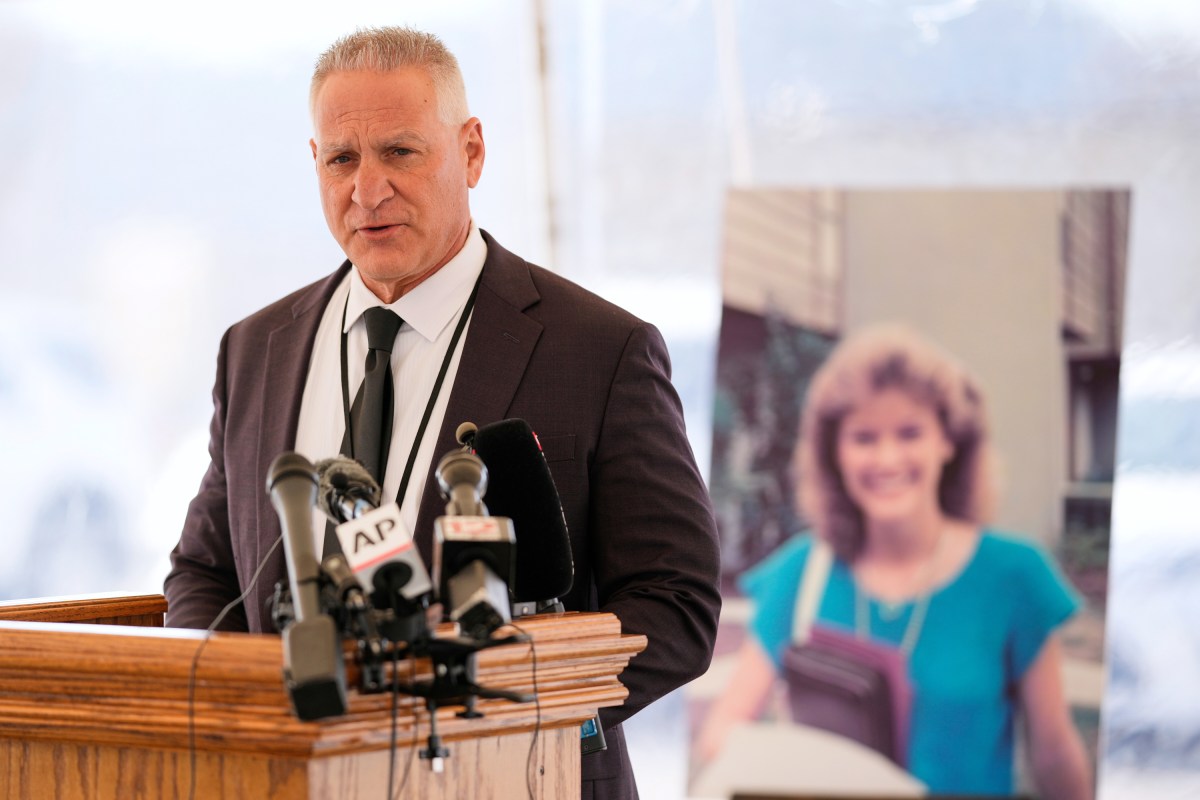
Frank Strada, the head of Tennessee’s prison system, resigned Saturday following the failed execution of Christa Pike, focusing new scrutiny on his leadership in Tennessee and his previous role during three problem-plagued executions in Arizona.
Tennessee Governor Bill Lee announced that Strada, commissioner of the Tennessee Department of Correction, would leave office this month. The resignation comes three days after the state attempted to execute Pike by lethal injection at Riverbend Maximum Security Institution in Nashville.
Pike survived the September 30 procedure after receiving two doses of pentobarbital. Her attorneys said in a Friday court filing that she was unconscious, intubated and using a ventilator to breathe while doctors worked to remove the drug from her system.
Lee has ordered an independent review of the attempted execution and halted further Tennessee executions for the remainder of 2026. The governor’s office said it would announce an interim commissioner later.
“Commissioner Strada has served with integrity, and I appreciate his willingness to put the interests of Tennesseans first during this difficult moment,” Lee said in a statement.
Newsweek reached out after hours by email to Strada, the Tennessee Department of Correction, and Governor Bill Lee's office for additional comment.
In a written statement, Strada defended his department’s handling of the procedure while saying his departure would allow the review to move forward.
“Serving as commissioner of the Tennessee Department of Correction has been a great honor, and I continue to believe the Department carried out its responsibilities in accordance with the established protocol,” Strada said, according to a statement reported by the Nashville Tennessean. He said stepping aside was “in the best interest of Tennesseans as the independent review moves forward.”
Lee appointed Strada to lead the Tennessee Department of Correction effective January 9, 2023. At the time, the governor cited his extensive corrections management and law enforcement experience and said he was well-suited to lead the department.
According to his official Tennessee biography, Strada began his career as a correctional officer and has 37 years of corrections management and law enforcement experience. That includes nearly 30 years with the Federal Bureau of Prisons, where he served as assistant director of the Correctional Programs Division.
In that federal role, Strada provided leadership and policy direction to staff at 121 correctional institutions, six regional offices and more than 300 residential reentry centers, according to the state biography. He also served as an adviser to the bureau’s director and received the bureau’s Distinguished Service Medal for what the biography described as exceptional meritorious service.
Strada is also a U.S. Air Force veteran.
Immediately before moving to Tennessee, Strada served as deputy director of the Arizona Department of Corrections, Rehabilitation and Reentry. His responsibilities included prison operations, inmate programs, public affairs, facilities management and financial services, according to Tennessee’s announcement of his appointment.
Strada’s resignation statement said the department had carried out its responsibilities under established procedure, while describing an independent investigation as appropriate and necessary.
“I look forward to doing everything I can to help determine exactly what occurred,” Strada said.
Pike’s attorneys said the resignation was warranted but insufficient.
“The resignation of Commissioner Strada is justified, but it does nothing to help Christa now,” attorneys Randy Spivey, Kelly Gleason, Stephen Ferrell and Luke Ihnen said in a statement reported by ABC News. “What happened to her Wednesday reflects a systemic failure that goes far beyond any one person.”
Pike remained hospitalized following the failed execution attempt, and no additional public update on her condition had been released as of Saturday evening.
The attorneys said they hoped the independent review would expose what they called profound problems within Tennessee’s death-penalty system. Their description represents the legal team’s assessment; the correction department has said that it followed every step of the state’s lawful execution protocol.
Pike, 50, was sentenced to death for her role in the 1995 torture and killing of 19-year-old Colleen Slemmer. The two were students at the Job Corps Center in Knoxville, and Pike was 18 at the time of the killing.
Her attorneys allege that the Tennessee execution team failed to recognize that the IVs were incorrectly placed or that her veins had blown during the September 30 procedure. They said those problems allowed pentobarbital to enter her body without bringing about her death. The department disputes suggestions that it departed from its approved protocol.
The attempted execution was the second time in 2026 that Tennessee was unable to carry out a scheduled execution under Strada’s leadership. In May, the execution of Tony Carruthers was stopped after the execution team could not establish the IV lines needed to administer the lethal-injection drug.
A third execution, that of Anthony Darrell Hines, was carried out by lethal injection in August. That means two of the three Tennessee execution attempts conducted in 2026 under Strada did not result in the prisoner’s death as scheduled.
Strada was a senior Arizona corrections official when the state resumed executions in 2022 after a nearly eight-year pause. Arizona executed Clarence Dixon on May 11, Frank Atwood on June 8 and Murray Hooper on November 16. Each procedure was marked by reported difficulty establishing IV access.
During Dixon’s execution, corrections personnel unsuccessfully attempted for approximately 25 minutes to place IV lines in his arms before accessing a vein through his groin, according to media-witness accounts collected by the Death Penalty Information Center.
An Associated Press reporter who witnessed the execution said personnel had to wipe up “a fair amount of blood” during the groin procedure. A Fox News media witness reported that Dixon appeared to be in pain and grimaced as execution personnel attempted to insert the lines.
Several death-penalty researchers questioned the procedure. Michael Radelet, a University of Colorado Boulder sociologist and death-penalty researcher, told the Death Penalty Information Center that he would classify the execution as botched, while acknowledging that others might disagree with that description.
Austin Sarat, an Amherst College professor who studies executions, said the repeated IV-placement attempts constituted serious problems. According to the Death Penalty Information Center, he also questioned whether the method used to access Dixon’s groin was permitted under Arizona’s execution protocol.
A month later, witnesses said medical personnel had difficulty locating a vein in Atwood’s right arm. Atwood suggested that the team use his right hand instead, according to reporting revisiting Arizona’s 2022 executions and an account published by Prison Legal News.
The year’s third execution encountered another delay. Witnesses said personnel took about 20 minutes to insert the lethal-injection IV during Hooper’s November execution, according to WKRN. The outlet reported that staff eventually placed the line through a vein near his groin.
During the process, Hooper reportedly looked toward witnesses and asked, “Can you believe this?” WKRN reported that Strada, then Arizona’s deputy corrections director, later announced his death.
Dale Baich, a former attorney for Hooper, described the three procedures as “problematic executions” in a 2023 interview with WKRN. Baich said Strada held a leadership role and was prominently involved in how Arizona carried out executions that year.
After taking office, Arizona Governor Katie Hobbs paused lethal-injection executions and appointed retired federal judge David Duncan to review the state’s process. Duncan later said he had concluded that lethal injection was not a workable method, according to reporting that revisited Arizona’s execution history after the attempted execution of Pike.
Strada has said Tennessee’s independent review is necessary, but he has not conceded that his department failed to follow its approved execution procedure.
“I continue to believe the Department carried out its responsibilities in accordance with the established protocol,” he said in his resignation statement.
The department has separately said that it followed every step of Tennessee’s lawful execution protocol as approved by the state attorney general’s office. Pike’s attorneys disagree and have requested a court order requiring officials to preserve evidence associated with the attempted execution.
Lee has retained former U.S. Attorney Ed Stanton to conduct the independent review, the Associated Press reported. Stanton previously conducted a review after a Tennessee execution was called off in 2022 and found that the state had not complied with its own lethal-injection process.
His review identified multiple protocol violations, recordkeeping problems and communication failures, prompting Tennessee to pause executions while it revised its procedures.
The governor has not announced who will replace Strada on an interim basis.
Newsweek’s reporters and editors used Martyn, our AI assistant, to produce this story. Learn more about Martyn here.