Friedrich Merz rues “disaster” as populists win state elections
HUNDREDS OF STATE elections have been held in Germany since the founding of the federal republic in 1949. The conservative Christian Democrats (CDU), or its sister party, the Christian Social Union, had hitherto won seats in all of them. But on September 20th the CDU looked set to fall just short of the 5% threshold in Mecklenburg-Vorpommern, a state on Germany’s Baltic coast, meaning it would for the first time in its history fail to enter a state parliament. Friedrich Merz, the CDU chancellor, called the result a “disaster”.
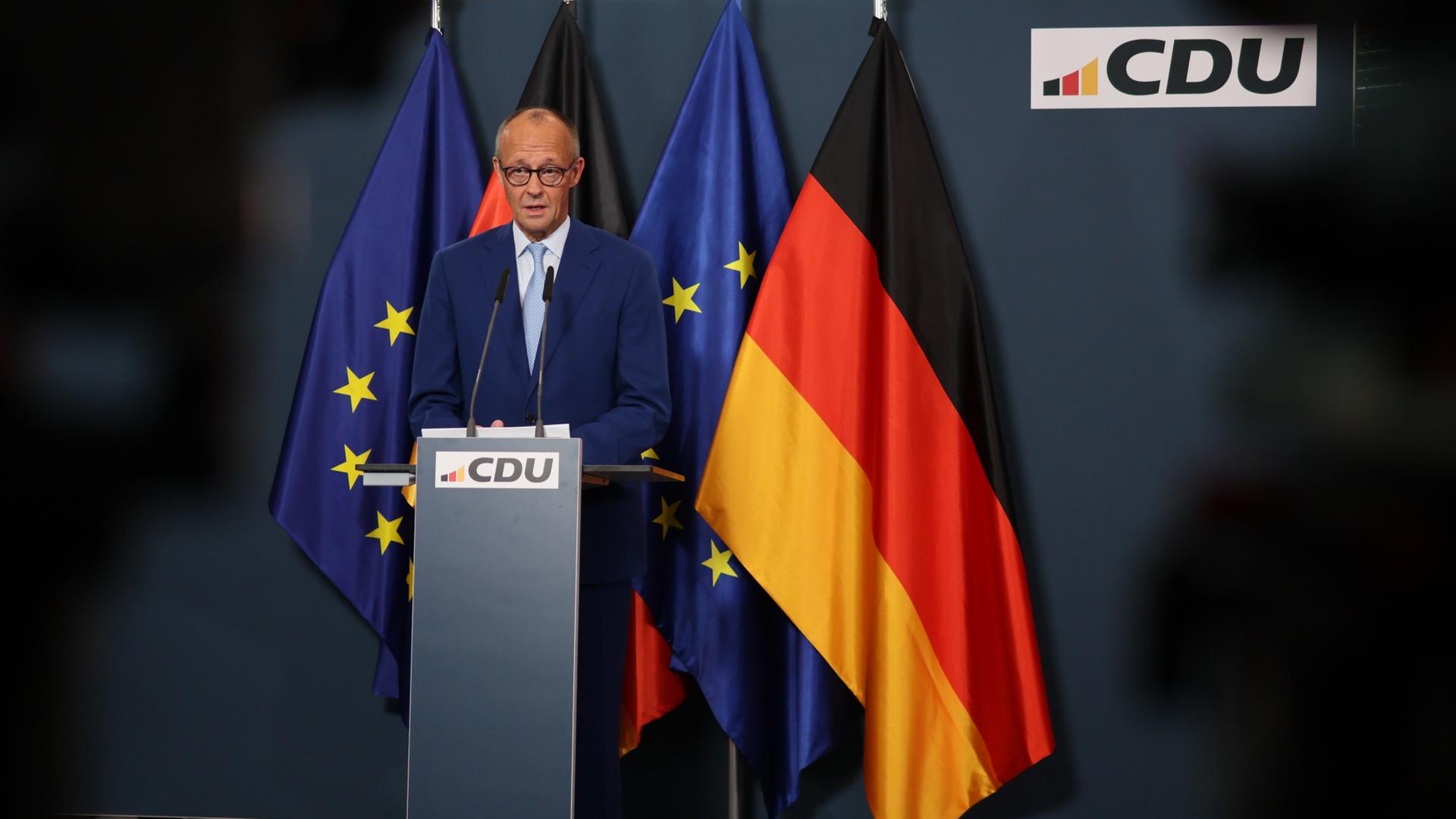
German Chancellor Friedrich Merz speaks to media at the Christian Democratic Union party headquarters in Berlin, Germany, (AP)Not only did the debacle mark a historic low for the party that has ruled Germany for longer than any other. It also meant that Mr Merz had failed a test that many in his restive party had set for him before the election. His position now looks shakier than ever.
Mr Merz’s blood has been in the water since September 6th, when the populist-right Alternative for Germany (AfD) delivered the ruling CDU a shellacking in the eastern state of Saxony-Anhalt. Mr Merz declared afterwards there could be no return to “business as usual”. Yet after the election in Mecklenburg-Vorpommern, as well as one in the city-state of Berlin, on September 20th, he stood before journalists in the capital and declared that his government’s reforms would continue as planned. Despite feverish speculation over his future, he vowed to carry on as both CDU chief and chancellor. If change was in the air, it felt remarkably still.
In Mecklenburg-Vorpommern the AfD took the top slot for the third time in a state election. The party received a projected 38% of the vote, edging the ruling Social Democrats (SPD) into second place, although the anti-AfD “firewall” maintained by other parties means the SPD is likely to remain in charge. In Berlin the populist-left Die Linke, which seeks to forcibly expropriate corporate landlords and has been battling charges of antisemitism, soared to a record result of 25%, propelled by younger voters. It has a decent chance of governing a German state for only the second time in its history, atop a left-wing coalition. The CDU, which currently runs Berlin’s government (known as the Senate), would be relegated to opposition.
No one could accuse the chancellor of underplaying the stakes. “Trust in institutions is declining and being exploited by radical parties on the left and right,” he said. Mr Merz made a fresh argument for his government’s proposed reform path, which includes changes to pension and labour-market rules agreed by the centrist coalition in July. The reforms, he said, “are the means to combat the authoritarian poison that…is penetrating deeper and deeper into our society”. He was due to huddle with party barons later in the evening. Meetings with party committees and MPs will follow on Monday and Tuesday.
Mr Merz may not face an immediate challenge. Last week all eight CDU state premiers, a group that includes potential successors to the chancellor, signed a letter backing him (albeit without naming him) and seeking to quell speculation about job swaps. Potential CDU rivals do not seem ready to pounce, and the SPD, the junior partner in the coalition, has little incentive to rock the boat. There were no immediate calls for change on Sunday night.
Yet after the Mecklenburg-Vorpommern disaster, so dismal is the mood that speculation over Mr Merz’s future won’t simply die away. His approval rating has been abysmal for months, and is if anything declining (see chart). Even loyalists acknowledge that his standing within the CDU seems irrecoverable. A modest recovery in economic growth and the passage of some reforms in parliament this autumn may provide a mild morale boost. But even that is not assured. The government is already signalling that it will soften one element of its pension plan. And its razor-thin Bundestag majority hands leverage to the growing ranks of disgruntled MPs. The next few days, as the CDU licks its wounds and weighs its options, could prove crucial.
There were some bright spots for centrists. Not long ago the AfD was hoping for a far bigger win in Mecklenburg-Vorpommern, and perhaps even a small one in Berlin, given its fractured electorate. Instead the AfD was given a serious scare by the surging SPD in “Meck-Pom”, and in Berlin it underperformed its polling. Alice Weidel, the AfD’s co-leader, insisted that voters had given her party a mandate to rule in Mecklenburg-Vorpommern. But the fact is that it will not govern either there or in the capital, though it may eventually do so in Saxony-Anhalt.
Yet take a step back, and Mr Merz’s warnings look well warranted. The AfD surged in both states relative to the last elections, as it has nationwide. It may become the sole opposition in Mecklenburg-Vorpommern, a position to which its politics of anti-establishment rage are perfectly suited. In Berlin, the SPD may balk at governing with Die Linke if it means accepting an expropriation policy that would damage the city’s reputation among investors. Potential coalition partners will also be wary of enabling a party some regarded as stained by association with antisemites, especially after Germany’s biggest Jewish organisation warned against it. However you cut it, German politics is fragmenting, fraying and radicalising. Mr Merz’s job did not get any easier tonight.