From boardrooms to Rajya Sabha: Why Dhanraj Nathwani's entry matters
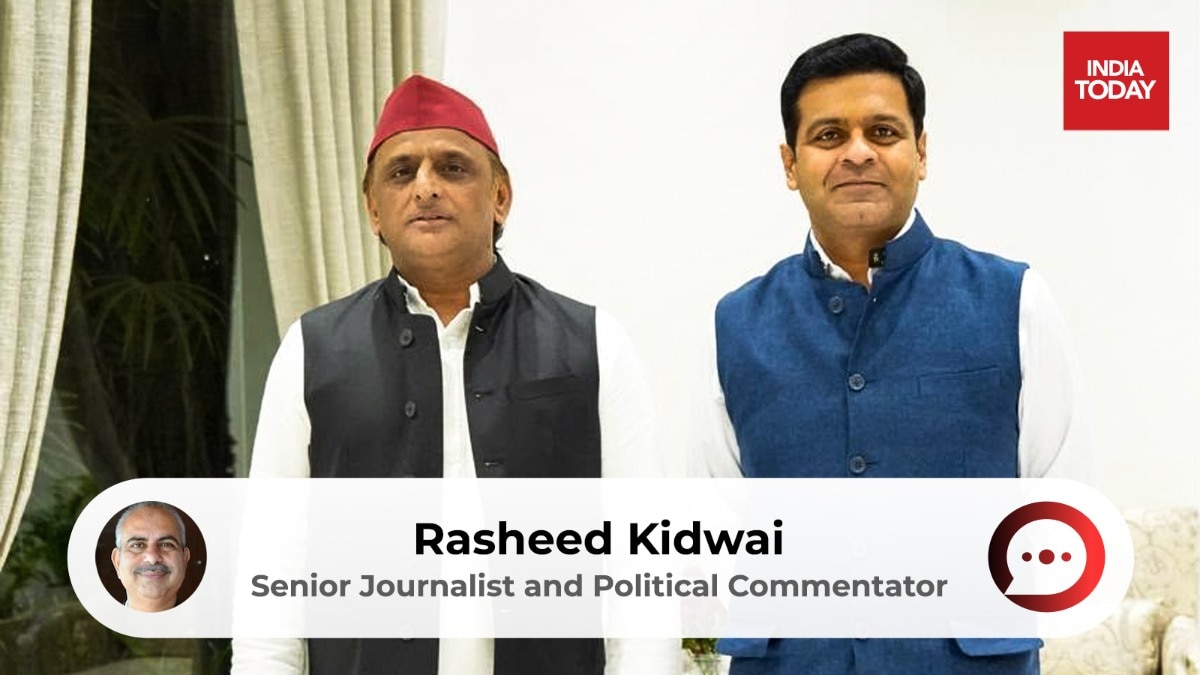
The Rajya Sabha has often been described as the House of experience — a chamber where public life, scholarship, administration, law, culture and industry find representation beyond the immediate contest of elections. The nomination of Dhanraj Parimal Nathwani as a Samajwadi Party (SP) candidate from Uttar Pradesh brings back an old but unresolved question: How should India engage with its business leaders in the political process?
At 40, Dhanraj Nathwani represents an unusual political entry. He is not a conventional politician who has spent decades navigating party structures or electoral campaigns. He comes from the corporate world, where he serves as Group President at Reliance Industries, while also being involved in sports, culture, wildlife and social initiatives. The SP named him alongside veteran party leader Ram Gopal Yadav for the October 16 Rajya Sabha election in Uttar Pradesh. Both subsequently filed their nomination papers in Lucknow.
But the larger significance lies beyond one individual appointment. It is about whether India is ready to create a stronger institutional pathway between enterprise and governance.A RARE FATHER-SON MOMENT IN THE UPPER HOUSE
The Nathwani candidature carries an added layer of history. If Dhanraj Nathwani is elected, he will enter a House in which his father, Parimal Nathwani, is currently serving his fourth term. Parimal Nathwani was elected from Jharkhand in June this year as an Independent backed by the NDA, after earlier serving two terms from Jharkhand and one from Andhra Pradesh.
The possibility of father and son serving concurrently in the Rajya Sabha is unusual, though Indian parliamentary history offers several examples of families occupying Parliament at the same time. Indian politics has witnessed several instances where public life became a shared inheritance across generations. The Nehru-Gandhi family, the Yadavs of Uttar Pradesh and Bihar, the Abdullahs in Jammu and Kashmir, and the Karunanidhi family in Tamil Nadu remain among the most prominent examples of political families shaping electoral politics.
There have also been instances where members of the same family have occupied Parliament simultaneously. The Scindias offer one such example across generations: Rajmata Vijaya Raje Scindia and her son Madhavrao Scindia were both prominent parliamentary figures; Madhavrao’s sister Vasundhara Raje subsequently entered public life, while his son Jyotiraditya Scindia represents the next generation.
The Nehru-Gandhi family has provided some of the most visible examples of simultaneous family representation. Sonia Gandhi, Rahul Gandhi and Maneka Gandhi were members of the Lok Sabha at the same time, while Rahul Gandhi and Varun Gandhi were also parliamentary colleagues as cousins.
Mulayam Singh Yadav and Akhilesh Yadav, and Sharad Pawar and Supriya Sule, provide father-child examples of simultaneous parliamentary representation. Sukhbir Singh Badal and Harsimrat Kaur Badal, meanwhile, represented the same political family in Parliament as husband and wife — a same-generation relationship, with the wider Badal legacy extending to Sukhbir’s father, Parkash Singh Badal.
The Nathwanis, however, represent a different category altogether. Their public engagement did not emerge from an established electoral tradition but from the world of enterprise. Here is a family whose primary identity has been built around industry, institution-building and corporate leadership, with two generations potentially finding a place in the same House.
The distinction matters because India has never lacked industrialists in Parliament. KK Birla served three terms in the Rajya Sabha between 1984 and 2002; Rahul Bajaj served in the Rajya Sabha from 2006 to 2010; Vijay Mallya served two terms from Karnataka; Subhash Chandra was an Independent Rajya Sabha member from Haryana between 2016 and 2022; and YS Chowdary, an industrialist, served in the Rajya Sabha from 2010 to 2022 before entering direct electoral politics. Naveen Jindal, another prominent industrialist, has served multiple terms in the Lok Sabha.
So Dhanraj Nathwani’s entry is not unprecedented. What is unusual is the particular combination: a serving senior Reliance executive, a business-family background, a regional opposition party’s ticket and the possibility of serving simultaneously with his father in the Upper House.advertisementINDIA INC AND INDIAN DEMOCRACYGlobally, the relationship between business and politics has often been more fluid than in India. In the United States, corporate leaders have frequently moved into public roles, advised governments or shaped policy conversations. The idea is not that business should dictate politics, but that those who understand technology, manufacturing, capital markets and global competition can contribute to public decision-making.
The modern state is increasingly dependent on economic expertise. Climate transition, artificial intelligence, semiconductor manufacturing, energy security, infrastructure development and supply-chain resilience require a close understanding of how industries operate.
The point is visible in the way major powers conduct economic diplomacy. When German Chancellor Friedrich Merz visited India in January, he was accompanied by a high-level delegation that included 23 German CEOs and industry leaders. The visit included an India-Germany CEOs Forum and discussions around trade, investment, semiconductors, critical minerals and technology.
A month later, Emmanuel Macron’s India visit similarly brought business and innovation into the centre of the diplomatic engagement. France brought more than 100 companies through Business France and French Tech delegations, while Macron and Prime Minister Narendra Modi jointly inaugurated the India-France Year of Innovation and engaged with business leaders, start-ups, researchers and innovators.
As Indian companies become global players and India seeks to become a manufacturing, technology and investment hub, business leaders can bring their experience into the institutions where policy is debated and laws are made.
The Rajya Sabha, with its tradition of bringing in voices beyond electoral politics, remains one such platform.FROM RELIANCE CORPORATE CORRIDORS TO PUBLIC SERVICE
Dhanraj Nathwani’s career reflects this intersection between corporate responsibility and public engagement. Apart from his responsibilities at Reliance Industries, he has been associated with sports administration, including leadership roles in Gujarat cricket and football. He became president of the Gujarat Cricket Association in 2022 and also heads the Gujarat State Football Association. He is associated with the administration of the Dwarkadhish Temple and has been involved with educational, environmental and wildlife initiatives.
For Reliance, this moment also represents another chapter in a long relationship between business leadership and public institutions. The group, built by Dhirubhai Ambani and now led by Mukesh Ambani, has occupied a unique space in India’s economic story — from telecommunications and digital infrastructure to energy transition and new technologies.
Interestingly, in recent political debates around corporate influence, including allegations raised by opposition leaders regarding electoral institutions, much of the discussion has focused on broader questions about business-state relationships. But Reliance, under Mukesh Ambani, has managed to progress relatively unscathed. The company’s continuing expansion across sectors also reflects the complexity of discussing Indian industry through a single political lens.
The larger question is not whether business leaders should enter politics. The question is how democratic systems can ensure that such transitions serve public interest, transparency and accountability.A NEW CLASS OF POLITICAL PARTICIPANTS?
India’s relationship with its industrialists has always been complex. After liberalisation in 1991, a new generation of entrepreneurs transformed the country’s economy. Leaders such as Ratan Tata, Azim Premji, Narayana Murthy, Nandan Nilekani, Mukesh Ambani and Anand Mahindra became symbols of a confident, outward-looking India — building globally competitive companies, creating employment, investing in technology and shaping the country’s aspirations.
Yet, unlike in several Western democracies, most of India’s corporate leaders chose to influence public policy from outside the formal political system.
They engaged with governments, participated in industry bodies, advised policymakers and contributed to national conversations, but rarely sought legislative office. The preferred model remained one of distance: industry would build, government would govern, and the two would engage through institutional channels.
There have, of course, been exceptions. Nandan Nilekani’s entry into the public sphere through the Aadhaar project, and later his brief electoral foray, demonstrated how technology entrepreneurs could contribute to state-building. Rajeev Chandrasekhar moved from entrepreneurship into Parliament and eventually government. However, such transitions have remained relatively limited compared with the scale and influence of Indian enterprise.
This is where the Nathwani nomination acquires a larger significance. Dhanraj Nathwani’s entry into the Rajya Sabha represents not merely an individual corporate leader moving into public life, but a possible evolution in the relationship between Indian industry and democratic institutions. Coming from a business family and from one of India’s largest corporate groups, he belongs to a generation that has grown up in a post-liberalisation India — an India where questions of infrastructure, energy security, manufacturing, technology and global competitiveness are central to governance.
The value of bringing professionals into politics lies not in importing corporate methods into government, but in expanding the range of experiences available to public decision-making.
The importance of Nathwani’s nomination, therefore, goes beyond the story of one individual or even one family. It reflects a larger question facing a rapidly growing economy: Can India build stronger bridges between those who create wealth and those who make policy?- Ends