From drones to missiles: How startups are reshaping India's defence industry
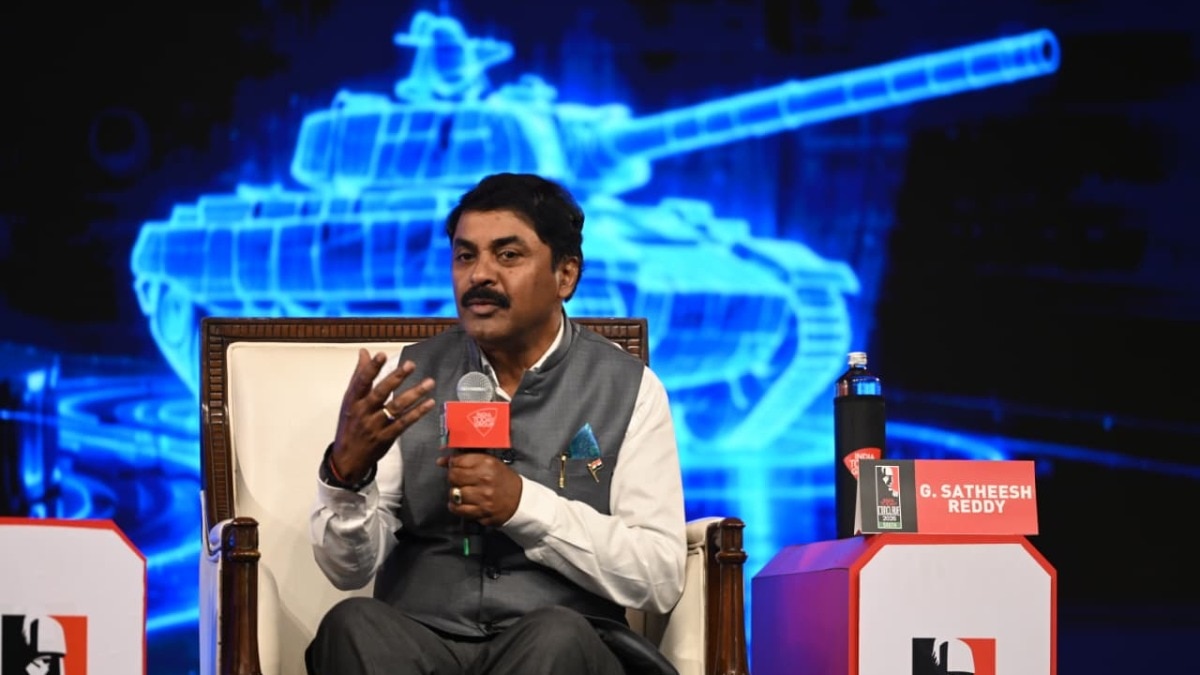
Speaking at the India Today Conclave – South 2026, G. Satheesh Reddy, Member of the National Security Advisory Board and former chairman of DRDO, said India’s defence startup ecosystem has moved beyond supplying components, with young companies now developing drones, missiles, satellites, launch vehicles and other advanced defence technologies.
Reddy described the growth of startups in the defence and aerospace sectors as a “revolution”, saying the shift is changing the way India develops and manufactures defence systems.
Reddy said startups have entered several areas that were earlier dominated by established defence organisations and large companies.
“The drones, 90% of the drone sector is with the start-ups today. Cyber security, fully with the start-ups today,” he said.
He added that startups are also developing satellites, launch vehicles and advanced payloads, including synthetic aperture radar and hyperspectral technologies.
According to Reddy, the change is not limited to individual technologies. Private companies are increasingly developing complete defence systems, with missiles, bombs, tanks, armoured vehicles and guns now being made by private industry.
“Today missiles, at least about 12, 13 missiles are being made by the private industry today,” he said.FROM ANCILLARY SUPPLIERS TO GLOBAL PRODUCTS
Reddy said the mindset among young entrepreneurs has also changed significantly.
Earlier, he said, people largely looked for jobs or tried to become ancillary suppliers to larger public sector companies. The newer generation is instead looking to develop products that can compete globally.
“Everybody thinks, why not I come out with a unique approach. And a globally competitive approach,” he said.
He said some technologies being developed by Indian startups are attracting interest from companies and countries outside India.
“Indian startups... are globally, you are a better product than anybody else,” Reddy said.GOVERNMENT SUPPORT FOR STARTUPS
A key challenge for defence startups is taking an idea from development to actual production. Reddy said the government has introduced multiple mechanisms to support startups through this process.
He cited Innovations for Defence Excellence (iDEX), which he said has funded more than 620 startups, along with DRDO’s Technology Development Fund.
“More than 700 plus start-ups and industries have been funded,” he said, referring to the various government funding mechanisms.
Reddy also said changes to the defence acquisition process are helping startups move beyond successful technology demonstrations.
“If you win an IDEX challenge, if you win a TDF challenge, you are automatically getting into that position,” he said, referring to the route towards defence procurement after successful development and demonstration.
He said startups can also receive orders of up to Rs 300 crore under provisions that do not require them to have an established revenue history.PRIVATE INDUSTRY TAKES A BIGGER ROLE
Reddy said India’s defence manufacturing ecosystem has also expanded significantly, with more than 25,000 industries now working as tier-1 and tier-2 suppliers.
More than 130 private industries are working with DRDO as development-cum-production partners, he said.
This marks a shift from the earlier model in which the public sector played a much larger role in taking defence technologies from development to production.
Reddy said indigenous content in the equipment and weapons used by the armed forces has risen from around 30-35% about 15 years ago to 65-70% today.
“The mindset in the armed forces also has changed. Now, their confidence in the indigenous systems has gone a big way,” he said.
Reddy said the growing participation of startups and private companies is also making Indian defence products part of global supply chains.
He said defence exports rose from Rs 23,622 crore last year to Rs 38,458 crore this year, while foreign countries are increasingly showing interest in technologies developed by Indian startups.
The next challenge, therefore, is to ensure that India's growing pool of defence startups can scale into companies capable of developing and manufacturing advanced systems for both Indian and global markets.- Ends
_2026_09_30_13_28_27.jpg)